








Wrist Check Vol. 1: Micro-Brands Making Moves

Micro watch brands used to live in the margins, passion projects for the already converted. In 2026, they are quietly setting the pace, offering character and considered design where big-box luxury often feels interchangeable. That abundance brings its own problem: for every thoughtfully engineered piece, there are dozens that lean on borrowed aesthetics or spec-sheet theatrics.
For this first volume of Wrist Check, we focused on watches that feel genuinely authored: purposeful complications rather than clutter, cases and bracelets that sit comfortably all day, finishing that holds up off the product page, and design stories that extend beyond nostalgia.
Each piece here was handled, worn, and assessed for legibility, wearability, and how convincingly it fits into a real wardrobe, from travel-ready GMTs to workhorse divers and quietly elegant dress watches. What follows are the micro-brands that are not just making watches, but making a point.

A French-made micro-rotor, a dual-crown case, and a dial that refuses to behave. The question is whether the art-school attitude is backed by real watchmaking.
- Best For: Someone who wants a real tool-watch platform with a designer’s visual punch, and cares about manufacture credentials.
- Feel: Micro-blasted grade 5 titanium under black DLC, light on wrist, crisp crowns, domed sapphire presence.
- What Stands Out: Silberstein’s red triangle, yellow arrow, blue seastar hands on a matte black dial, plus an in-house micro-rotor and internal bezel.
- What We Don’t Like: Dual screw-down crowns add friction for quick adjustments, and strap configuration varies by retailer listing.
- Why Choose YEMA x Alain Silberstein Limited Edition: A 500-piece collaboration that pairs playful French modernism with Yema’s CMM.20 manufacture movement and titanium build.
Some watches fade into the background; this one stays visible from across the room and then backs it up with real technical substance. Alain Silberstein’s design language leans into primary colors, hard geometry, and a sense of humor that refuses to apologize. On the YEMA x Alain Silberstein Limited Edition (Ref. 20.24.66.TN.U6), that attitude lands on a platform with serious intent, from grade 5 titanium to a Yema Manufacture micro-rotor movement. The first time I picked it up, the 40 mm case—micro-blasted and coated in black DLC—felt lighter than a comparable steel diver, and the raised double-domed sapphire gives the dial a subtle, purposeful lift. Turning it in the light, I caught myself smiling at how sharp the red triangular hour hand looks against the black semi-matte dial. The caseback seals the limited-edition mindset: numbered, with a sapphire window and an electro-plated koi fish decoration.
This is a tool-watch layout filtered through Silberstein’s postmodern lens. Legibility holds because the fundamentals are disciplined: white 3D applied hour blocks filled with Super-LumiNova, plus hands that are loud but logically coded. The yellow arrow minute hand is the anchor, the red hour triangle stays readable even at a glance, and the blue seastar seconds hand adds motion without clutter. The internal bi-directional rotating bezel is controlled by its own screw-down crown, separate from the screw-down crown used for setting the movement. When I first tried to set a quick countdown, I instinctively grabbed the wrong crown, which underlined the learning curve baked into this layout. Under the sapphire caseback sits the CMM.20 micro-rotor, a 4 Hz automatic movement with 33 jewels, a stated 70-hour power reserve, and an accuracy claim of about −3 to +7 seconds per day, plus enhanced resistance to magnetic fields and shocks.
That movement is the core argument for the €3,900 price. “Manufacture” can be slippery marketing, so I looked for what Yema is actually saying: designed, manufactured, assembled, and calibrated in Morteau, France, with most other components sourced within roughly 70 km in France and Switzerland. That’s a more transparent framing than generic heritage talk, and it helps the watch feel like a product with actual regional roots. Day to day, the titanium build and 11 mm thickness keep it wearable, even with the added visual energy of the hands. I wore it through a standard workweek, including a couple of bike commutes, and never felt the weight become a distraction. Water resistance is rated to 200 meters, which supports the tool-watch posture instead of undercutting it. Strap details can vary by listing: a black KFM strap with titanium butterfly clasp and two extra straps (red and black) is cited, while another describes an integrated rubber bracelet.
The verdict comes down to whether you want a collaboration that feels integrated, not pasted on. This one does. The case, bezel, dual crowns, and internal rotating bezel read like a coherent tool-watch system, and the Silberstein signature hands turn it into something you’ll actually recognize across a room. The CMM.20 micro-rotor is the value lever at €3,900, backed by a 5-year international warranty for Yema Manufacture movements, and the 500-piece limitation adds structure without being the only selling point. The small drawback is usability friction: two screw-down crowns are secure, but they slow down casual adjustments, and the bezel crown adds one more step before timing anything. If you collect Silberstein designs, like contemporary French watch culture, or want a light titanium watch with real mechanical substance, this fits. If you want quiet design, quick-grab simplicity, or you’re indifferent to the micro-rotor story, the price will feel harder to justify.

A disc-driven mechanical world-timer, assembled in France, that asks you to relearn how you read time.
- Best For: Design-first watch people who want world time at a glance and don’t mind a learning curve.
- Feel: Solid, cleanly finished, and deliberately futuristic in the black forged carbon version.
- What Stands Out: Rotating-disc time display plus a city-linked 24-hour worldtimer at 9 o’clock.
- What We Don’t Like: Fast read takes practice; disc viewing sometimes needs a small wrist tilt.
- Why Choose SpaceOne WorldTimer: For a space-age, disc-driven take on world time from SpaceOne Watches Paris, developed and assembled in France.
Your brain expects hands, and instead you get orbiting discs that feel more like a control panel than a dial. The first instinct is to search for familiar markers, but the WorldTimer asks you to decode it on its own terms. After a few minutes at my kitchen table in San Francisco on a gray morning, the usual muscle memory shifted into a different rhythm of reading time, and the watch stopped feeling like a party trick and started feeling like a compact piece of machinery. This version sits within SpaceOne Watches Paris’ ACT III WORLDTIMER collection, and the black forged carbon case gives it a deliberately space-age presence—more 1960s capsule panel than classic wristwatch. SpaceOne describes its watches as developed and assembled in France, and the finishing here supports that story: edges are clean, tolerances feel tight, and the discs sit with the kind of precision my engineer father would have appreciated.
Time-telling here is an architecture lesson. Minutes live on a disc at 3 o’clock, seconds sit on a disc in the center, and the 12-hour time displays at 6 o’clock. The headline feature sits at 9 o’clock, where two coaxial discs pair 24-hour time with corresponding cities for worldtimer tracking. During the first day, reading it felt closer to checking instruments than glancing at a classic dial. Eyes bounced between 3 and 6 to pin down local time, then drifted to 9 when a call to Tokyo or New York entered the day. The city and 24-hour pairing rewards repetition; after a few dozen checks, the relationship between ring position and city time stopped requiring mental translation. One small friction point showed up in normal movement: depending on angle and lighting, a slight wrist adjustment brought the discs into crisp focus, especially when stepping from bright daylight into softer indoor light.
Daily wear confirms what the design suggests: this is a watch you choose because you want the display to be the point. The disc system becomes more automatic after repeated checks, but it never disappears the way traditional hands can. That’s the tradeoff. The black forged carbon case and dark hardware also change how the watch reads in different rooms, shifting from stealthy to graphic as light catches the disc cutouts and markings. SpaceOne positions the WorldTimer collection as limited edition, with stainless steel, titanium, and forged carbon among the choices, and that mix fits the brand’s space-age story better than a more traditional palette would. On my wrist, the black forged carbon version felt light but substantial, closer to a well-balanced kitchen knife than a delicate accessory, and the worldtimer discs at 9 o’clock kept earning their keep on days spent coordinating across time zones for work and family.
Verdict: SpaceOne’s WorldTimer is a strong argument for disc-based timekeeping when the design and function are built together, not layered on. The rotating-disc layout is coherent, the worldtimer at 9 o’clock is genuinely useful for keeping global time visible, and the space-age inspiration comes through as a clear point of view instead of decoration. Development and assembly in France add credibility to a concept-driven piece, and knowing it comes from SpaceOne Watches Paris helps the story feel anchored rather than abstract. Limited-edition status and the choice of stainless steel, titanium, or forged carbon, backed by a two-year warranty, make it feel like a real ownership proposition rather than a novelty, and international delivery keeps the buying decision straightforward if the aesthetic clicks. The main drawback is speed: quick, unconscious reads take time to learn, and the occasional wrist tilt is part of living with the discs. This is for someone who likes design that behaves differently on purpose. If you want instant legibility above all, a traditional hands-and-markers watch will fit better.
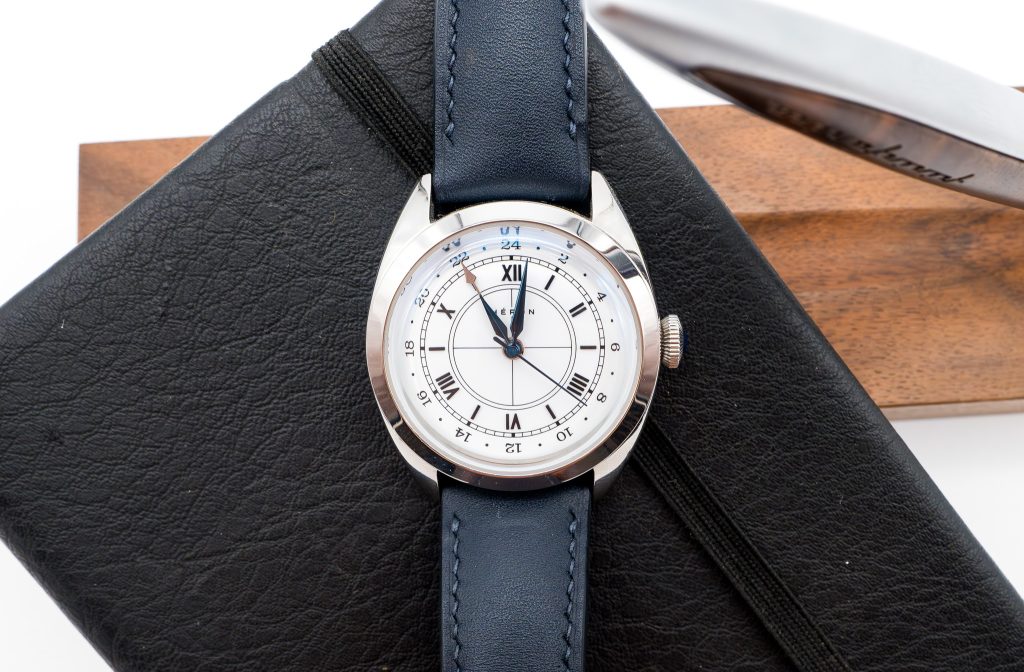
At around $690, the Mirabel GMT asks a clean question: is this neo-vintage restraint backed by real material depth, or is it only well-lit nostalgia?
- Best For: Travelers and office-bound wearers who want two time zones in a restrained, mid-century dress watch.
- Feel: Cool 316L steel, glossy enamel dial, smooth boxed sapphire, and a Baranil calfskin strap that softens with wear.
- What Stands Out: Enamel sector dial with applied Roman numerals, heat-blued alpha hands, true GMT Miyota 9075, hand-painted world-timer caseback.
- What We Don’t Like: 50 m water resistance asks for restraint around water; the white dial is currently sold out.
- Why Choose Heron Watches Mirabel GMT: A true GMT in a compact dress profile, with craft-forward details that read as considered rather than flashy.
There’s a particular kind of watch that doesn’t shout “travel” so much as suggest you know where you’re going. The Mirabel GMT in white, REF. 4002-A, aims for exactly that. The glossy enamel-painted sector dial takes on a clean, almost liquid sheen, and the heat-blued, faceted pilot-style alpha hands shift between ink and cobalt as you move your wrist through a room. Heron’s idea is clear: pull the GMT complication away from the usual sporty vocabulary and place it in something closer to a mid-century instrument watch taught manners. The 316L stainless steel C-shaped case feels intentionally proportioned at 37.5 mm, with a boxed sapphire crystal that adds depth without turning precious. After opening the package, my first habit was to tilt it toward a window and then flip it over, because the solid “World-Timer” caseback with its hand-painted enamel centerpiece invites that kind of attention.
The watch earns its “GMT” name in how it behaves, not how it looks. Inside is the automatic Miyota 9075, a true GMT, so the local hour hand moves independently while the GMT hand keeps home time. The first setting took a minute, and I did what most owners will do and pulled up the external 9075 instructions to avoid an early mistake. Once understood, it becomes the kind of function you use without thinking: land, jump the local hour, leave everything else alone. The cabochon pilot crown, diamond-shaped with a resin insert, has a secure grip and a clean, mechanical feel through the positions. Legibility is strong in good light, with polished applied Roman numerals catching small highlights, though the enamel’s gloss can throw reflections indoors. In a quiet room, the rotor made itself known now and then—more presence than problem.
On the wrist, the Mirabel’s numbers translate into ease. The 43.5 mm lug-to-lug keeps the watch compact, and the 11.8 mm total thickness including the boxed crystal sits neatly under a cuff without feeling shaved down. Lug width is 20 mm, and the quick-release spring bars make changing straps a quick, low-stakes ritual; I swapped once simply because the watch invites experimentation. The supplied Baranil calfskin leather from Tanneries Haas, hand-stitched with linen thread and sealed edges, started slightly structured and then relaxed after a few longer wear sessions—the kind of leather that feels honest about being leather. This is also where the dress positioning sets limits: water resistance is 50 meters, adequate for daily life, but not a watch I’d keep on for a swim or a shower. Compared with the usual bezel-forward GMT tool watches, the Mirabel travels quietly, closer to a small instrument than a piece of equipment.
At $690, the Mirabel GMT feels priced from the inside out. The value isn’t one headline feature—it’s the accumulation: a true GMT movement, a glossy enamel sector dial with a crosshair layout, heat-blued hands that do real work in changing light, and a caseback more than a logo, with its navy-and-white hand-painted enamel world-timer motif and perlage hidden inside. The main drawback is less a flaw than a constraint: 50 meters of water resistance keeps it in the realm of considered wear, and the white version is currently sold out, which tests patience. This watch is for someone who wants two time zones without the usual visual noise, someone who dresses with restraint and still likes function. If higher water resistance, absolute quiet from the rotor, or immediate availability matter most, look elsewhere. The Mirabel’s accomplishment is giving GMT a calmer, more architectural language, and then backing that language with substance.

A micro-brand tool watch that puts its money into materials, then asks you to trust the rest.
- Best For: Someone who wants a black-on-black diver with honest materials and a professional 300 m rating for daily wear confidence.
- Feel: Cool 316L steel and clear sapphire up top, paired with a straightforward black rubber strap that keeps the watch practical.
- What Stands Out: 300 m water resistance, Swiss C3 Super LumiNova on markers and hands, and a helium valve at 9 o’clock.
- What We Don’t Like: Only rubber strap included, and the 9 o’clock valve adds visual busyness for most non-divers.
- Why Choose Pantor Sealion: A materials-forward diver that emphasizes construction and legibility at a mid-tier price.
Some watches seduce with story; others just show up and dare you to find the weak link. The Pantor Sealion diving watch-300m diver watches with black dial and rubber strap arrives with the kind of straightforward brief I like: black dial, black rubber strap, 316L stainless steel case, sapphire crystal, and a stated focus on outdoor adventures through a vintage design lens. I received the Sealion diving watch and the first thing I checked was whether it reads as honest construction in the hand. The case finishing looks considered for the category, the sapphire gives the dial a crisp, clean window, and the watch has the quiet heft you want from steel without feeling clumsy. The design is familiar, but not anonymous, partly because of the automatic valve placed at 9 o’clock, which telegraphs “tool watch” in a way you can’t unsee.
Pantor’s most revealing choice is mechanical transparency: you can order the Sealion with either a Japan SII NH35A or a Swiss ETA 2824-2. That tells you where the brand thinks value lives, and it gives buyers a clear fork in the road. The one I handled was the SII NH35A version, and setup was the usual routine for an automatic with a date calendar: a few careful crown positions until the quick date change becomes second nature. Nothing about that process felt precious, which is a compliment for a watch positioned as a daily-wear diver. Functionally, the watch leans into legibility. The black dial uses 1–12 hour markers and both markers and hands are treated with Swiss C3 Super LumiNova. In daylight it reads cleanly, and after a quick charge under a lamp, it’s the watch I reached for when I wanted an easy low-light check.
Proportion is where the Sealion makes its strongest case. At 42 mm wide and 12.6 mm thick, it sits in a zone that can work across a lot of wrists without pretending to disappear. On my wrist, the diameter gives the black dial enough presence to feel purposeful, while the thickness stays manageable in daily circulation. It slid under a shirt cuff more often than I expected, though you remain aware it’s a diver, not a dress watch. The rubber strap reinforces that intention. It’s comfortable for long stretches, easy to adjust, and it keeps the watch stable as you move through the day, especially when you’re on a bike or carrying bags. The helium valve at 9 o’clock is the one detail that kept catching my eye in reflections. It’s a functional signal, but aesthetically it’s an extra node on an already busy object. Some people will love that seriousness; others will wish the case flank stayed quieter.
A 300 m water-resistance rating is a strong claim, and the Sealion treats it as a design premise rather than a footnote. I did not take it diving, but I did treat it like a watch that should not need special handling around water, which is the real daily test. The crown-locking routine matters here, and Pantor’s warranty language is blunt about water infiltration if the crown is not completely locked or if the watch is used beyond its rating. That is fair, and it is also a reminder that “professional diver” is as much about habits as hardware. At $539.99, the Sealion’s value argument rests on its materials and core specs: 316L steel, sapphire crystal, Swiss C3 Super LumiNova, 300 m rating, and a choice of two movements that clearly ladder the range. The product page showed it as out of stock when I looked, with a limited-time sale banner and free worldwide shipping, so availability may be the biggest practical obstacle. For someone who wants a vintage-leaning diver that feels built, not styled, the Sealion lands. If you want a cleaner case profile or multiple strap options in the box, look elsewhere.
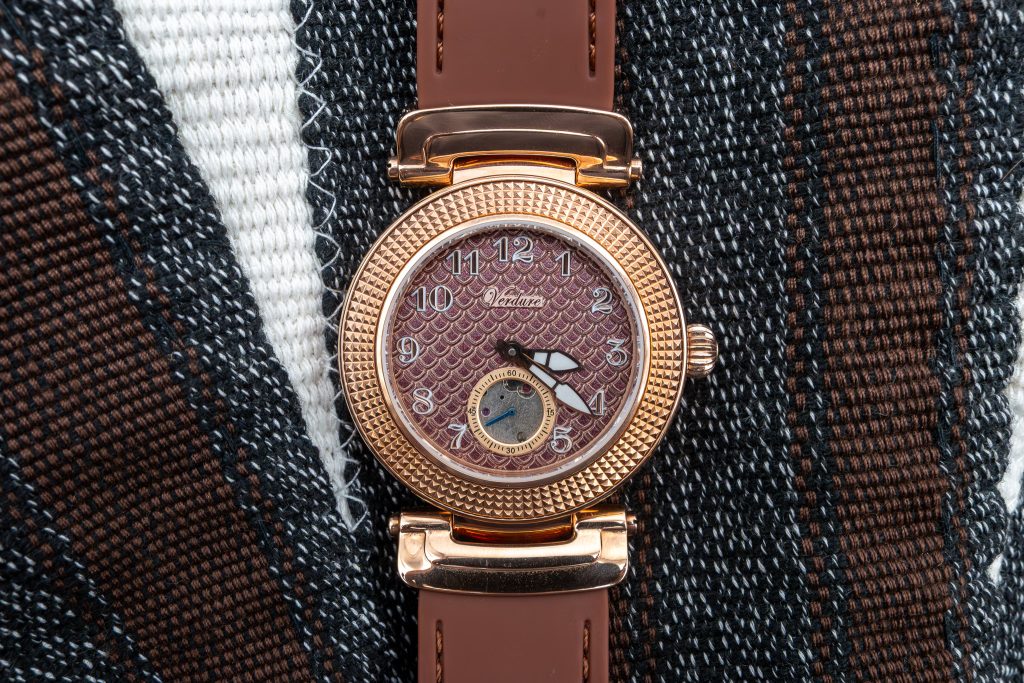
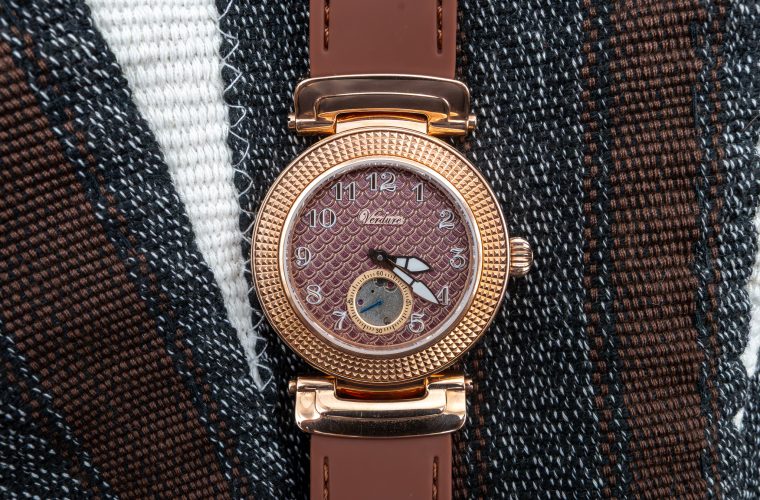
Verdure’s “treasure piece” in the Lure Collection’s catalog, which is bold wording, yet not out of place here.
- Best For: Someone who wants a coastal-leaning, composed daily watch and cares about the full ownership presentation.
- Feel: Considered and put-together, with a sense of intent that reads more “designed” than “decorated.”
- What Stands Out: The most impressive, best-constructed presentation box I’ve seen from Verdure, plus a cohesive coastal design pitch.
- What We Don’t Like: Fit took a minute to dial in; the coastal theme will feel specific if you prefer purely neutral styling.
- Why Choose Estuary: A well-positioned Verdure that delivers on its design premise and signals quality before it ever hits your wrist.
You know that one piece in a brand’s lineup you keep tabbing back to, not because it’s the flashiest, but because it looks like it actually understands what it’s trying to be? That was Verdure’s Estuary for me. The brand frames it as “Coastal-Inspired Elegance with Timeless, and Natural Charm,” and it sits in a clean middle ground within Verdure’s watches section alongside names like Anchor, Affluent, Royalty, Journeyman GMT, Radiance, and Azure. That kind of positioning can be empty marketing or it can be a useful shorthand for how a piece feels day to day. The first encounter leaned toward the latter. The watch came out reading calm, intentional, and less fussy than the phrase on the product page might suggest. After a quick look in natural window light, the appeal clicked—it’s trying to project ease and restraint, not theatrics, and that makes it more versatile than the coastal tag implies.
Presentation is where Estuary separates itself inside Verdure’s own ecosystem. The watch arrived in the best-constructed and most impressive box I’ve seen among Verdure’s watch collection, and that matters more than people admit. A good box doesn’t make a watch better, but it does signal operational seriousness: someone cared about how the product is handled, stored, and introduced. The unboxing felt deliberate rather than performative, with the kind of secure, well-finished construction that makes you keep the packaging instead of tossing it in a closet. It also raised expectations for the watch itself, which is risky if the product can’t cash the check. After setting the time and wearing it through a normal workday at a desk and then out for errands, the Estuary didn’t feel like it needed to apologize for the build-up. It held its composure.
In everyday use, Estuary’s strength is that it stays out of your way. A watch pitched as “coastal” can drift into costume, but this one reads as a design direction, not a theme park. It settled into my routine quickly: on in the morning, checked absentmindedly throughout the day, then back off at night onto a dresser tray without feeling precious about it. The only friction was the initial fit. Getting it to sit the way I wanted took a couple tries, and that learning curve is the sort of small annoyance you only notice because everything else is running smoothly. Within Verdure’s catalog, it feels like a sensible choice for someone who doesn’t want the implied specificity of a model name like Journeyman GMT but still wants a piece with identity.
At $1,199 on Verdure’s official product page, the Estuary lands in a price tier where buyers have every right to expect a coherent concept and a premium-feeling ownership arc. It delivers both, and the packaging is an unusually strong quality signal for the money. The internal comparison Verdure invites is its own Estuary 2.0 with Steel Bracelet at $1,399. That variant exists for shoppers who know they want that specific configuration and are willing to pay more for it. Estuary, as tested here, makes sense for the buyer who wants the coastal-leaning elegance and natural charm, but also wants to stay closer to the $1,199 entry point. Skip it if you’re shopping purely on specs or want a watch that announces itself loudly. Choose it if you value quiet design, clean execution, and a brand that understands the first five minutes of ownership matter.

An enamel-style brown-grey dial and a disciplined marker system make this COSC tool watch feel calmer, and more considered, than its price suggests.
- Best For: Travelers and daily wearers who want a compact, water-ready field chronometer that stays understated with a suit or a jacket.
- Feel: Tight stainless-steel build, domed sapphire depth up top, airy Bonklip comfort with quick micro-adjustment.
- What Stands Out: Storm Grey enamel-effect dial plus mixed-shape luminous markers; COSC-certified Soprod M100; lumed seconds; 200 m rating.
- What We Don’t Like: Bonklip takes a minute to learn; 42-hour reserve may mean a reset after a quiet weekend.
- Why Choose Ref. 6190-3 M.S.L Field Chronometer: COSC precision and distinctive dial architecture at a grounded price.
Imagine a field watch stripped of nostalgia cosplay and rebuilt around how you actually see, travel, and dress in 2026. That’s the angle here: compact steel, real water resistance, and a dial that feels deliberate rather than decorative. The case is stainless steel and compact at approximately 37.7 mm, with a double-domed sapphire crystal that gives the dial a calm, contained depth. Storm Grey is the story here. In morning light it reads like a softened taupe-grey, then cools toward slate indoors, sidestepping the hard contrast of black or the formality of white. The dial architecture is even more decisive: a triangle at 12, rectangles at 3, 6, and 9, and circles for the remaining hours, all applied in circular relief and filled with luminous material. After a few glances, the hierarchy feels borrowed from mid-century military logic, then cleaned up for modern wrists.
Under that quiet exterior sits a COSC-certified, Soprod M100-based automatic movement running at 28,800 vibrations per hour, with approximately 42 hours of power reserve. In practice, the appeal is less romance than discipline: I checked it against my phone over several days and it stayed within the expectations of a chronometer. The central seconds hand is luminescent, which sounds like a detail until you wake in a dark room and can confirm, instantly, that the watch is still running. Water resistance is rated to 20 bar, supported by a screw-down crown and the sapphire crystal, and the crown itself has a satisfying, tool-like feel when threading back down. Serica also lets you choose crown placement at order, 3 o’clock or 9 o’clock, which is a small but thoughtful nod to how different people actually wear a field watch.
Daily wear is where the Storm Grey dial earns its keep. Navy looks sharper against it than I expected, and the same goes for brown leather, olive outerwear, and grey suiting; it behaves like a neutral, but with more tact than plain black. The mixed markers add speed, not decoration. The triangle gives instant orientation, the rectangles anchor quarter-hours with more luminous surface, and the circles keep the remaining hours consistent. Small connecting lines between the circular markers and the minute track add a precise, almost satellite refinement when you look closely. The Bonklip bracelet, derived from a late-1920s design and updated for modern use, took me a moment to adjust correctly, then disappeared on the wrist. Compared with a Hamilton Khaki-style field watch or a larger, more declarative Longines Spirit, this wears smaller, neater, and more internationally discreet.
The Serica Ref. 6190-3 M.S.L succeeds because it doesn’t confuse heritage with costume. The mid-1940s military DNA is present in the functional beauty of the dial and the legibility-first thinking, yet the applied markers in relief, broad arrow hands, and lollipop seconds feel contemporary and considered. Proportions help: approximately 10.4 mm thick including the glass, and around 46.5 mm lug-to-lug, it sits close to the wrist and slides under a cuff without drama, which is not a given for a 200 m watch. There’s a small notch-like gap around 6 o’clock between bezel and case that caught my eye up close, though it doesn’t affect wear. The main trade-off is the 42-hour reserve, manageable if you wear it consistently. At €1,090, the value proposition is straightforward: COSC accuracy, serious water resistance, and a dial design you won’t confuse with anything else. Buy it for understated travel and daily work. Look elsewhere if you want long power reserve first, design second.

A limited-run handwound dress watch where the dial does the talking, and the trade-offs feel intentional.
- Best For: Dress-watch buyers who care more about visible craft than brand recognition, and don’t mind a daily wind.
- Feel: Compact 38mm case, sapphire front and exhibition back, vintage-style Italian leather strap with a gentle taper.
- What Stands Out: Hand-engraved dial with intentional human irregularity; limited run of 45; coherent Art Nouveau character.
- What We Don’t Like: Handwinding becomes a routine, not a convenience; the busy dial can be harder to read in dim light.
- Why Choose Vario Empire: It puts artisanal dial work and proper materials into a disciplined dress-watch format at $888.
You can tell when a watch is trying to impress you, and when it’s just showing you what it actually is. This one falls firmly in the second camp. This Empire collection is described as made entirely of custom parts, and this particular watch was produced in a limited edition of 45 pieces, made in Japan and inspected in Singapore. Mine came out of the box at my kitchen table with the kind of first impression you can’t manufacture at scale: the dial is hand engraved, and the small variations in line and spacing read as deliberate evidence of a person, not a machine. Vario’s own framing is that each dial is uniquely hand-crafted and that imperfections are part of the story, which feels like an honest philosophy here. The floral language leans Art Nouveau, with an orchid motif often associated with this design, and the result stays focused on proportion instead of spectacle.
A dress watch still has to behave like a watch, and the practical choices are well judged. The case is 38mm with a 46mm lug-to-lug and 11mm thickness, a set of dimensions that stays neat on the wrist without disappearing. On my 6.25-inch wrist, it reads balanced and intentional, more “proper” than “tiny.” Sapphire crystal sits up front, and the sapphire exhibition caseback also carries an inner anti-reflective coating, which matters because this watch invites close looking from both sides. The movement is a Miyota 6T33 handwound caliber running at 28,800 beats per hour, and it delivers the smooth seconds sweep you’d expect at that frequency. Power reserve is about 40 hours, which, in use, becomes a gentle nudge to build a winding routine instead of treating it like a set-and-forget accessory.
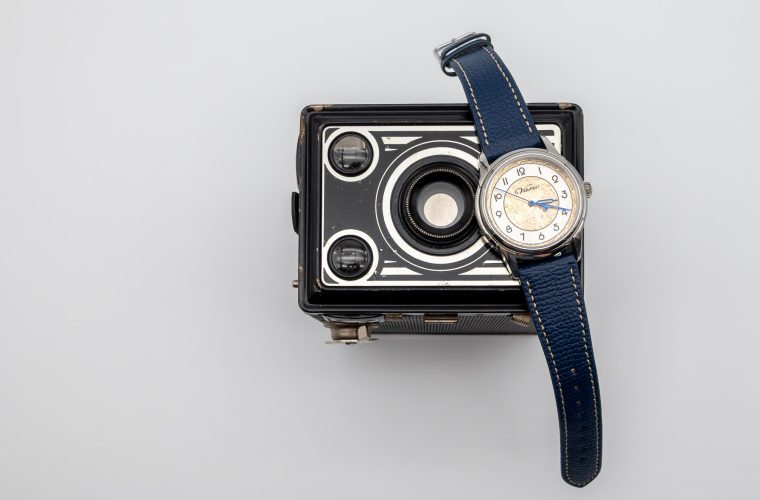
Daily wear is where the design integrity either holds or collapses, and this one holds. The 5 ATM water resistance is enough for handwashing and Seattle drizzle, but it keeps the watch mentally filed under “don’t be careless,” which matches the dress category anyway. Winding quickly became a morning habit, though the crown feel took a couple days to learn; resistance varies slightly as you approach full wind, and it’s easy to second-guess yourself at first. One morning of rushing out the door ended with a stopped watch the next day, exactly the kind of friction handwinding always brings. The strap deserves its own note because my watch arrived on a blue leather wriststrap, even though the official options listed are Onyx Black and Espresso Brown. The leather is vintage style Italian with a slight bi-colour effect and a 20mm to 16mm taper that keeps the watch feeling light and centered. The blue is handsome, but less universally appropriate with formal clothing than black or brown.
At $888, the value argument is simple: the money is visible on the front of the watch. A hand-engraved dial, executed with enough restraint to stay wearable, is not a common offering at this price, and the limited edition status reinforces that this isn’t a mass-produced exercise. The rest of the build supports the dial instead of competing with it: sapphire on both sides, an exhibition back that encourages mechanical engagement, and a Miyota 6T33 that feels like a pragmatic choice rather than a talking point. Minor drawbacks come with the territory. Handwinding demands consistency, 5 ATM means you stay mindful around water, and the textured dial can sacrifice quick legibility in low light. This suits someone who wants a dress watch as an object of craft and proportion, not a logo. For anyone chasing convenience or instant readability, the same restraint that makes it special may feel like a constraint.

An officially licensed commemorative watch in warm bronze, built to age in public, not sit in a box.
- Best For: Someone who wants a compact field watch with a living bronze case, and likes their gear tied to a real public message.
- Feel: Polished and satin bronze with a warm heft, sapphire on top, thick leather or sturdy canvas against the wrist.
- What Stands Out: Official Smokey Bear tie-in, natural patina, 120m water resistance, two quick-swap straps included.
- What We Don’t Like: Bronze can mark skin in heat and sweat; patina asks for patience or occasional cleaning.
- Why Choose The Smokey Bear 80th Edition: A story-forward bronze watch that stays approachable at $595, and supports Smokey Bear education.
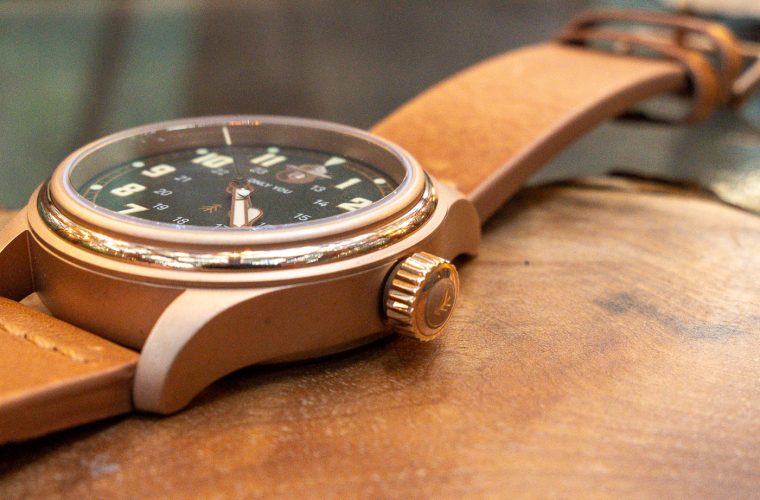
Some watches scream for attention; others feel like they’ve been waiting quietly on a hook by the back door for years. Smokey Bear lives in that second category, a piece of shared memory more than a mascot, and a reminder that prevention is a job we hold in common. Vero’s The Smokey Bear 80th Edition Forest Green, SKU SG80, takes that legacy seriously as the official watch of Smokey Bear, and it keeps the tribute grounded in materials that age honestly. The 38mm bronze case mixes high polish with satin surfaces, and the forest green dial reads like it belongs outdoors without pretending to be rugged theater. When mine arrived late afternoon, I handled the case first, turning it in the light to watch the finishes shift. The box and extra strap ended up on my desk because I knew I’d be swapping immediately. This is a compact, considered field-watch silhouette, 12mm thick with a 46mm lug-to-lug, and it’s designed to be worn, not kept pristine.
The practical side is just as intentional. Inside is a Seiko NH38A automatic movement, Japanese-made and U.S.-regulated, with a stated 41-hour power reserve, and it winds through natural wrist motion, so there’s no battery to chase. In use, the watch felt straightforward and calm. The flat sapphire crystal with AR coating keeps the dial legible without fuss, and in a quiet room I could catch the rotor’s soft movement as I shifted my arm. The screw-down crown is the sort of detail that changes behavior; I found myself double-checking it before washing dishes or stepping into a sudden downpour. Water resistance is rated to 120 meters with the crown properly secured, which is reassurance for daily life rather than an invitation to prove anything. After a few days of wear, I kept checking it against my phone out of habit, and it stayed on track.
Living with bronze is less about “performance” than temperament. Patina starts as a faint dulling at the edges, then develops in a way that makes the watch feel increasingly particular to you. That’s the point, and it also adds corrosion resistance, but it does require consent. I rotated between the two included straps: a 3.3mm-thick leather strap with bronze hardware and quick-release spring bars, and a black canvas NATO with bronze hardware and its own spring bars. Swapping took only a couple minutes once my fingers learned the motion, and the 20mm strap width keeps the proportions tidy. The leather felt more at home for everyday errands; the NATO made the watch feel more utilitarian, especially when I wanted the bronze to read less precious. One reality check: bronze can leave green-blue staining on skin when you sweat. I didn’t love that possibility, and I appreciated having a practical mitigation tip on hand. Some people use a light wax on the caseback in warm weather. If you want the case bright again, Vero even explains how to restore bronze with common household ingredients or products like Brasso or Flitz, which tells you they expect the watch to live a real life.
At $595, this watch’s value proposition is unusually clear. Vero picked the NH38A to keep the price approachable, and the decision reads as inclusive rather than corner-cutting: a dependable automatic that keeps the focus on design, wearability, and the meaning attached to it. The strongest part is the whole object—the forest green dial under AR-coated sapphire, the green Super-LumiNova on hands and numerals when the lights go down, the compact 38mm stance, and the way bronze starts telling time in two languages at once, hours on the dial and years on the case. The main drawback is the same thing that makes it special: bronze is a living finish, and with that comes skin-marking risk and an acceptance curve if you crave unchanging shine. If you want set-and-forget stainless steel, or you’re chasing higher-spec horology, look elsewhere. If you want a field watch with soul, tied to a genuine public message where proceeds support Smokey Bear educational efforts, this one feels rooted, not performative.