







When Success Is the Worst That Can Happen

Whenever there’s a critical and commercial bomb on the level of this fall’s Joker: Folie à Deux, an inevitable part of the aftermath is articles breaking down the behind-the-scenes drama that led to disaster. “Why No One Will Get Fired Over ‘Joker: Folie à Deux,’” The Hollywood Reporter explained, while Variety offered up “Inside the ‘Joker: Folie à Deux’ Debacle: Todd Phillips ‘Wanted Nothing to Do’ With DC on the $200 Million Misfire.”
These and other articles did their best to contextualize the film’s performance to readers, with plenty of specific details that I’ll note in a bit. But reading about what happened in the making of Todd Phillips’ follow-up to his 2019 blockbuster, a pattern emerges that connects Folie à Deux with other high-profile failures not just in recent years, but stretching back across history: The hubris that comes with success.
2019’s Joker, even for those who didn’t care for Phillips’s interpretation of the Clown Prince of Crime, was an undeniable hit, earning $1 billion at the box office (as an R-rated movie!) and receiving 11 Oscar nominations, with Joaquin Phoenix winning for Lead Actor and Hildur Guðnadóttir winning for Original Score. So, while the ending of the film didn’t necessarily seem driven towards setting up a sequel, it did feel somewhat inevitable, and the news that it’d be a musical featuring Lady Gaga as Harley Quinn even had some Joker naysayers (like myself) excited.
Because of the first film’s performance, Phillips and Phoenix were able to command $20 million paychecks, while the sequel’s budget more than tripled (from the first film’s $55 million to a final total of $190 million). More importantly, Phillips retained final cut and, per reports, did not screen the film for test audiences or focus groups. Even incoming DC Studios heads James Gunn and Peter Safran had no involvement with the movie, which Phillips credited to Warner Bros.: “‘Todd did his thing. Let Todd continue to do his thing,’” was how he described the studio’s attitude towards Folie à Deux.
The result was a movie that ended up alienating its original fanbase, Lady Gaga fans, and anyone who appreciates a good musical number. Could the movie have been saved had Phillips opened himself up for notes, or spent some time considering the fan reaction? Maybe, maybe not. But what does feel certain is that Phillips got everything he wanted to make the exact movie he wanted — he even got to use the ending he originally wanted to use for the first Joker, which was rejected then out of respect for Christopher Nolan’s The Dark Knight. And the result was bad, with no one to blame but Phillips.
Phillips made Folie à Deux using Warner Bros.’s money, which gives him an advantage over two filmmakers from this year who self-financed their own epic-scale movies. Both Francis Ford Coppola and Kevin Costner said in interviews that they would be comfortable with losing tens of millions of dollars on their respective passion projects, because they were paying for the right to make exactly what they wanted to make. However, as someone who sat through both Megalopolis (twice!) and Horizon: An American Saga — Chapter One, I can say that both directors fell far short of the lofty expectations they set for those films… in part because both films feel overindulgent, in need of more development to reach the heights they wanted to achieve.

Francis Ford Coppola and Adam Driver behind the scenes of Megalopolis, courtesy of Lionsgate
In both cases, Costner and Coppola promoted their films by banking on their reputations as Oscar-winning filmmakers, Coppola in particular: Consider the infamous Megalopolis trailer quoting negative reviews of past Coppola classics like The Godfather and Apocalypse Now, to serve as evidence that critics would eventually be proven wrong about slamming his newest work. The twist, of course, was that none of those quotes (or the reviews themselves) were real — they were all fake, created by AI. (In case you like your hubris with a side order of hubris.)
This is a pattern seen repeatedly across all realms of artistic expression — someone breaks through with a massive hit, but their follow-ups fail to impress as they stop paying attention to outside voices. J.K. Rowling currently represents the platonic ideal of this, as her writing indicates she stopped really listening to editors a long time ago. (At least, that’s the only explanation I can come up with for how the phrase “Ron ejaculated loudly” made its way into Harry Potter and the Order of the Phoenix.)
Her creative decisions in Hollywood have floundered as well; while the Harry Potter franchise continues to print money, the Fantastic Beasts film series is functionally dead at this time — a series over which Rowling had a great deal of creative control. Outside of theme parks and merchandise, her cultural power amongst non-TERFs has diminished to the point where her only major project on the horizon is HBO’s planned TV re-adaptation of the Potter books — literally just telling the same story over from the beginning.
Speaking of television, in general it’s not too hard to figure out if a show’s producers have a bit too much confidence in their work. Just look at the episode runtimes. The final four episodes of Game of Thrones all exceeded an hour and 15 minutes in length, while Ted Lasso, which began as an easy breezy half-hour comedy, notably ballooned to episodes almost as long as 80 minutes in its third (maybe not final) season. And the most recent season of Stranger Things had a cumulative runtime of 771 minutes (or approximately 12 hours and 51 minutes), despite only running nine episodes.
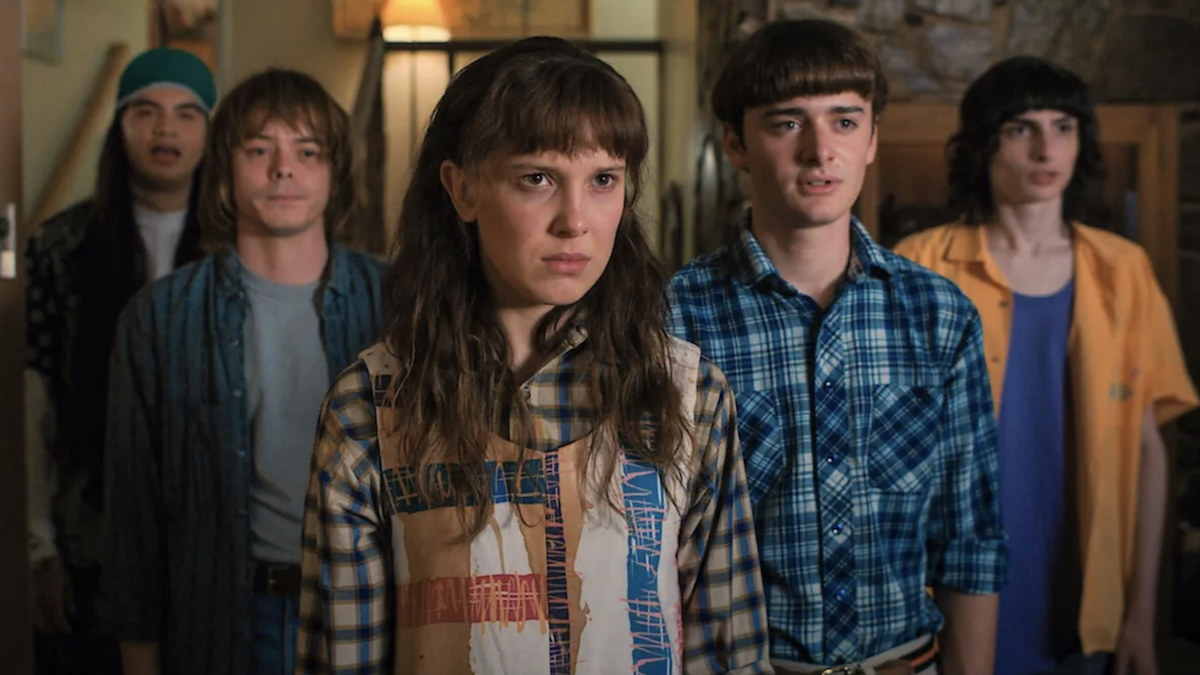
Stranger Things (Netflix)
None of this needed to be that long. And it’s not that longer episodes equal a downswing in quality, but they often indicate that creators are pushing back against the kinds of potential cuts that would bring a show in at a more traditional length, because the show’s previous success has given the creators more power to control what comes out of the editing room. It’s a symptom of a larger problem — that the creator is no longer listening to dissenting voices, whether they be studio executives, their collaborators, or their fanbases.
Even a show like Sam Levinson’s Euphoria crept up from an average length of 57 minutes an episode in Season 1 to 59 minutes an episode in Season 2. Though the real evidence of Levinson’s descent into hubris was The Idol, a show he took over from his original collaborators, largely reshot to his own specifications, and then premiered at Cannes before its underwhelming debut on HBO.
Past success remains one of the most important qualities in any creator getting a greenlight, because it decreases the risk for the risk-averse people in charge of the money — they can point to that past success as a justification for the decision that led to present failure. As The Hollywood Reporter pointed out in its own headline, Folie à Deux isn’t going to get people fired, because Joker’s 2019 triumph made a sequel an easy sell on paper. It’s purely the poor execution that led to this outcome.
However, this article isn’t meant to argue that the people in charge of the money should have more authority over creative choices. The point, instead, is that even the best creators benefit from stepping outside themselves, and opening themselves up to the possibility that they might be wrong about something. They need the insight that can come from real collaboration. And it’s unfortunate when they get enough power to tune those voices out. For themselves — and their audiences.