









Pantor Sealion Watch Review

Imagine a watch drawn the way an architect sketches a room: dimensions first, details later. You notice the way light hits the surfaces before you register the décor. That’s how the Pantor Sealion landed for me. The first thing I noticed was the crystal, not the dial. Under kitchen light, the sapphire has that clean, hard clarity that makes a black dial look deeper than it is, like a dark tile that only reads as flat from far away. The Pantor Sealion diving watch-300m diver watches with black dial and rubber strap has the proportions of a modern diver, but it frames itself as vintage, and it carries the kind of marketing confidence micro-brands lean on when they want to sound inevitable.
I wore it as it’s intended to be worn: on the rubber strap, through regular days, a little outdoor time, and the normal water contact that happens when you stop babying a watch. The central question at $539.99 isn’t whether it can look like a diver. It’s whether the architecture feels honest.
Where It Sits in the Street Grid

Micro-brands live or die by access. With Pantor, the pitch is simple: an American brand presenting itself as a professional diving watch specialist, offering the Sealion as part of the broader Pantor Sea Lion Series, and advertising free shipping to all of the world on the site where it’s sold. That last point matters because it signals how the brand imagines its customer—not local, not boutique-driven, but global and self-directed.
Buying, though, is also availability, and the product page I saw had the Sealion marked “Out of Stock.” That status changes, but the feeling it leaves is consistent: this is a small operation with demand and supply out of sync, or at least paced differently than big brands. It shapes expectations before you even touch the watch. You’re not walking into a dealer network. You’re committing to a direct relationship with a micro-brand’s systems and policies, for better and worse.
Vintage With Bones, Not Costumes

Pantor describes the Sealion as a vintage design with a black dial and rubber strap, suitable for outdoor adventures. “Vintage” is one of those words that can mean anything from thoughtful restraint to pure costume, so I tried to read it the way I’d read a renovation: what’s original structure, what’s decorative cladding.
The black dial is the anchor. It’s legible in the straightforward way black tends to be, and the Swiss C3 Super-LumiNova on the 1 to 12 hour markings and the hands is a real material choice, not a vague promise. Lume tells you how serious a brand is about tool-watch function because it costs money and it’s easy to cheap out.
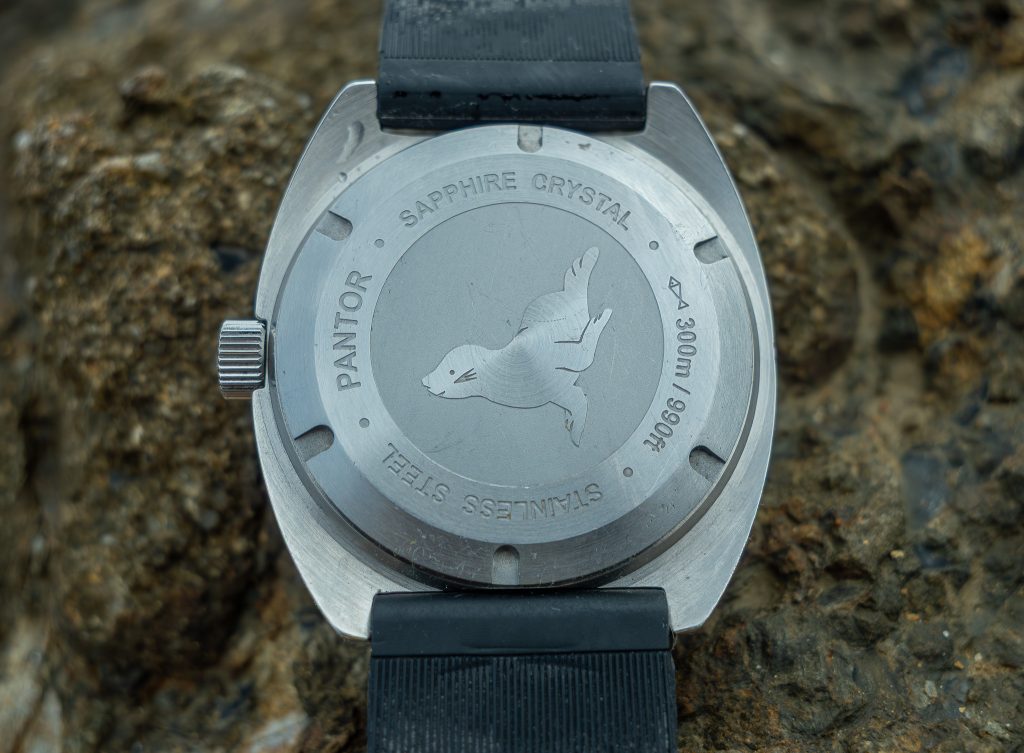
Pantor also describes the case as having high quality finishing. That’s marketing language, but finishing is still where honesty shows up: transitions, edges, and whether the steel reads as considered rather than merely shiny. In hand, the 316L stainless steel feels like the right baseline for a watch trying to compete in this category. It’s not exotic. It’s appropriate.
How 42mm Gets Used, Not Wasted

The Sealion’s 42 mm case diameter is presented as moderate, suitable for men and women. That’s true in the abstract, but wearability is less about the number and more about how the watch uses its footprint. Here, spatial planning is what I kept coming back to. At 42 mm across and 12.6 mm thick, the watch has enough volume to feel substantial, but it doesn’t feel like a tower on the wrist.
Inside that outline, Pantor specifies a 29 mm dial opening diameter. That number matters because it hints at how much “wall” you’re wearing: how much of the watch is dial, how much is case. A smaller dial opening can make a watch feel more armored, more like equipment, but it can also make it feel visually heavier. On wrist, the dial reads contained, with the case taking an assertive role.
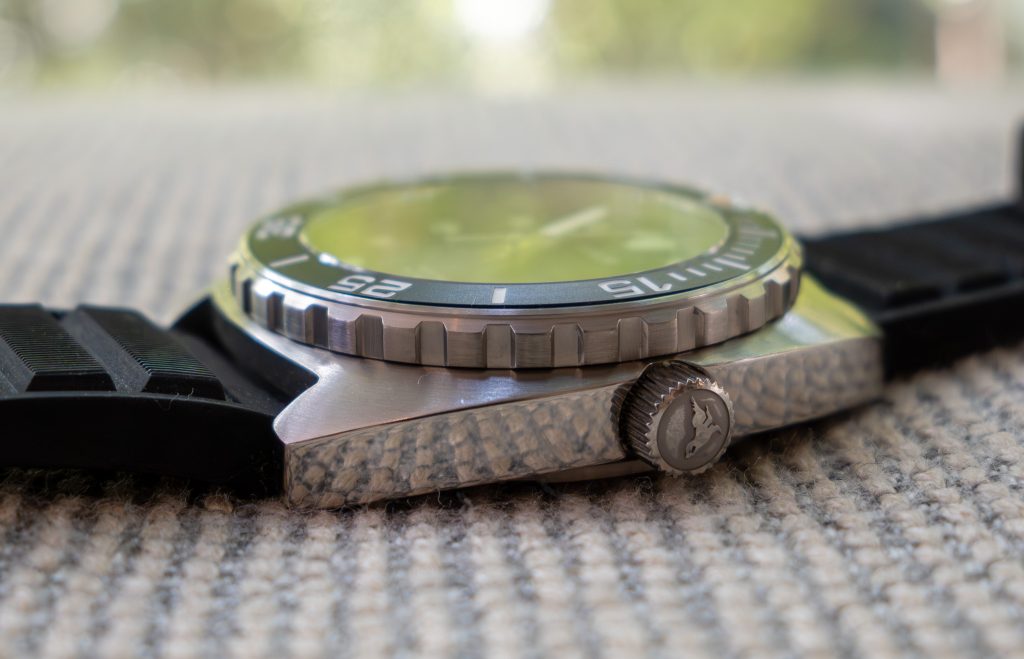
Pantor even specifies the dial thickness as 0.6 mm. Most people won’t care, but as a design signal it’s interesting. It suggests they’re thinking in layers, like an elevation drawing: crystal, dial, hands, movement, case. That kind of attention doesn’t automatically mean the whole watch is resolved, but it implies intent.
Professional Claims, Pressure Lines
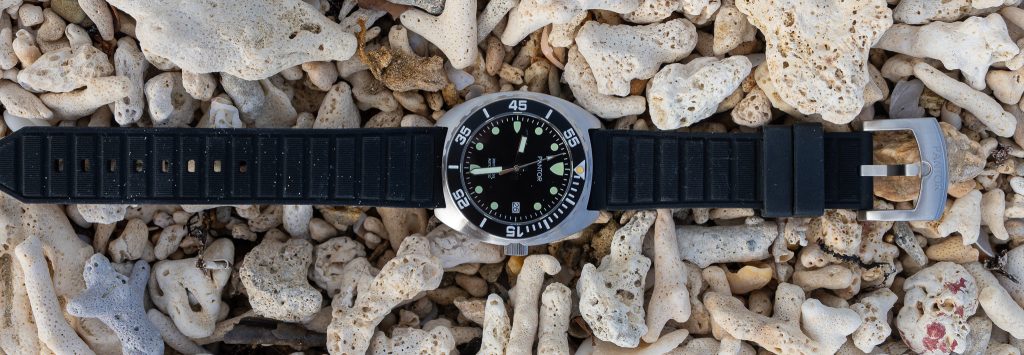
On the left side of the case, at the 9 o’clock position, the Sealion has an automatic valve. That placement changes the silhouette. It also changes the story Pantor is telling when it calls this a professional diver watch with 300 meters water resistant technology.
“Professional” can mean a lot of things. In practice, it should mean the design choices line up with real use and real risk. A watch rated to 300 meters sets an expectation of seriousness, and the inclusion of an automatic valve pushes that even further into “we built this for pressure” territory, at least rhetorically.
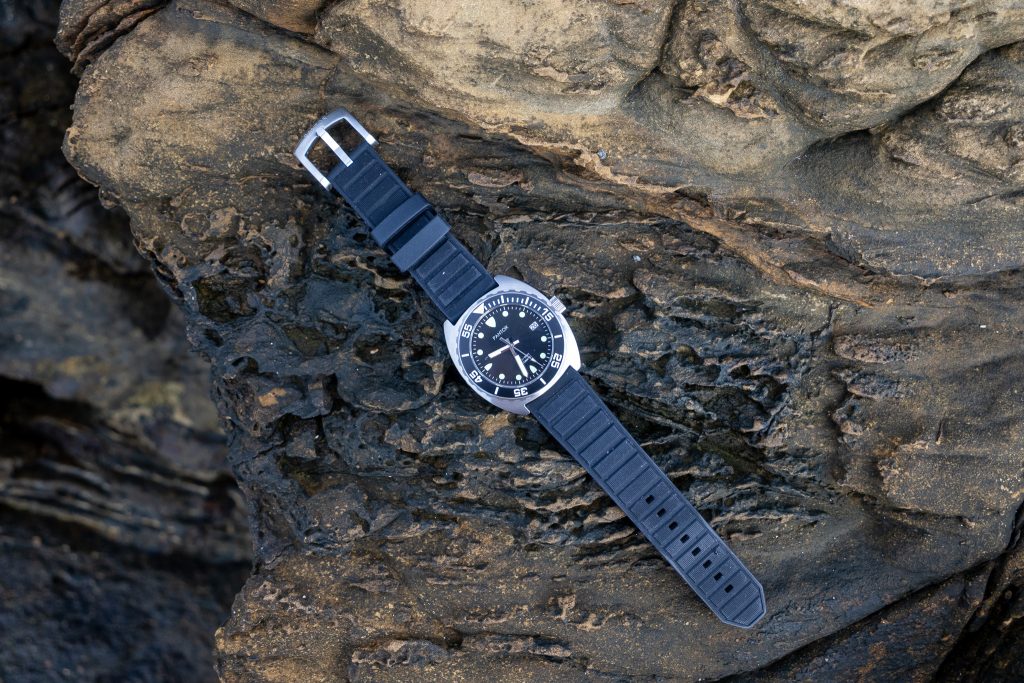
In my actual days with it, the most honest interpretation is simpler: this is a diving watch suitable for both divers and daily wear, and it behaves like a daily watch first. It handled the mundane water moments without making me nervous, especially knowing the warranty language explicitly calls out water infiltration caused by the crown not being fully locked. That sentence is doing a lot of work. It frames the watch as capable, but it also tells you where responsibility lands. The “professional” claim is aspirational; the construction details are the part you can evaluate.
Lume, Dates, and Daily Friction
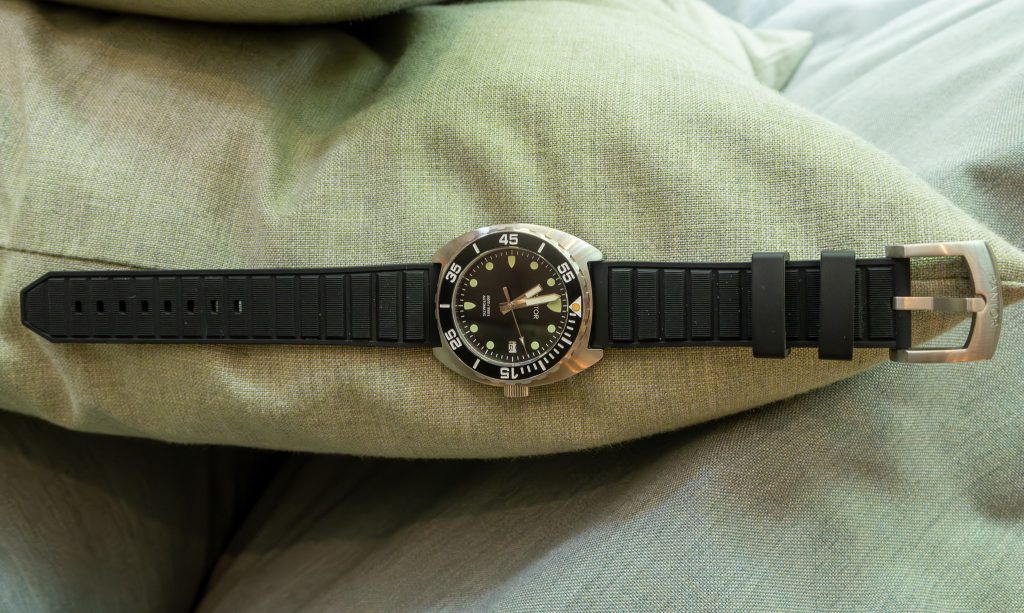
A diver’s real test, for most owners, is the quiet stuff. Morning light, late-night light, the glance while your hands are full. The Sealion’s Swiss C3 Super-LumiNova on the dial markings and hands is the feature that kept proving itself in ordinary life. After being out during the day, the lume had enough presence at night that I stopped thinking about it. That’s the goal. A tool feature should step in when needed, not demand constant notice.
The date calendar complication is the other daily-use anchor. I’m not sentimental about date windows, but I do resent when they’re included as a spec and then treated like an afterthought. Living with the Sealion, the date became part of the rhythm: set it once, then rely on it the way you rely on a well-placed light switch. There was a short learning curve in the first evening of handling the watch and making sure everything was set the way I wanted, the kind of minor calibration that comes with any mechanical watch you plan to wear instead of store.
If there’s a limitation here, it’s not mechanical. It’s social. A rubber strap is comfortable and appropriate for outdoor use, but it narrows the situations where the watch feels seamless.
The Spec Sheet, Actually Lived
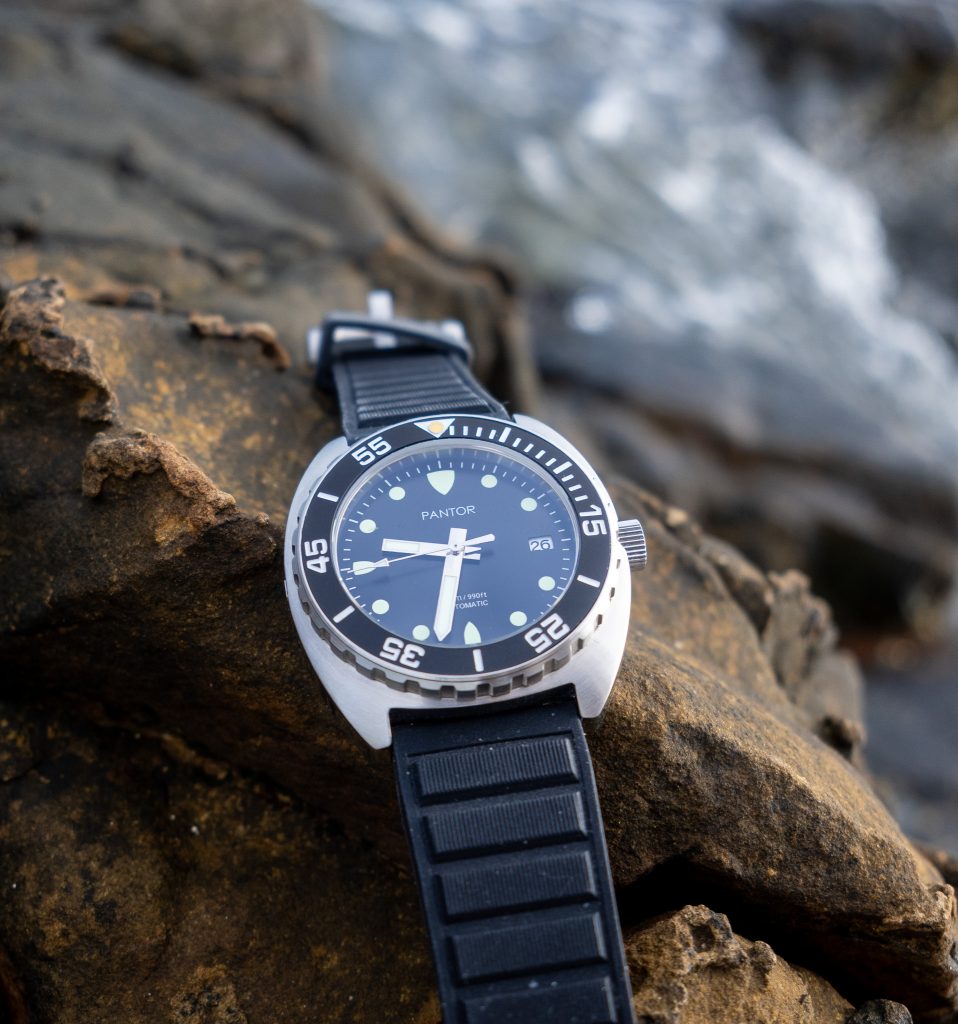
The Sealion is a straightforward stack of choices, and that’s where it earns most of its credibility. The case is 316L stainless steel. The crystal is sapphire. The dial and hands use Swiss C3 Super-LumiNova. Those are material decisions that place the watch firmly in the modern dive-watch baseline. They also tell you where Pantor chose to concentrate resources: in components that affect durability and legibility every day.
Pantor offers two movement options: Japan SII NH35A or Swiss ETA 2824-2. I’m not treating that as a spec-sheet flex so much as a window into manufacturing decisions. Giving buyers a Japanese versus Swiss path is a way of segmenting the same architecture into different price and perception brackets. It’s also a way of letting the brand meet different expectations without redesigning the watch.
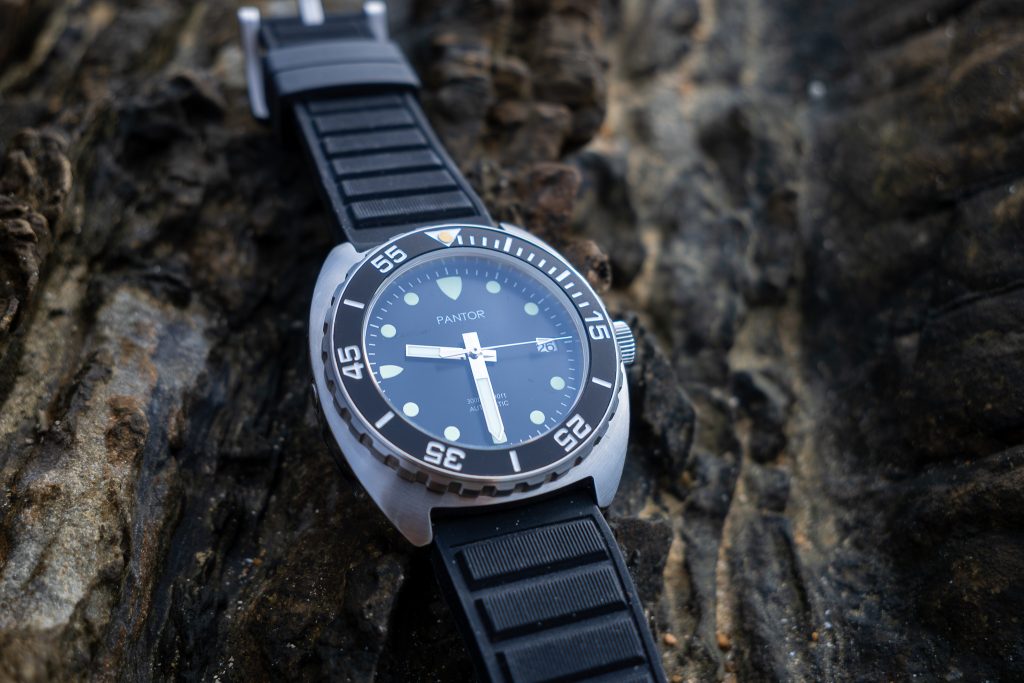
Then there’s the water resistance rating of 300 meters, paired with that automatic valve at 9 o’clock. The combination reads like a watch that wants to be taken seriously as a diver, even if most owners will never get near that depth. In architectural terms, it’s like over-specifying a façade system for weather you’ll never see. Sometimes it’s a waste. Sometimes it’s the point.
Micro-Brand Trust, Written Down
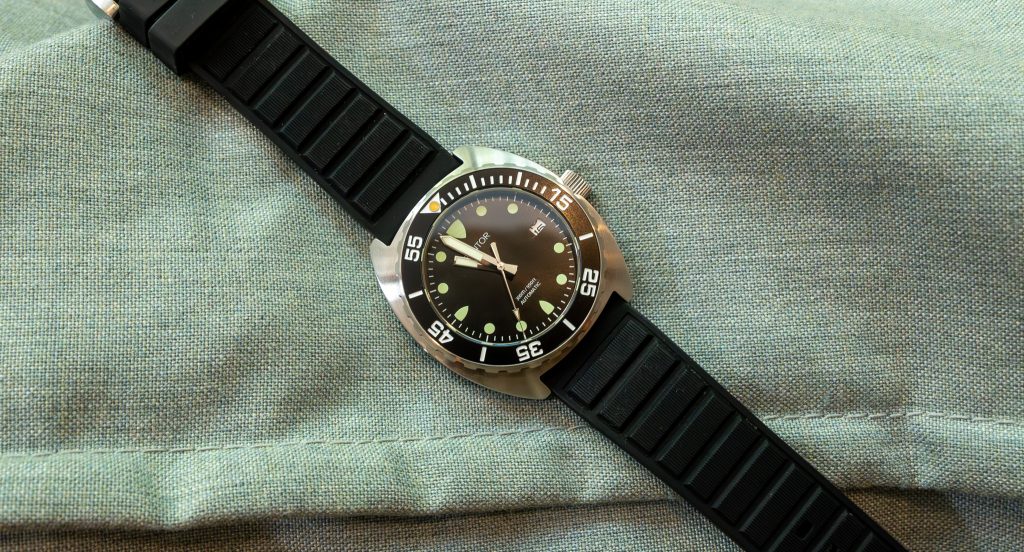
Pantor states that it is committed to continuing the precision and innovation of timepieces and designs watches for people who enjoy diving and individuality. It also states that it places great importance on watch performance and bases each design on increased reliability. Those are broad claims, the kind that are hard to disprove and easy to lean on.
The more concrete signal is the warranty structure. Pantor provides a 12-month warranty, running from the date of purchase, covering defects in materials existing at the time of purchase. The exclusions are extensive: normal wear and tear, misuse, accidental impacts, scratches on the sapphire, bezel, bezel insert, case, and bracelet, plus mistreatment, modification, improper operation, unauthorized repairs, and loss of the watch. The policy also explicitly excludes water infiltration if the crown isn’t fully locked or if the watch is used beyond the depth rating imprinted on the watch.
None of that is shocking in this category, but it clarifies the relationship. The brand is promising baseline manufacturing integrity, not ongoing forgiveness. Pantor also says its professional watchmaker partner has 30 years of experience producing diver watches. That’s a reassuring line, but it’s still a line. The warranty is the operational truth.
Price, Trust, and What You Get

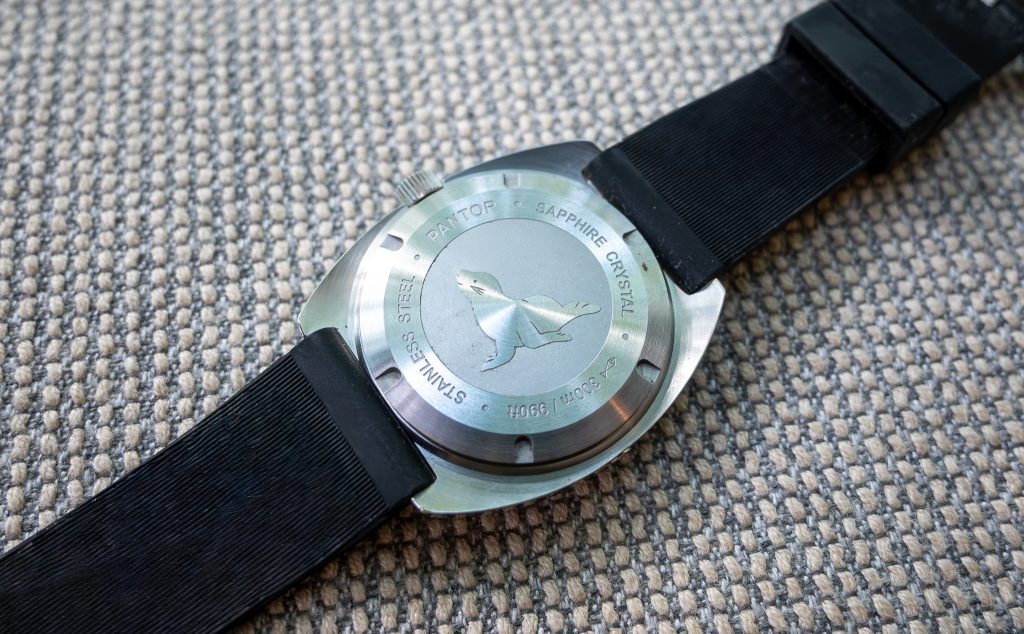
At $539.99, the Sealion is competing in the space where buyers expect sapphire, solid steel, legitimate lume, and a credible movement. On paper, Pantor checks the boxes that matter: 316L stainless steel case, sapphire crystal, Swiss C3 Super-LumiNova, a date complication, 300 meters of water resistance, and two movement options spanning Japan SII NH35A and Swiss ETA 2824-2. That’s a serious materials list for the money.
The question is whether the watch feels like a coherent object or a collection of specs. Wearing it, the coherence mostly comes through in proportion and restraint. The 42 mm diameter and 12.6 mm thickness sit in a zone that reads contemporary without turning cartoonish, and the 29 mm dial opening gives the watch a slightly fortified character, which suits the diver identity.
The compromises are the ones you’d expect from a micro-brand at this price: limited configuration clarity in day-to-day buying, a rubber-strap-only reality for this specific model as I received it, and the occasional friction of availability. Value here isn’t just what you get. It’s how comfortable you are trusting the gaps.
Final Thoughts
 The Pantor Sealion is built around a simple idea: look vintage, behave like a modern tool watch, and keep the materials honest enough that the object can carry the marketing without collapsing under it. In the hand and on the wrist, the fundamentals land. 316L steel and sapphire feel like real commitments at $539.99, not decorative upgrades, and the Swiss C3 Super-LumiNova on both dial and hands supports the watch’s daily usefulness in a way that spec sheets rarely capture.
The architecture is competent: 42 mm across, 12.6 mm thick, a contained 29 mm dial opening, a date complication integrated into the everyday rhythm. The automatic valve at 9 o’clock and the 300-meter rating push the narrative toward “professional,” though most owners will live in the shallow end of that promise.
Buy it if you want a micro-brand diver that prioritizes credible materials and a clear tool-watch identity, and you’re comfortable with a straightforward 12-month warranty and its tight exclusions. Skip it if you need the reassurance of constant availability and a longer safety net.
Late at night, the lume is the part that feels most honest: quiet, functional, and there when you need it.