









Teenage Engineering K.O.II

Some instruments ask you to slow down and plan. Others dare you to keep up. The K.O.II lives in that second category, built for the half-formed ideas that show up while you’re still figuring out what you’re doing with your day. It wants you to grab sound before you even decide why.
Teenage Engineering calls it “the fastest, punchiest and most affordable sampler in its class.” I don’t take slogans personally, but I do take timing personally. Over a few sessions, the K.O.II proved it can move at the speed of a good idea, the kind that shows up while you’re making coffee or killing time before dinner. It’s also a more serious machine than its playful face suggests, sometimes thrilling, sometimes fussy, never generic.
From Pocket Toy to Portable Ritual
The K.O.II’s roots matter because sampler culture is a lineage, not a feature set. This is Teenage Engineering building outward from its own PO-33 K.O!, with more power, expanded sampling capabilities, a reworked sequencer, and punch-in 2.0 effects. That heritage reads as respect for a particular practice: grabbing sound, chopping it into usable shapes, then turning limitation into style.
Teenage Engineering, a Swedish design company founded in 2005 and based in Stockholm, has always treated music gear as industrial design with an accent. Sometimes that accent feels like theater. Here, the design confidence mostly serves the workflow. The K.O.II is marketed as a versatile machine for use in and outside the studio, and it carries itself like something meant to be lived with, not parked.
What I kept coming back to is how the device frames speed as craft, not as a race. The K.O.II doesn’t ask you to disappear into menus. It asks you to commit, to keep moving, to accept that beats are built from decisions. That’s not nostalgia. That’s continuity.
Paper, Plastic, and First Contact
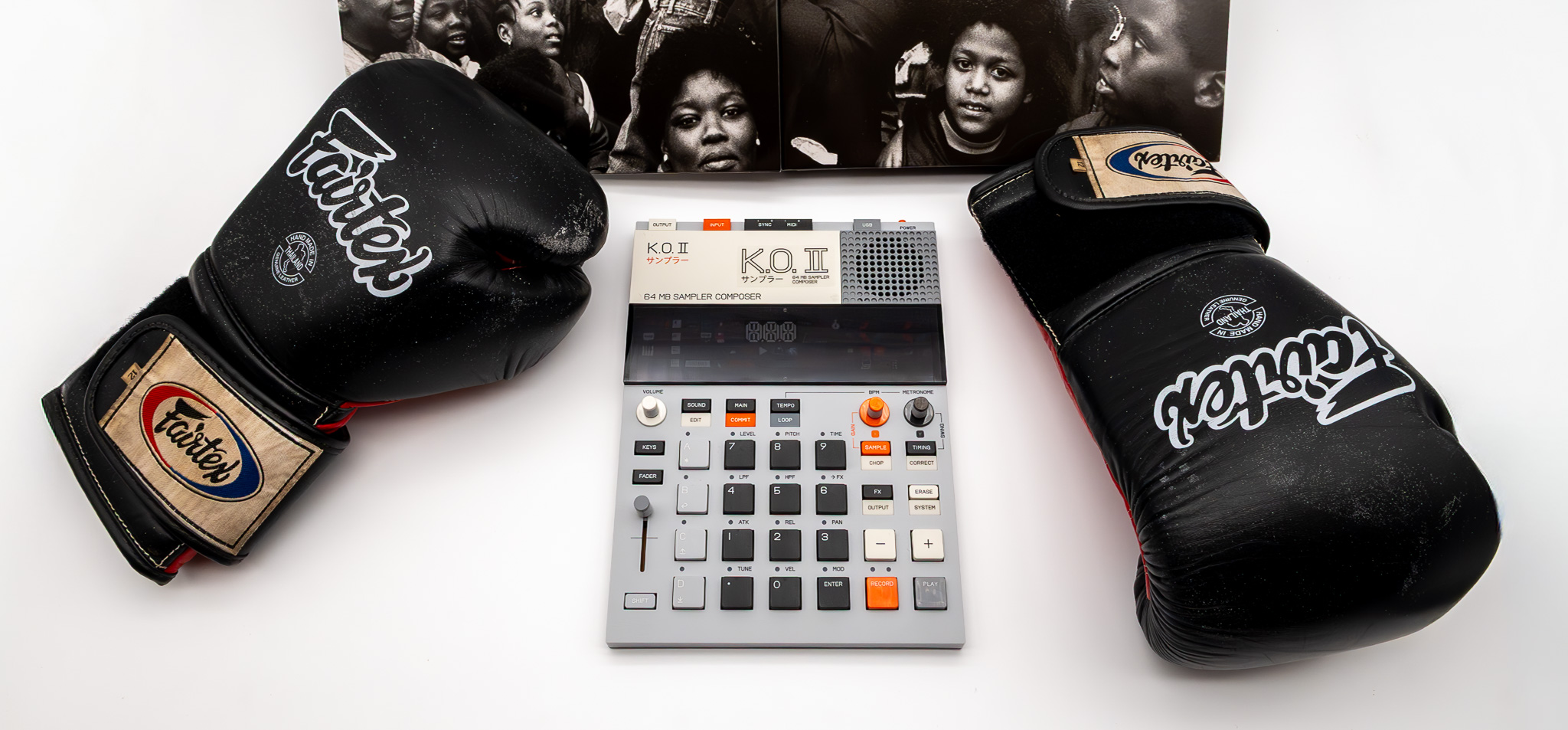
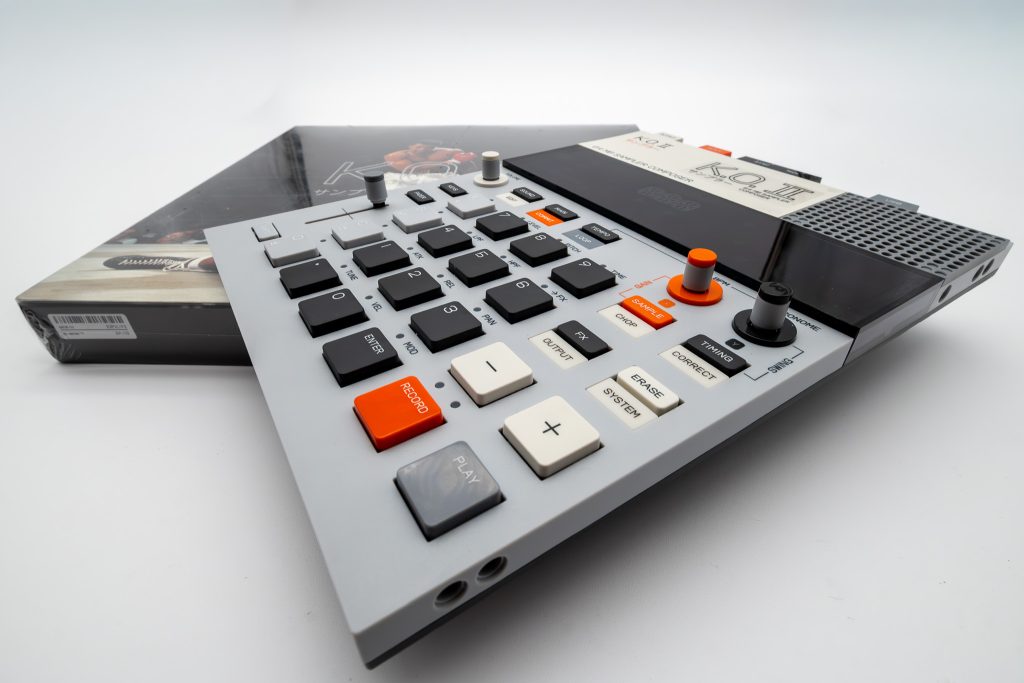
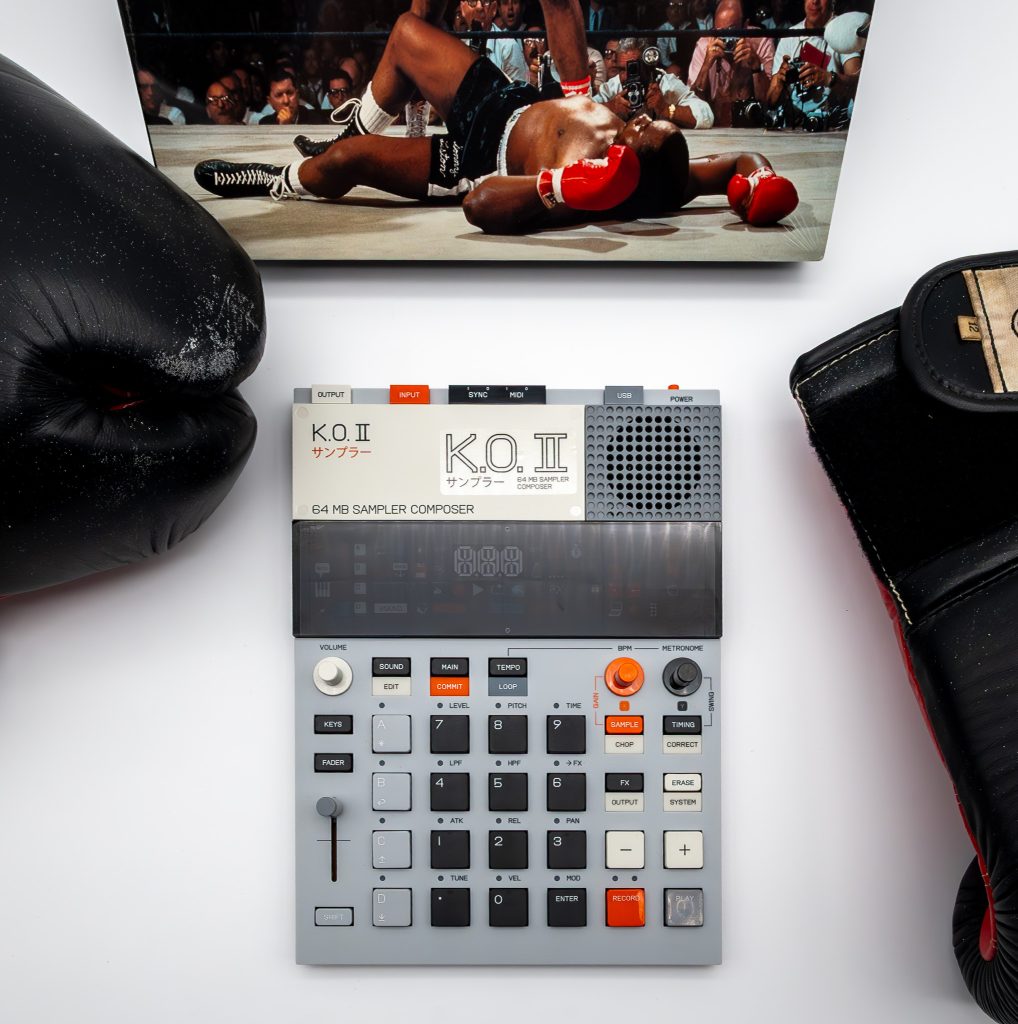
Physically, the K.O.II sits in a sweet spot between toy and instrument, then leans hard toward instrument once you start touching it. The front is dominated by 12 pressure- and velocity-sensitive pads, and a set of “vintage style” keys with a modern touch. Teenage Engineering’s own details are almost comically specific: laser-engraved labeling on the key switches, PA66 polyamide housing, pressure-sensitive film, even an immersion-gold 4-layer PCB. You can call that marketing. You can also read it as a company telling you, plainly, where it spent its attention.
The display is its own little manifesto, described as the “world’s first super segment hybrid display.” In practice, it’s crisp enough to navigate without turning the box into a phone. Late the first evening, in low light, I appreciated that it communicates quickly. I didn’t feel like I was staring into a miniature laptop.
The footprint is genuinely portable: 240 mm × 176 mm × 16 mm. It slips into a bag without drama, and after a couple of pick-up, put-down days, it started to feel like something I could carry the way I carry a notebook. The tactility is the hook. The pads reward light touches and heavier ones with different intent, and that’s where the K.O.II begins to feel rooted, not styled.
Sampling at the Speed of a Thought
As a sampler, the K.O.II is built to reduce the distance between “I heard something” and “I’m using it.” You can record via line-in or the built-in microphone, and Teenage Engineering explicitly imagines you sampling voice, synthesizers, vinyl records, or audio from a phone. That last one is the modern truth. I grabbed audio from my phone, used the hands-free sampling key combination, and the moment felt like the point: no precious setup, just capture and keep going.
Sampling runs stereo or mono at 46.875 kHz with 16-bit resolution. Memory is stated as 128 MB, organized into 999 sample slots, and the device ships with preset samples plus a curated selection of drums, bass, and keys pre-loaded. Those factory sounds aren’t the story, but they do make the first half hour feel immediate instead of empty.
Chopping is where it starts to feel like a K.O.-family instrument. The K.O.II can slice samples live or automatically, and the automatic option becomes a relief when you’re moving quickly and don’t want to pretend every cut is a moral decision. I had a small learning curve assigning the chopped bits where my hands expected them, then it clicked. The internal signal chain uses 32-bit float processing with 24-bit ADC/DAC converters, and while I won’t romanticize numbers, the unit keeps its composure when you start stacking, filtering, and pushing.
A Sequencer You Can Live Inside
The K.O.II’s sequencer has a structure you can actually inhabit. Projects are organized as nine projects, each with up to 80,000 notes. Inside a project you get four groups, and each group has 99 patterns. Patterns have 12 tracks that can be used for samples and MIDI, with variable pattern length per group from 1 to 99 bars. On paper, that can read like bookkeeping. In the hand, it reads like a map.
After a couple of runs, I started treating groups like rooms with different lighting: one for drums, one for bass fragments, one for chopped vocal bits, one for whatever mistake I was turning into a hook. Groups can mix and match patterns on the fly, and Teenage Engineering’s description of instantaneous swapping per group matches what the machine wants you to do: build variations like you’re thinking out loud.
Timing tools feel built for people who actually record themselves playing. You can sequence in free time or quantized with swing, and the instantaneous time correction and erase functions keep you from spiraling into perfectionism. I did, on the second night, lose track of which group held the pattern I liked, then found it again by ear. That’s the point. The K.O.II supports memory as sound, not as file management.
OS 2.0 adds song mode, and that matters here. Suddenly those patterns stop being sketches you abandon and start behaving like sections you can arrange.
Commit Button, Composer Brain
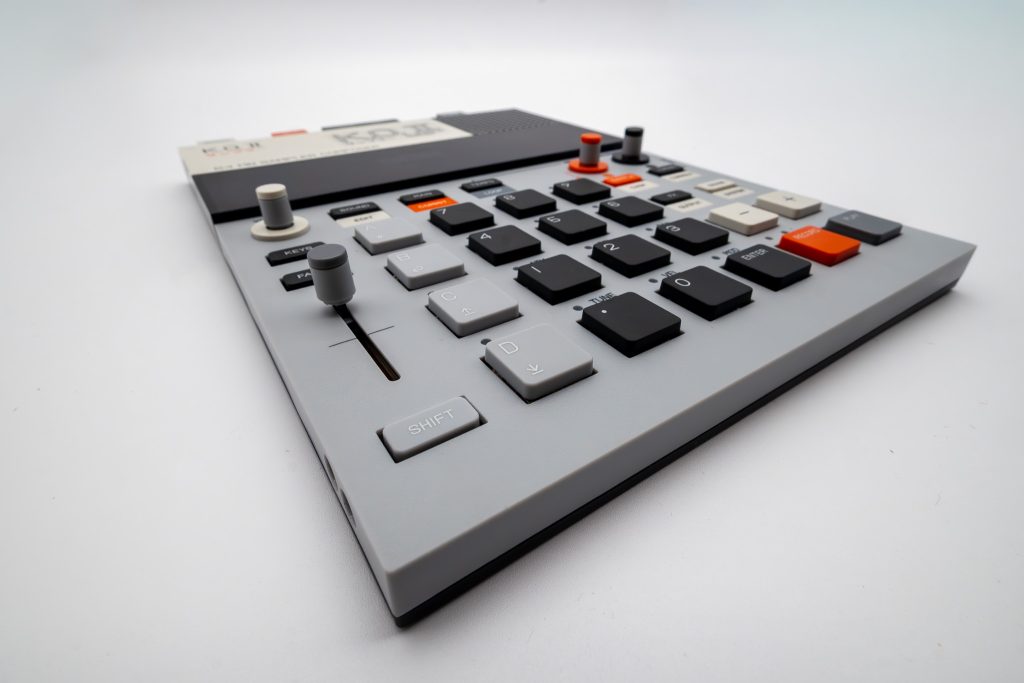
Teenage Engineering gives the K.O.II a commit button, and it’s more than a gimmick. The company describes it as a way to “freeze” a point in time and move on, adding verses or breaks in real time while playing. The first time I used it correctly, I felt the device’s philosophy land in my hands: stop polishing, capture the moment, keep moving. There’s also an “instant commit” function aimed at quickly constructing beats during composition, and the K.O.II does reward that kind of decisive momentum. Joie de vivre, but make it rhythmic.
OS 2.0 expands the K.O.II’s scope with song mode for arranging tracks up to 9,801 bars. That number is excessive in the best way, like a dance floor that stays open longer than you planned. Song mode chains scenes together across positions 1–99, each position holding a scene, and the maximum length is determined by the longest pattern in each scene. Once I started using scenes intentionally, the unit shifted from “portable sketchpad” to something closer to a complete composition tool.
There is, inevitably, a touch more interface to learn. Song mode asks you to think in sections and returns, not just loops. The payoff is that your beat no longer has to be a moment. It can be a track with a spine.
Effects, Resampling, and the Rabbit Hole
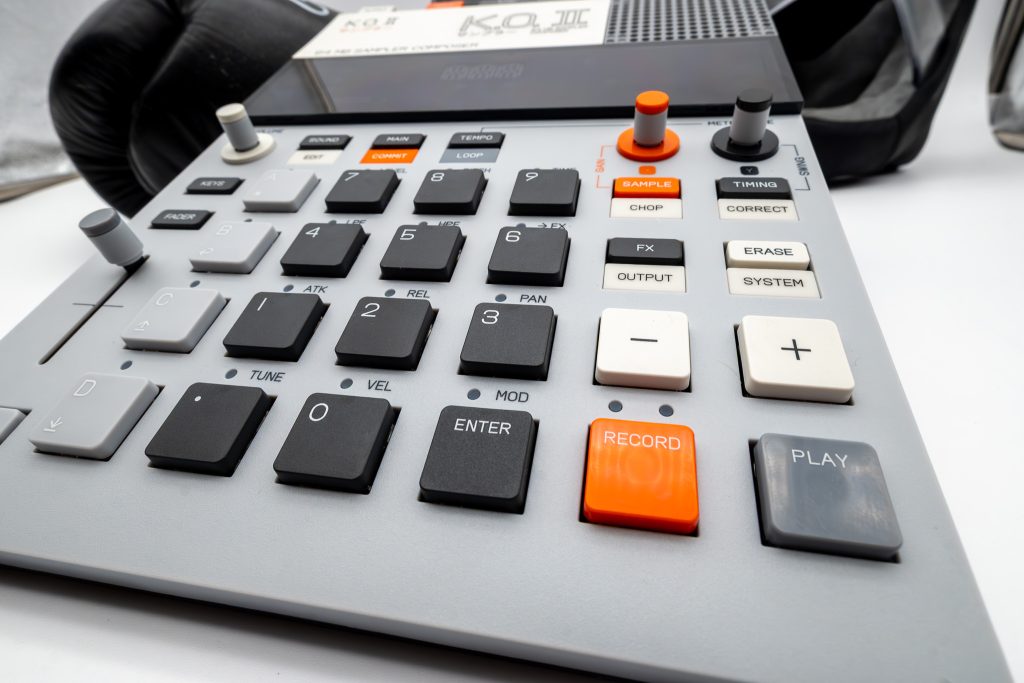
Effects are where Teenage Engineering’s playfulness can either become your signature or your distraction. The K.O.II includes punch-in FX 2.0 that are pressure-sensitive, and the pressure part is real. Press a pad lightly and the effect feels like a gesture. Press harder and it becomes a statement. The device also has six built-in send effects and a master compressor, plus the ability to tweak and automate parameters like filter and pitch. It’s a lot, but it’s cohesive. Nothing feels bolted on for a spec sheet.
OS 2.0 adds sidechain, and it’s note-triggered: one sound can control the volume of another, the classic kick-and-bass conversation without turning the groove into math. When I set it up, the rhythm tightened in a way that felt musical, not clinical. OS 2.0 also brings resampling, chopping, and an optimized playback engine with increased polyphony, along with extended MIDI support. Polyphony is specified as 16 mono or 12 stereo voices.
Resampling is the feature that turns the K.O.II into its own closed loop of ideas. You can sample any sound source on or off the unit, process it through effects, and create a new sample. That’s sampler culture in miniature: take a thing, transform it, make it yours.
The one caution is psychological, not technical. With punch-ins, sends, compressor, sidechain, automation, and resampling, you can build a whole world and never finish a song. The K.O.II stays fast, but you still have to choose a direction.
Wires, Batteries, and Real-Life Use
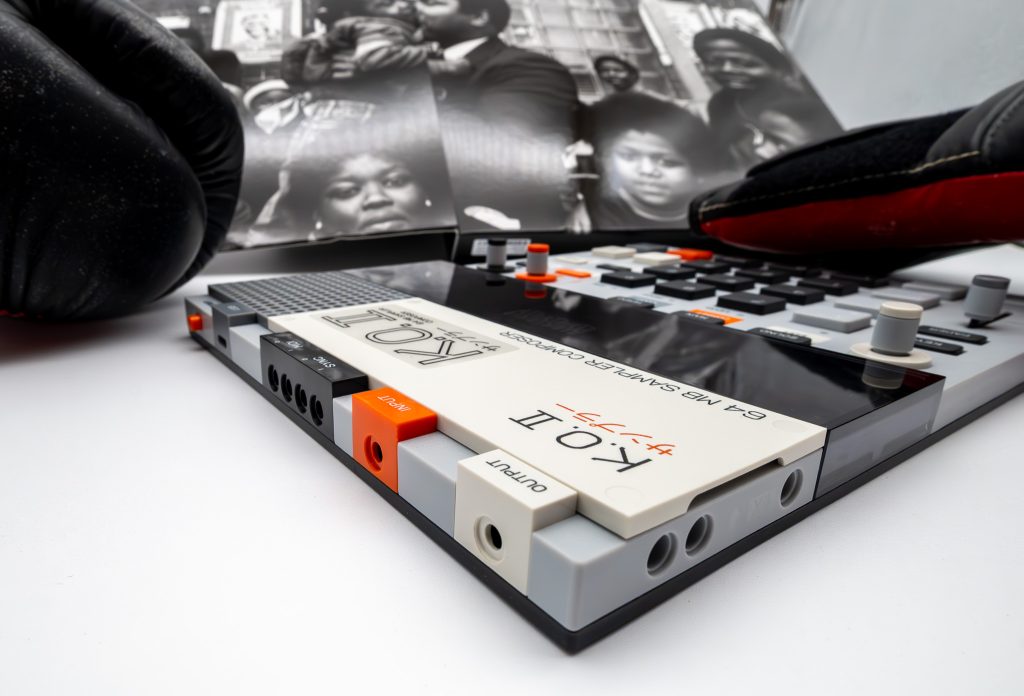
Teenage Engineering pitches the K.O.II as usable in and outside the studio, and this is where it earns that promise. Power can come from four AAA batteries or via USB-C. I used it away from my desk, relying on the built-in speaker more than I expected. The speaker isn’t a studio monitor and doesn’t need to be. It’s there to keep the loop alive while you’re moving around the house, or to audition an idea without putting on headphones. The built-in microphone plays a similar role: quick capture, minimal ceremony.
Connectivity is generous for a box this size. You get USB-C, MIDI output, MIDI input, sync output, sync input, audio input, and audio output. MIDI I/O uses TRS Type A connectors and is specified as MMA compliant. Sync in and out supports 8th-note, 16th-note, or Sync24 clock rates with start/stop control. The first time I patched it into another piece of gear, I did have a small, familiar moment of doubt about TRS Type A versus Type B, then confirmed the standard and moved on. Once locked, it behaved like a proper part of a setup, not a novelty.
Loop mode, derived from Teenage Engineering’s OB-4 with adjustable length and slide, adds another performance-forward lane. It’s the kind of feature you touch when you want movement without destroying the beat.
On the computer side, EP-sample-tool for Mac or PC handles backup and restore, sample trimming and customization, and drag-and-drop file transfer. After I connected via USB-C and started moving my own files over, the K.O.II felt less like a sealed toy and more like a small studio with doors that open.
Cost, Caveats, and Collectibility
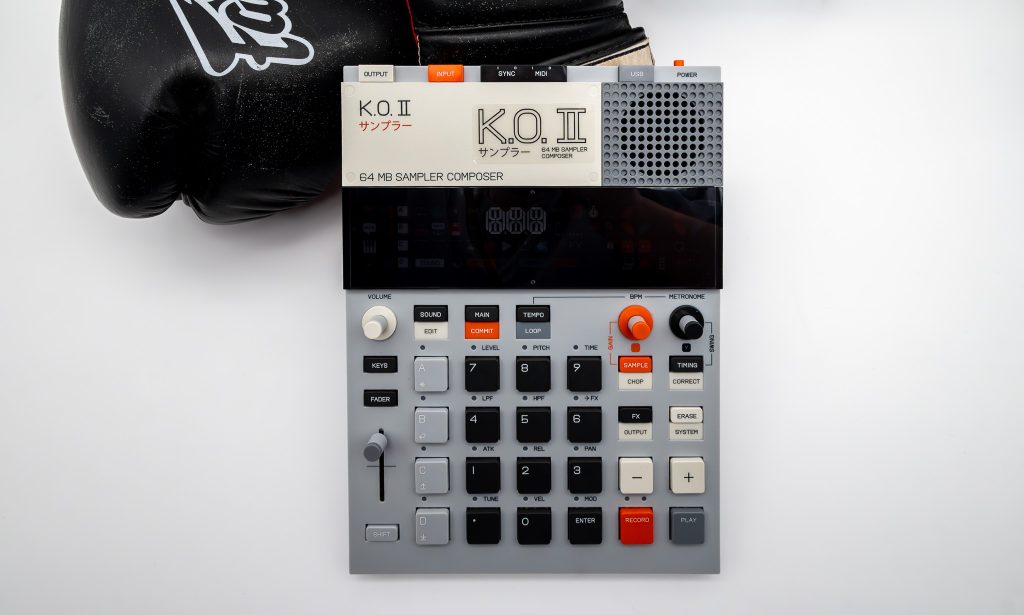
At $329 on Teenage Engineering’s site, the K.O.II sits in an interesting place. It’s priced like a serious creative tool, not an impulse accessory, and Teenage Engineering calls it the “most affordable sampler in its class.” I can’t audit the whole class from my desk, but I can say this: the K.O.II gives you a lot of sampler for the money, especially once OS 2.0 turns it into a fuller composition environment with song mode, resampling, sidechain, increased polyphony, and extended MIDI support.
Value, though, is never only features. It’s trust. Early in my use, I hit one minor firmware oddity that resolved with a restart, the kind of glitch that reminds you this is a small computer with pads. I also noticed the fader occasionally felt inconsistent under my finger, not broken, just a little uneven in a way that made me pay attention. Those are my two notes in the margin, and they land in a broader context: the K.O.II’s early run carried a reputation for issues with things like the internal speaker, the fader, or firmware behavior, and the launch period left some buyers wary. Teenage Engineering’s customer support responsiveness has also been criticized in that same orbit, which matters when you’re deciding how much patience you’re willing to keep in reserve.
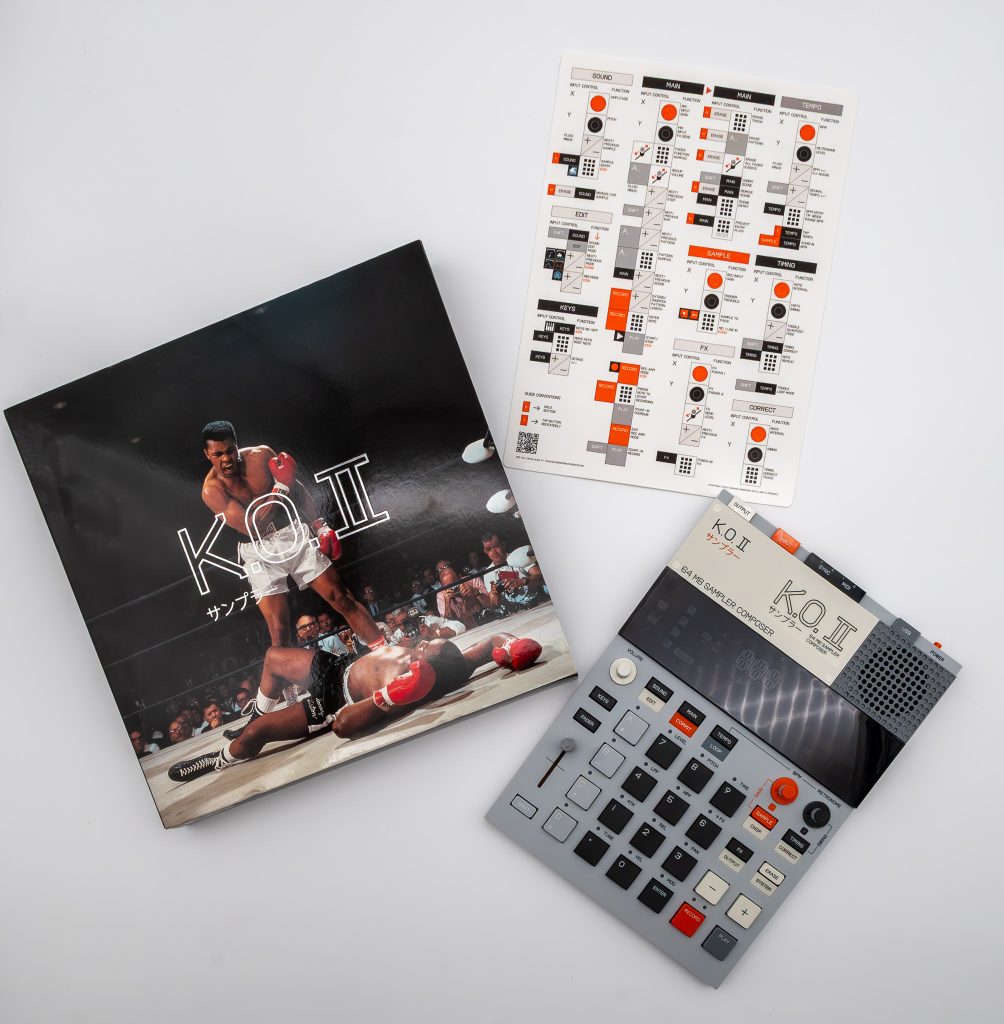
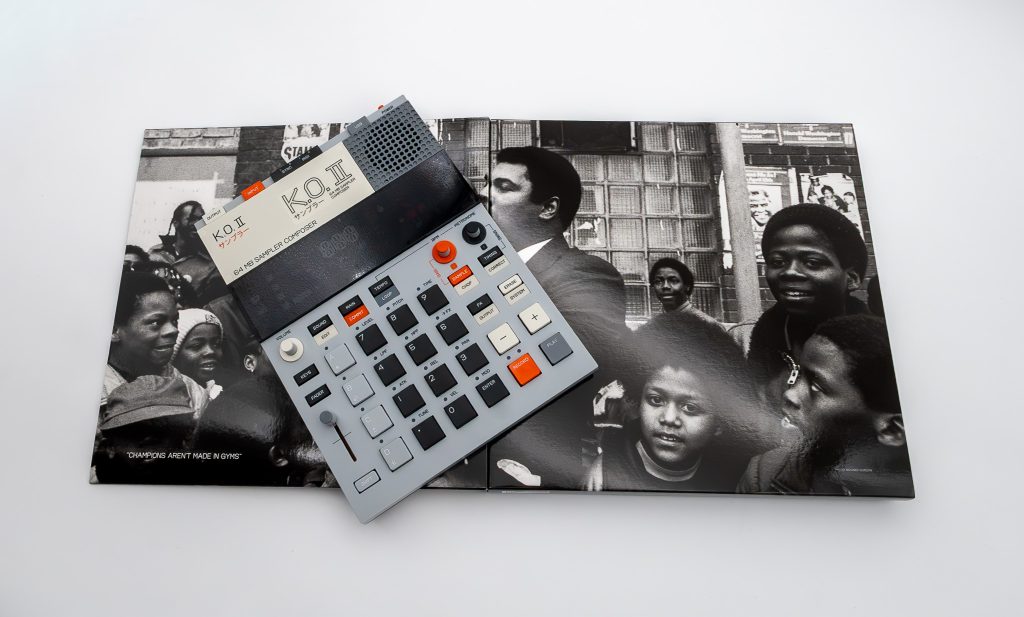
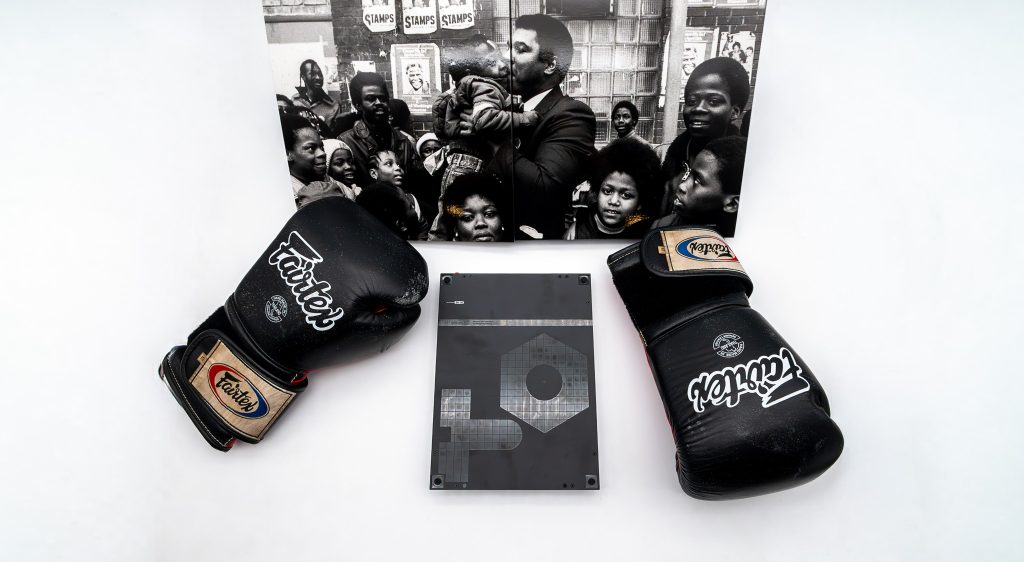
Practical people will also think about protection. The fact that third-party makers like Decksaver sell fitted covers and cases labeled for the EP-133 K.O.II is a small reassurance that the form factor is stable enough to build around. Teenage Engineering even leans into collectability with a “K.O.II: the champ edition” package that includes the unit, a 10 inch vinyl record, and Muhammad Ali artwork. It’s a reminder that this company sells culture as much as circuitry.
Final Take
The EP–133 K.O.II feels like Teenage Engineering taking sampler tradition seriously, then translating it into a contemporary object you can carry. The design has character without turning into costume. The “super segment hybrid display,” the pressure- and velocity-sensitive pads, the vintage-style keys with their laser-engraved certainty, all of it supports a workflow that wants you to act, not browse. Sampling is immediate via line-in or the built-in mic, chopping can be live or automatic, and resampling makes the box feel like a living archive of your own decisions. The sequencer’s architecture, nine projects with four groups and deep pattern capacity, is structured enough to build real music while still feeling playful. OS 2.0 pushes it into more complete territory with song mode, sidechain, increased polyphony, and extended MIDI support, and it mostly avoids turning power into clutter.
Buy it if you want a portable sampler that can be a sketchpad one minute and a structured arrangement tool the next, and if you like instruments that reward commitment. Skip it if you need absolute, boring reliability from day one, or if any hint of early-run instability makes you anxious. The K.O.II’s raison d’être is momentum. When it’s working the way it should, you feel that momentum in your hands before you hear it in the speakers.