







Rayavadee Resort Review

The first thing that hits you isn’t the beach or the boat or the promise of a welcome drink. It’s vertical. Walls of limestone rising straight out of the water, trees clinging to their sides, long-tail boats carving lines across the bay like moving punctuation marks. Somewhere in that composition, half-hidden behind palms and rooflines, is the resort—less a standalone object than a series of clearings stitched into a national park. By the time my boat curved toward the peninsula and the pointed roofs finally appeared, the tagline “Like Nowhere Else on Earth” felt less like branding and more like an accurate geographic statement.

Rayavadee occupies the tip of the Phranang Peninsula, in the heart of Krabi’s Phranang Peninsula Marine National Park. There’s no road access to the resort; you come in from Krabi International Airport by car to a pier, then transfer to a boat for the last leg. That physical cutoff from the mainland, combined with national park protections, shapes almost every design and operational decision here, from the car-free circulation through the gardens to the way the resort negotiates public beaches and protected wildlife.


I checked in around mid-afternoon on a humid day, shoes still gritty from the pier. Within an hour I’d walked from my Deluxe Pavilion through palms to Railay Beach, watched monkeys move through branches near the paths, and found the cave that hides one of the property’s restaurants. By that first evening, it was clear this isn’t just a pretty backdrop with a conventional luxury hotel dropped on top. Rayavadee is an exercise in how to place a high-end resort inside a fragile landscape without pretending to own it outright. The question is whether the architecture and spatial planning live up to that ambition and justify the price.
Reaching the Peninsula, Not Just a Resort
Krabi Province is already known for its dramatic topography, but the Phranang Peninsula feels like someone tightened the focus. Rayavadee sits at the tip, surrounded on three sides by water and on the fourth by cliffs and forest. You can reach it only by boat because there’s no direct road access to the resort itself. From Krabi International Airport, a van takes you to a pier in about twenty minutes, then a speedboat runs across open water for roughly another twenty.


That split journey does change how arrival feels. Instead of rolling through a gate and up a driveway, you glide along the coastline, watching the peninsula grow from a dark line to articulated cliffs and tree canopy. The pointed roofs of the pavilions appear last, tucked back in the greenery. Luggage is quietly taken from the van at the pier and reappears outside your pavilion later; on the boat, you worry about your bag getting splashed more than logistics.
Stepping off onto the resort’s landing area, there’s no car noise, no parking lot, no shuttle buses. Circulation here is on foot, through a network of garden paths. It fits the national park context but it also means you live at a walking pace. The paths link three different beaches: Railay, Phranang, and Nammao. Over the course of my stay I used all three, often taking one route out in the morning and a different one back in the evening, gradually building a mental map of how the resort sits within the peninsula.

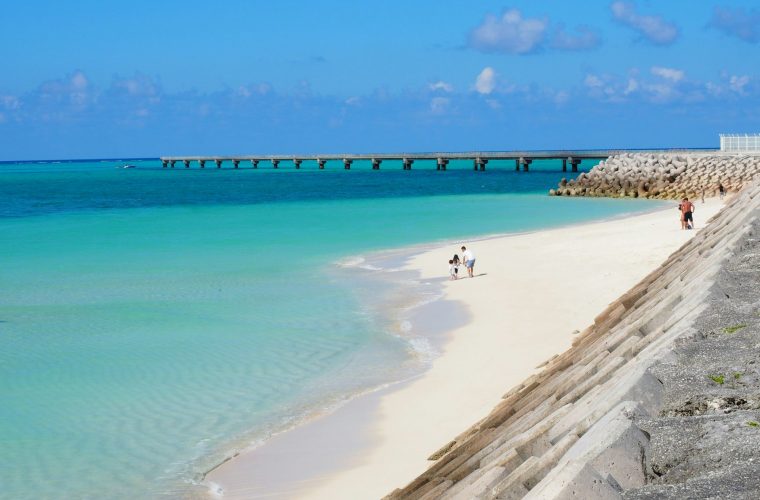
The surrounding area isn’t a private enclave. The beaches in front of Rayavadee are public, and during the middle of the day I watched a steady flow of day boats dropping visitors at Railay and Phranang. That’s the trade-off of this location: you get ringside seats to one of Thailand’s emblematic coastal landscapes, but you share parts of it with non-resort visitors. The property leans into that reality instead of walling it off, which feels appropriate given the national park designation, but it’s important context for anyone expecting gated-island seclusion.
Building Quietly Between Jungle and Sea
Rayavadee’s architecture tries to occupy a middle ground between traditional Thai forms and contemporary resort planning. The 94 pavilions and 7 villas are all free-standing, typically two storeys, with steeply pitched, pointed roofs that echo vernacular Thai architecture rather than copying it literally. From a distance the profiles give a coherent language to the property; up close you see that the real work is in the material transitions between manicured resort and unruly jungle.


Public spaces are spread out. There’s no grand lobby atrium announcing itself as the center of gravity. Instead you move through a series of open-sided pavilions, terraces, and garden clearings: the arrival area, the activity centre with boats and excursion desks, restaurant clusters near different beaches, the spa tucked slightly inland. That decentralized approach respects the linear nature of the peninsula and keeps built mass low, but it also means circulation is a constant part of the guest experience. I found myself thinking less in terms of “going to the lobby” and more in terms of moving along axes: pavilion to Railay, pavilion to Phranang, pavilion to pool.


Materially, the resort favors natural finishes: timber structures, stone or tile underfoot, plastered walls in warm neutrals. Surface treatments feel solid rather than faux. Wood railings show some patina from sun and salt air, which is appropriate for the climate. In shaded walkways, the combination of stone and timber keeps temperatures bearable; in more exposed terraces I noticed how quickly surfaces heat up under afternoon sun, an unavoidable condition in a tropical marine park.


The most striking public-space intervention is The Grotto, the restaurant set under a seaside cave formation at Phranang Beach. Here the architecture steps back and the rock formation becomes the primary enclosure. Dining tables sit on sand; you look out between stalactites at the water and boats. It’s a good example of the resort using existing natural “architecture” rather than over-building. Lighting is kept low in the evening, with the cave walls doing most of the atmospheric work.
Across the resort, lighting strategy favors ambiance over brightness. Garden paths use low, warm fixtures that pick out foliage but leave the canopy dark. At night, sitting on my pavilion terrace, the sense was of being in a clearing, not a brightly lit campus. You hear monkeys and birds more than people. Acoustically, the absence of vehicles matters: sound here is surf, wildlife, and the occasional long-tail boat engine cutting across from the public beaches.

The architecture doesn’t try to be iconically modern or historically exact. It’s more about pushing built mass behind the tree line and creating a series of habitable clearings between rock and sea. As an architect by training, I appreciated the restraint. As a guest, I noticed how that restraint translated into shade, privacy, and a sense that the resort acknowledges it’s borrowing space from a larger landscape rather than claiming it.


Two Floors of Privacy in the Deluxe Pavilion
My base was a Deluxe Pavilion, the resort’s core room type and a good barometer for whether Rayavadee delivers value beyond its highest-end villas. These are two-storey, free-standing units set within tropical gardens, each with a terrace and a separate living area.
 You enter at ground level into the living space: a sitting area with sofa and chair, a low table, and built-in cabinetry that hides a flat-screen TV, minibar, and tea and coffee setup. There’s enough floor space to drop a suitcase without tripping over it, and the terrace extends this zone outdoors via sliding doors. I kept my larger bag open along one wall downstairs and used the stairs as a visual divider between “storage” and “actual living area,” which is not how the architect drew it but worked in practice.
The staircase leads up to the bedroom, which occupies most of the second storey. The bed is a king, dressed in high-quality linens with a weight that felt appropriate for the climate: light enough to avoid overheating but substantive enough that you don’t feel like you’re sleeping under a sheet. There’s another TV upstairs, a wardrobe, and access to the ensuite bathroom, which runs along one side of the plan. The separation between living and sleeping works well if you treat the pavilion like a small house rather than a single hotel room. Coming back from the beach, I’d leave sandy items downstairs near the terrace, shower upstairs, and then only descend again once I felt “de-sanded.”
Natural materials dominate the interior palette: timber flooring or trim, solid-feeling cabinetry, stone or tile in the bathroom. I checked edges and joins in a way only an architect would; construction quality looked consistent, with no obvious shortcuts. The bathroom uses stone or ceramic tile on floors and walls, with a combination of tub and shower. Fixtures felt durable, not overly delicate, which is important given the humidity and salt in the air.


Light control is handled by curtains rather than heavy blackout systems. In the morning, filtered light came through the bedroom windows, creating a soft, greenish glow from the surrounding foliage. It’s pleasant if you like waking up with the sun; if you prefer cave-like darkness, you’d need an eye mask. Air conditioning handled the thermal load well; the upstairs never felt stuffy despite being the upper level. It took a few minutes to understand which switch controlled which light, a common hotel ritual, but once set I barely adjusted anything.
Wi-Fi is complimentary across the resort, and in the pavilion it was generally fine for email and streaming. Stepping out onto the terrace, the signal occasionally dipped, which matches the garden-heavy, low-infrastructure environment. I found that if I set up with my laptop at the downstairs table, I got the most stable connection. In a national park setting, that felt like a fair compromise.
The two-storey layout has trade-offs. Having to go upstairs to reach the bathroom from the living area can feel inconvenient if you’re spending most of your time downstairs. At the same time, the vertical separation gives a clear distinction between day and night zones and helps the pavilion feel more like a private retreat than a standard room. For couples or solo travelers this configuration works well; for someone with mobility limitations, the stair reliance would be a problem.
For a high-end resort at this price point, I look for honest materials, good joinery, and spatial planning that respects how people move through space. The Deluxe Pavilion clears that bar. It isn’t extravagant, but it feels considered and in keeping with the barefoot luxury position: you can step in from a sandy path, drop your shoes on the terrace, and the interior surfaces feel robust enough to handle that rhythm without anxiety.


Human Pace, Barefoot Service
Service at Rayavadee leans toward attentive and personalized without becoming stiff. On arrival, front desk staff handled the check-in formalities efficiently, explaining the basics of the property layout and the boat schedule from the pier. The tone was conversational rather than scripted, which fit the environment; it would be odd to have ultra-formal, white-glove theatrics in a place where many guests walk around in flip-flops.

Housekeeping came through in the late morning, which allowed time for a first coffee on the terrace and a walk to the beach before returning to a made bed and refreshed towels. Turn-down service happened while I was at dinner both evenings, reducing the room back to an ordered state, curtains drawn, soft lights on. One small but practical detail: flashlights are provided in the pavilions, acknowledging that garden paths at night are kept dim.
I tested the concierge services by asking about boat trips to nearby islands and nature walks in the surrounding national park. Staff at the activities centre walked me through options, including resort-run speedboat excursions to places like Phi Phi and Bamboo Island, and suggested departure times to avoid the heaviest day-visitor crowds. They also pointed out nature trails I could access from the property, with advice on when wildlife tends to be most active.
Room service is available twenty-four hours, and a late-night snack order arrived promptly, still hot and presented on proper tableware rather than flimsy trays. Requests for extra water and more mosquito coils were handled quickly; the mosquitoes are a reality in this environment, especially around dusk. Staff placed additional coils on the terrace, and I learned to apply repellent before heading to dinner.
The overarching service philosophy feels oriented to letting you inhabit the resort at your own pace. People greet you along the paths, but no one hovers. Staff recognize returning faces by the second day, which creates low-key familiarity. For a property where the rate puts you squarely in luxury territory, that blend of competence and informality fits the barefoot brief.
Four Kitchens, One Limestone Stage
Rayavadee runs four main restaurants, each tied to a particular piece of the site: Raya Dining, Krua Phranang, Raitalay Terrace, and The Grotto. Together they form a dining circuit that engages both the resort’s landscape and its culinary ambitions.


Breakfast takes place at Raya Dining, in a structure with indoor and terrace seating. The buffet runs from around 7:00 to 11:00, which gives a generous window. I went mid-morning both days, when the light was softer and heat still manageable. The selection leans broad international: made-to-order eggs, pastries, fruit, Asian options, and more. Quality held up across categories, with fresh fruit and good bread standing out. Coffee met my high standards; it wasn’t third-wave specialty, but it wasn’t bland. Sitting near the edge of the terrace, you can see gardens and catch glimpses of cliffs rising in the distance.


For Thai cuisine, Krua Phranang sits near Phranang Beach. Here the architecture uses timber and open walls to frame views of the sea and limestone formations. I ate there one evening, choosing dishes built around local ingredients. Flavors were assertive but balanced. Dining with a view of the cliffs as darkness fell and the last day boats departed anchored the meal in place in a way that generic hotel Thai food never does.
Raitalay Terrace overlooks Railay Beach, with an emphasis on international and Asian dishes and a strong seafood component. Lunch there meant watching the ebb and flow of activity on the public sand while eating something far more composed than what you’d pick up from a beach stall. The architecture is less dramatic than Krua Phranang or The Grotto but functional, with views and shade as the main design drivers.

The Grotto is the headline experience: a restaurant tucked under the overhang of a natural seaside cave formation. I booked dinner there on my second evening. Sitting with my feet in the sand under the rock ceiling, looking out at the water, it felt like the resort’s thesis condensed into a single spatial moment: built intervention kept to a minimum, letting the natural enclosure and ambient soundscape do the heavy lifting. Lighting was soft and unobtrusive, mostly from low fixtures and candles. Food at The Grotto plays supporting role to the setting, which is fine; you come here for the cave and the way the space frames the sea.
Across all venues, service was on par with the rest of the resort: responsive, warm, and informed. Menus emphasize locally sourced ingredients and include organic and lighter options, which ties into the resort’s stated sustainability focus. Prices reflect the status and isolation of the property; you’re not popping out to a cheap street-side alternative, but you are getting carefully composed meals in architecturally and geographically distinct settings.


Sharing the Iconic Beachfront
One of the more unusual aspects of Rayavadee is how it navigates beach access. The sand in front of the resort, including Railay and Phranang, is public. By regulation, Rayavadee can’t place its own sun loungers or umbrellas on the beach. That constraint is non-trivial for a high-end beachfront resort whose guests typically expect to occupy the front row.


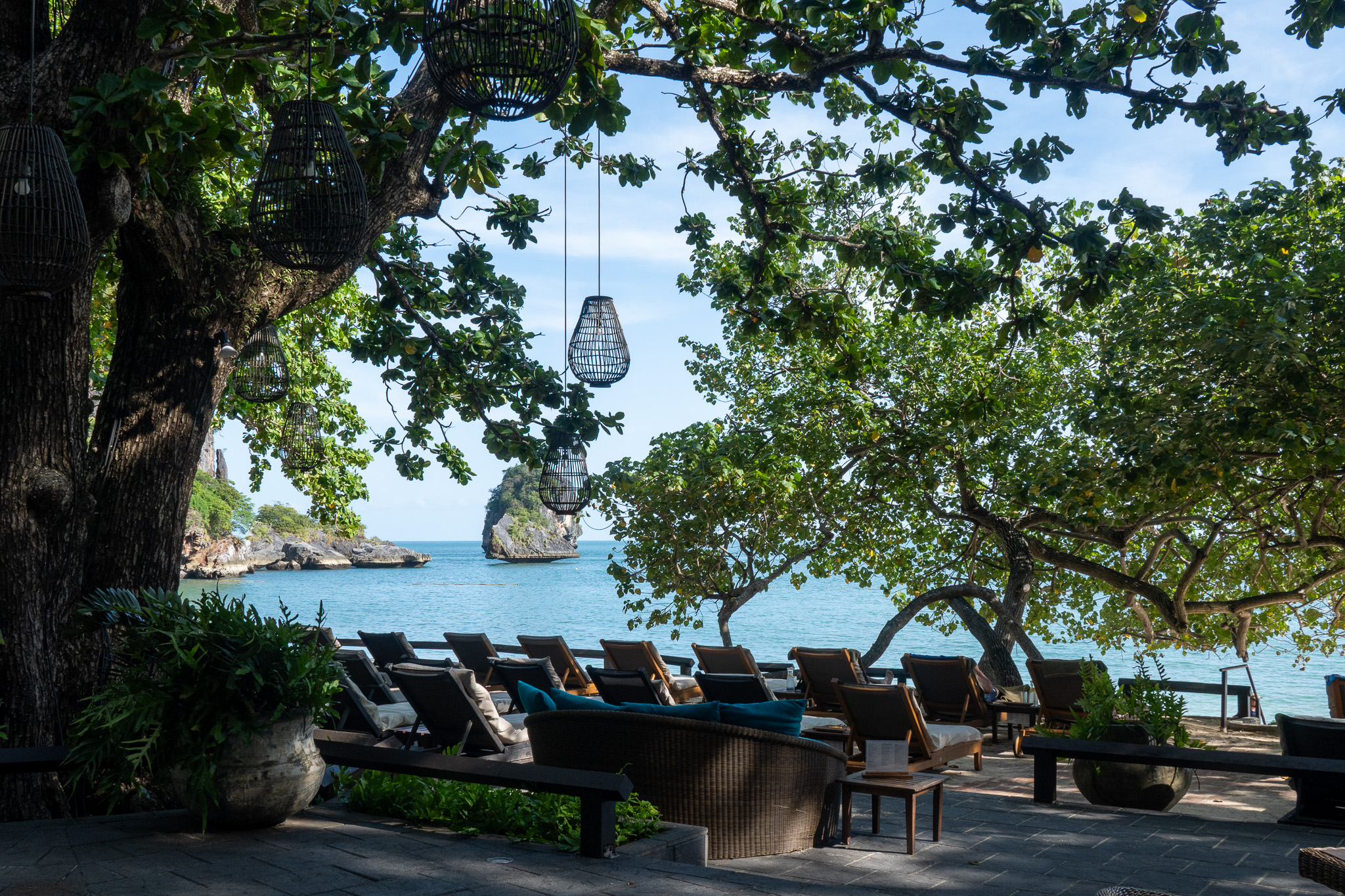
Sun loungers are instead concentrated around the main pool near Railay Beach and in an elevated area overlooking Phranang. The pool itself is a large outdoor structure with sea views, a shallow children’s section and a whirlpool zone. I spent time there both late morning and late afternoon. The positioning works: you get uninterrupted views of sea and cliffs, with immediate access to loungers, towels, and umbrellas, but your feet remain on resort property, not public sand.
The elevated deck near Phranang quickly became a favorite perch. From up there you look down at the public beach activity without being in the middle of it. In the middle of the day, especially around holidays, the density of day-tripper boats on Phranang can be striking. Groups stream off long-tails, walk across the sand, photograph the cliffs and cave, then leave. From the water line, it can feel busy. From the deck or pool, you have a more controlled, resort-calibrated environment with that spectacle as a backdrop.
I alternated between walking barefoot along the actual beach and retreating to the pool deck or my pavilion terrace. The lack of loungers on sand initially felt like a limitation, but in context it reflects the reality that the resort sits within a national park and must share the coastline. Beach towels are provided, so if you want to throw one down on the sand, you can, but you’re in a more mixed-use public setting when you do.
The resort’s handling of this arrangement feels thoughtful. They don’t fence off access or pretend the public doesn’t exist. Instead, they invest in the pool and elevated areas as primary lounging zones. For guests who prioritize private, furniture-lined beaches, this could be a sticking point. For those comfortable with a little permeability between resort and public sphere, it reads as an honest response to local regulations rather than a design flaw.
Spa Days, Sea Trips and the Surrounding Park
As a resort embedded in a marine national park, Rayavadee’s amenities extend outward as much as inward. The Rayavadee Spa sits back from the beaches in a garden setting, with treatment rooms, a sauna, and a menu that spans massage, facials, body wraps, scrubs, and some Ayurvedic-inspired options. I booked a late-afternoon massage after a day spent between the pool and a walk to Phranang.


The spa design follows the resort’s language: timber, stone, soft lighting, and a focus on enclosure without feeling sealed off from nature. Lying in the treatment room, you hear filtered sounds of birds and occasional rustle in the foliage. Technique was skilled and pressure adjusted easily to preference. For someone who doesn’t live for spa days, I walked out looser than I went in and without the sense that the setting had been over-staged.
The activities centre, located near the water, coordinates excursions into the surrounding seascape. Rayavadee runs its own fleet of speedboats, which simplifies logistics for visits to nearby islands such as Phi Phi and Bamboo Island or deeper into Phang Nga Bay. I opted for a half-day outing; staff timed the departure to hit sites before they filled with other boats, and being able to step from resort path to resort boat was a clear benefit of how the property integrates water access into its core layout.
On land, there are at least two outdoor tennis courts and squash courts, along with a fitness centre. I walked past the courts in the morning and saw a few people playing before the heat built up. The gym has the expected cardio and weights; I used it briefly in the early evening, mostly to stretch after time on the boat. It felt adequately equipped and well maintained, if not a design highlight in its own right.


Nature walks are encouraged, with the resort promoting paths through forests and along the coastlines of the surrounding national park. On my first full morning, I followed a trail from within the property boundary into denser vegetation, spotting monkeys and exotic birds along the way. That continuity between curated gardens and wilder parkland is one of the pleasures of the site.
For those interested in food beyond the table, cooking classes focusing on Thai cuisine are available. I didn’t participate this time, but seeing groups in an open demonstration area chopping herbs and stir-frying while cliffs loomed in the background reinforced how much the resort’s programming is anchored in its Thai and marine context.


What You’re Paying For Here
Rayavadee operates at the top end of Krabi’s resort market, and the rates reflect that. You’re paying for a national park address, boat-only access, and a design that keeps built mass low and pavilions generous in space. The question is whether the overall package justifies that premium.
On the cost side, you have the room rate for a Deluxe Pavilion, dining within a closed ecosystem where off-site options require coordination, and extras such as spa treatments and excursions. There is some mitigation through direct booking benefits: complimentary round-trip van and speedboat transfers between Krabi Airport and the resort for two persons and a daily resort credit when booked under certain offers. The resort also runs packages, including some all-inclusive options with meals and drinks folded in, which can make budgeting more predictable.
Compared with other luxury properties in Krabi that you can reach by road, Rayavadee differentiates itself through its setting and spatial relationship to the landscape. Many coastal resorts offer ocean views; fewer sit with three beaches and dramatic limestone cliffs forming their immediate perimeter. The car-free grounds, the need to navigate by footpath, and the ability to step from your pavilion to a boat that takes you straight into Phang Nga Bay form part of the value proposition.
From a design and construction standpoint, the resort holds up: honest materials, good maintenance, spatial planning that respects context. Service aligns with expectations for the tier. The Deluxe Pavilion delivers a sense of privacy and a villa-like experience without having to pay for a full villa. Wi-Fi inconsistency in some areas and the unavoidable presence of mosquitoes and public beach day visitors are minor frictions rather than structural failings.
For travelers deciding between boat-only Rayavadee and a high-end property with easier logistics, the deciding factors are appetite for that isolation and appreciation for the marine park setting. If the idea of arriving by speedboat, walking everywhere, and sharing the beach with the public in exchange for that landscape appeals, the price makes sense. If you prioritize private beaches lined with loungers and direct road access, you might question paying the premium when other resorts offer more control over their immediate shoreline.
Final Call: Is Rayavadee Your Place?
Rayavadee is, above all, a resort defined by its setting. The architecture doesn’t shout; it recedes behind trees and under cliffs, letting limestone, sea, and jungle set the stage. The boat-only access and car-free grounds slow daily rhythms down to walking pace, and the two-storey pavilions feel like small houses quietly embedded in a tropical garden.
The property excels for couples and design-aware travelers who care as much about spatial relationships and atmosphere as they do about checklists of amenities. Honeymoons, anniversaries, and milestone trips are natural fits here, especially for people who want to feel immersed in a marine national park without sacrificing comfort. The Deluxe Pavilion category, with its honest materials and thoughtful vertical separation of living and sleeping, delivers on the barefoot luxury promise without needing to step into the top-tier villas.
 This is less ideal for travelers who equate luxury with total control over the beach environment or who prefer to step out of the gate into an urban or village scene. The public nature of Railay and Phranang, the occasional crowding of day visitors, the minor unpredictabilities of Wi-Fi and wildlife are baked into the location. If you want polished seclusion on a privately controlled strip of sand, other destinations and properties will suit better.
From a value perspective, Rayavadee earns much of its pricing through context: few places put you this close to such a striking coastal landscape with this level of service and construction quality. Booking directly, watching for packages that include transfers and resort credits, and traveling slightly outside absolute peak periods will help make the numbers feel more rational.
Walking back to my pavilion after dinner at The Grotto, barefoot on a dimly lit path with cliffs looming overhead and the sound of the sea looping in the background, I understood the “Like Nowhere Else on Earth” line less as marketing and more as a description of a specific, carefully negotiated truce between high-end hospitality and a powerful landscape. If that’s the sort of tension you appreciate, Rayavadee is worth serious consideration.