







Cannes 2023: Killers of the Flower Moon review

In a sprawling cast, even smaller turns—many by unfamiliar (to me) actors playing members of the Osage Nation—leave vivid impressions. A narrative thick with facts and resists an uplifting arc gains momentum through a bluesy Robbie Robertson bass line and Thelma Schoonmaker’s editing. Over three hours and 26 minutes, “Killers” never goes three flashbacks deep like “The Irishman” did, but I still wish there were a way to put this festival on hold so I could study every transition.
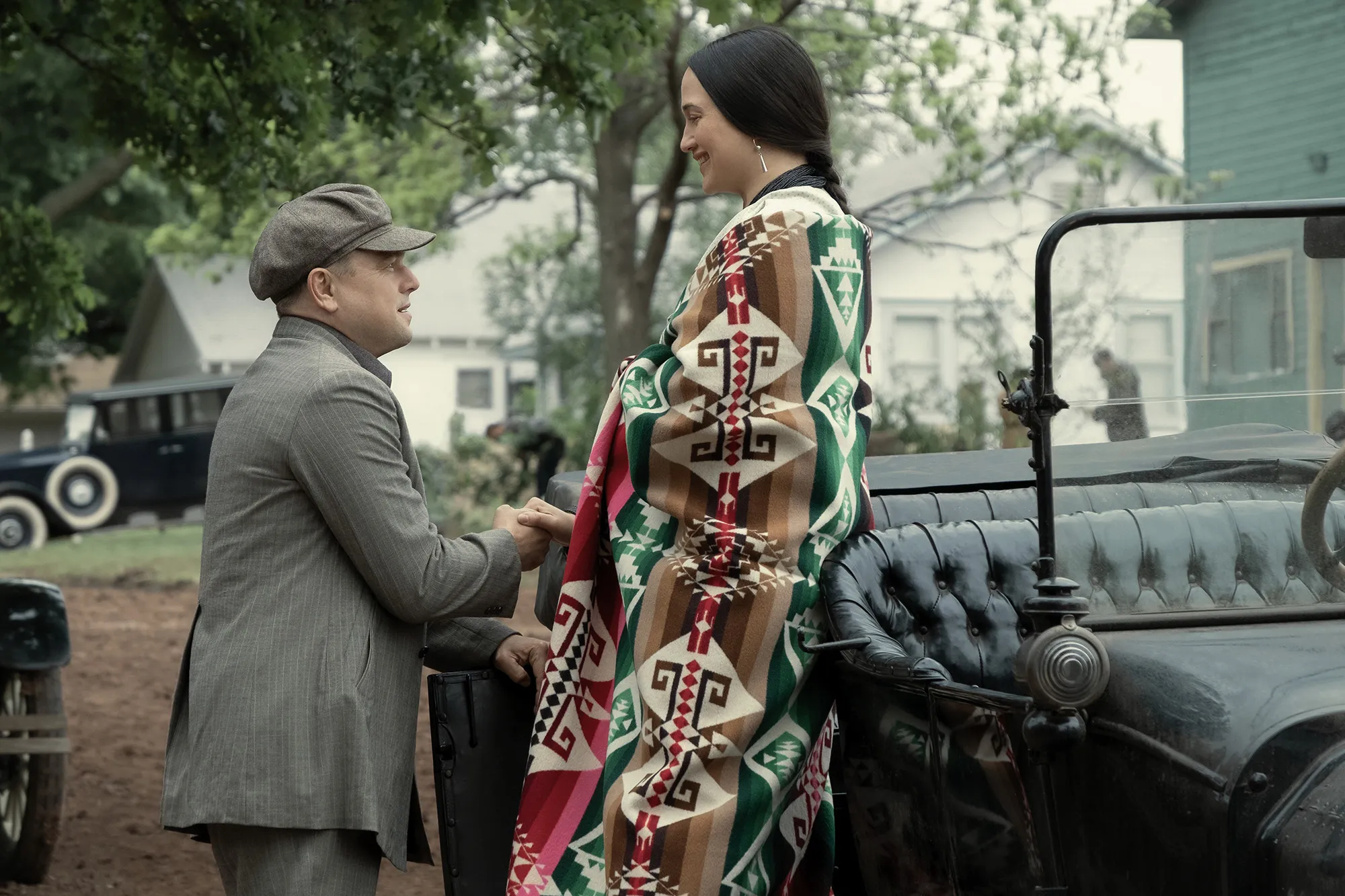
There is a sense that Scorsese is packing as much movie as he can into this one, down to casting two of his longtime collaborators, Robert De Niro and Leonardo DiCaprio, opposite each other in one of his films for the first time. Scorsese has cast them against type. DiCaprio is Ernest Burkhart, a not-terribly-bright World War I veteran who goes to work for his uncle, Bill Hale, a cattle rancher with a patrician air who has deep connections throughout Oklahoma’s Osage Hills. (Bill prefers the nickname King.) And when Ernest meets Mollie (Lily Gladstone), an Osage member whom he picks up in his cab, Bill suggests that it would be practical for him to get to know her even better. If the Hale family marries into a full-blood Osage family, then the Hales might eventually inherit some of the tribal oil rights.
It is not that easy, and without going into all the schemes that Bill orchestrates, it is astounding to consider just how much ground “Killers of the Flower Moon” covers. The film delves into Mollie’s family tree (her mother is played by the veteran Cree-Métis actress Tantoo Cardinal; her sisters by JaNae Collins and a standout Cara Jade Myers) and introduces a cavalcade of shady men who are willing to do Bill’s bidding, and who are all instantly recognizable on sight, even though the narrative is filled with Scorsese’s customary asides. (There is also at least one direct callback to “Goodfellas.”)
But the heart of the movie, ten times over, is Gladstone, who brings such grace and equanimity to Mollie, who has to navigate an emotional minefield with every line reading. Mollie instantly recognizes Ernest’s own wolfishness (she calls him a “coyote”) and marries him anyway, staying with him out of a form of faith that he never earns, but that also isn’t purely naive.
While oil money has made the Osage richer than the local whites, it hasn’t given them more power: Mollie lives in a world controlled by white men, not just Ernest but the doctors who manage her diabetes, a guardian who has a lock on her money, and police who won’t investigate when tribal members are murdered. Scorsese has steeped the movie in Osage traditions—it’s bookended by rituals—but there is a sense, especially toward the end, that Mollie is, typically for Scorsese, Ernest’s confessor in a Catholic sense.
“Killers of the Flower Moon” is not in competition, but had it been, it’s hard to see how any other movie would have rivaled it for richness or mastery.
For more on this film, read Sarah Knight Adamson’s essay on the stories behind this picture as well as Chaz Ebert’s article compiling Roger’s reviews of Martin Scorsese’s work.
by Ben Kenigsberg