








Pocket Audio HiChord Review

You know that fragile moment when an idea shows up—on a commute, in the kitchen, between emails—and you either catch it or lose it? HiChord is built for that exact window. It wants to be the thing you reach for when a progression is humming in your head but the laptop’s closed, the studio’s far, and you’ve got ten spare minutes, not two free hours.
Pocket Audio pitches HiChord as a pocket-sized chord synthesizer, looper, and drum machine that can get you to full songs without music theory, a laptop, or a long learning curve. That’s the promise, and it’s a bold one at $320. Over a couple days of living with it, the core truth came into focus: HiChord isn’t trying to replace a studio. It’s trying to replace that empty gap between having an idea and actually hearing a song-shaped thing happen.
Actually Pocketable, Not Just Small
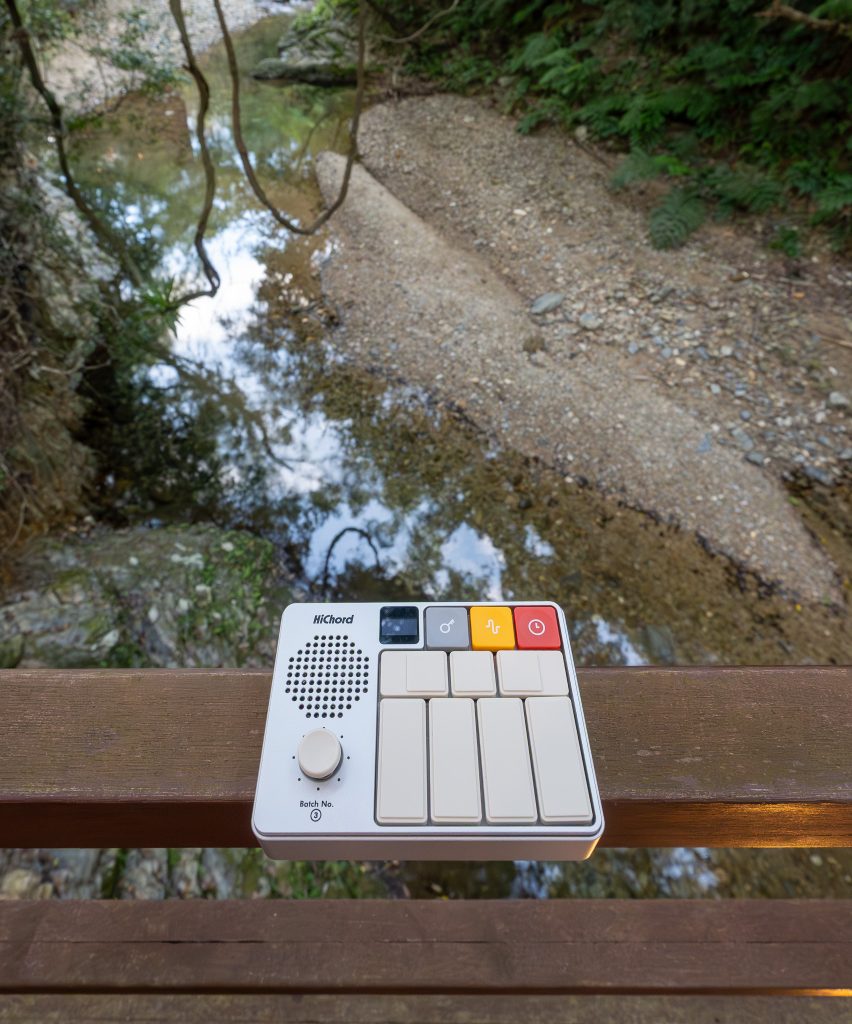
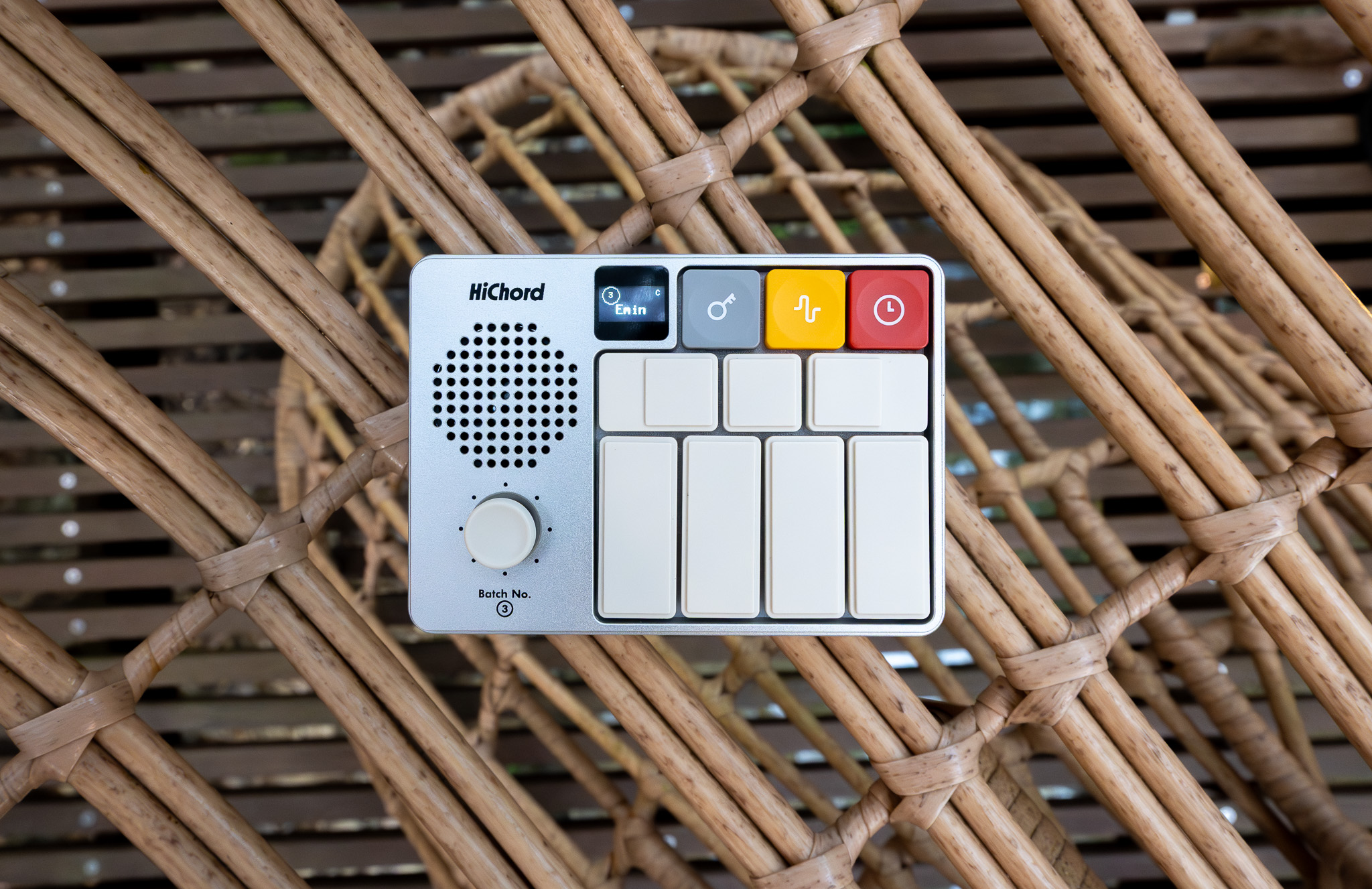
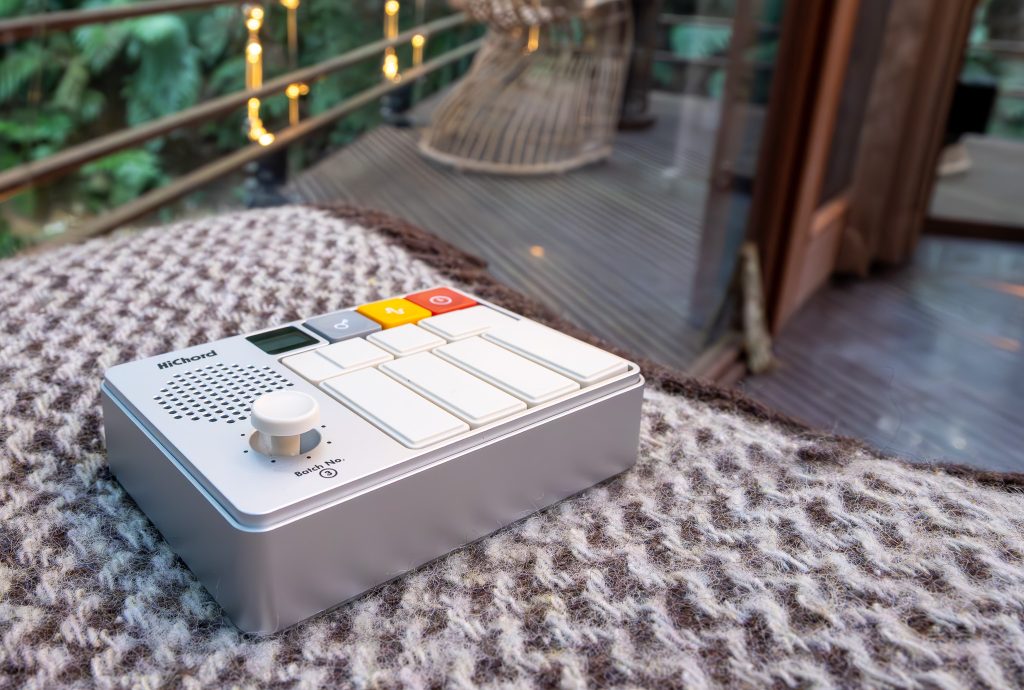
HiChord’s biggest feature is that it’s not asking for a setup ritual. The aluminum enclosure is genuinely compact at 100 mm x 71 mm x 28.65 mm, and it’s shaped like something meant to be carried, not displayed. I ended up using it in short, opportunistic bursts: on the couch for ten minutes, at a table while coffee cooled, then again later with headphones when the rest of the apartment was quiet. The included EVA case made that “grab it, throw it in a bag” behavior feel normal instead of precious.
That portability matters because HiChord’s whole concept is momentum. Seven chord buttons mapped to a key invite you to keep moving, and the built-in speaker means you can hear a sketch without reaching for anything else. The speaker isn’t a substitute for monitors or even decent headphones, but it’s enough to confirm: yes, that progression works. Yes, that loop is landing. In the pocket-device category, that’s a real advantage.
Metal You Actually Want to Hold
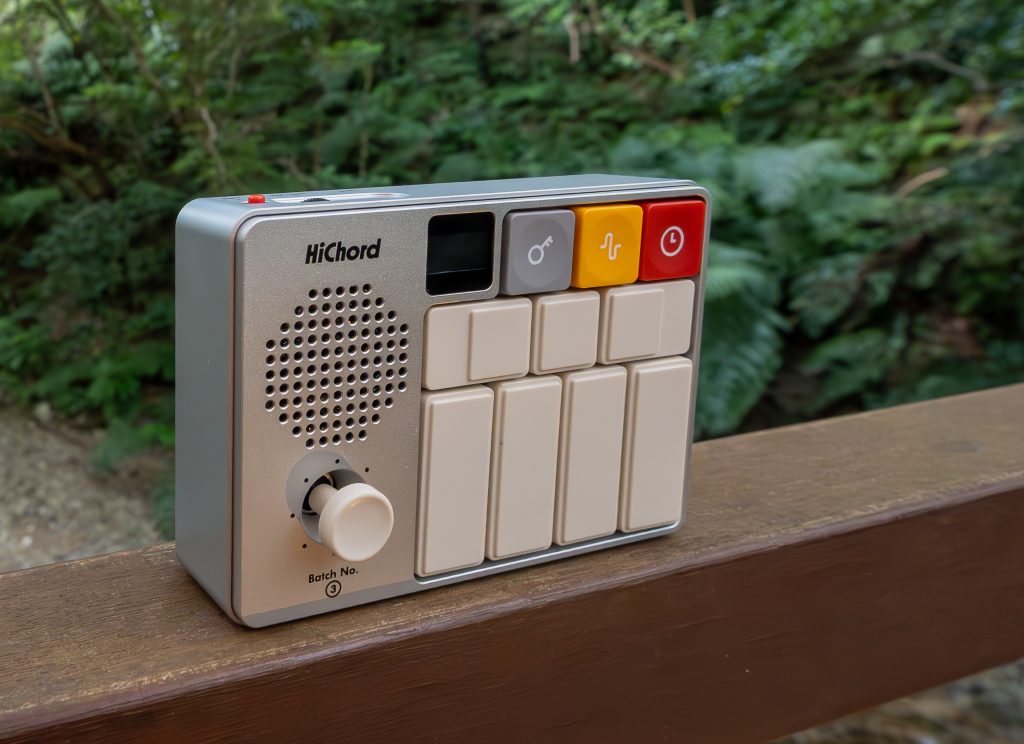
Pocket Audio describes HiChord as a durable CNC anodized aluminum device, and it reads that way in person. The chassis feels like it can handle actual travel. It also feels deliberately modern: a compact slab with hardware controls that don’t try to cosplay vintage synth culture.
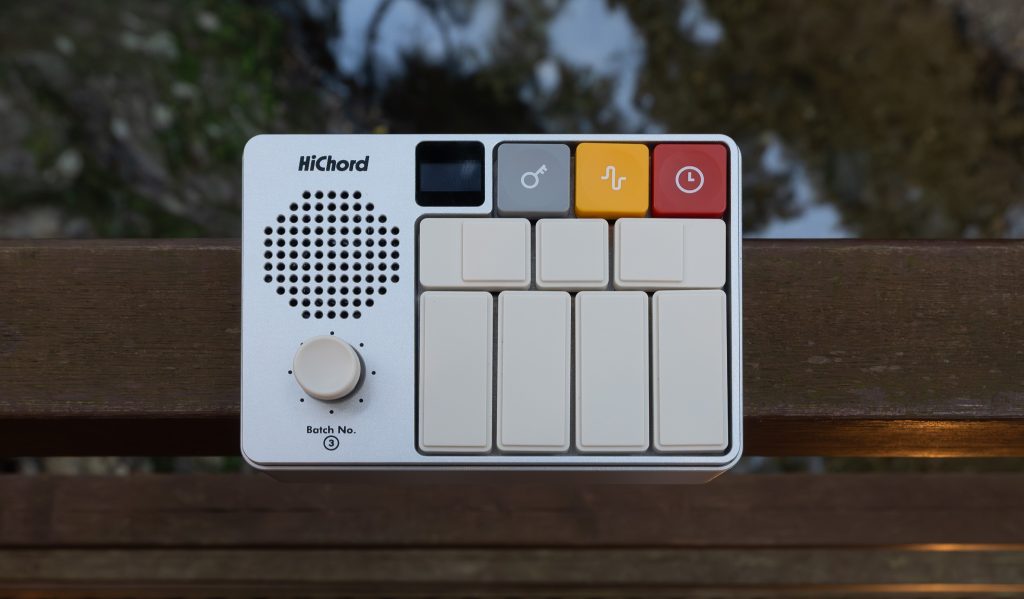
The layout is simple and, after a short adjustment, logical. The seven dedicated chord buttons are the physical center of the instrument. Next to them, the chord-modifying joystick is the piece that changes HiChord from “clever toy” to something you can perform on. The joystick is built for live transformation into chord variations like major, minor, seventh, suspended, and diminished, plus extended intervals like 7th and 9th. You don’t need to stop and rethink your hands. You push, you hear the harmony pivot, you keep going.
The 0.49-inch OLED display is there when you need it and absent when you don’t. It’s small, and that’s a real constraint. It works as a confirmation window, not a place you want to live. The scroll wheel for volume and the power button round out the physical story: minimal, pocket-first, and clear about what it is.
Harmonic Training Wheels, On Purpose
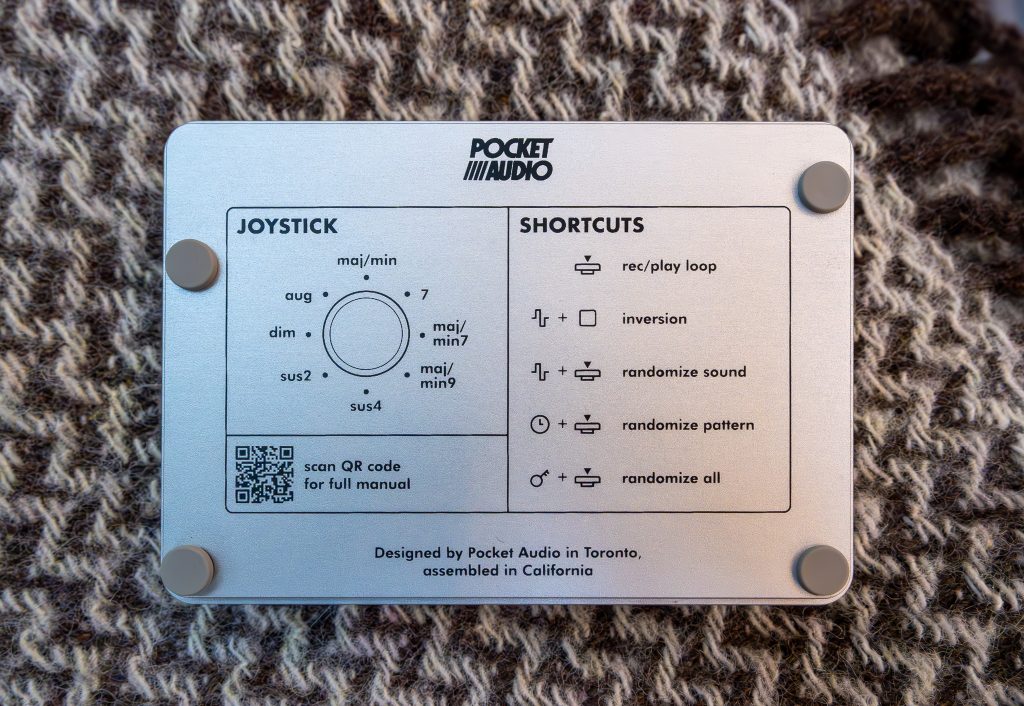
HiChord runs on a one-button chord system based on the Nashville Number System. In practice, the device is constantly translating your intent into diatonic chords in a chosen key. The marketing line about “no wrong notes” is basically the vibe: you can press chord buttons in sequence and stay harmonically coherent.
On my first night with it, that coherence felt like permission. I picked a key, started hitting chords, and immediately got the kind of progression that usually takes a few false starts on a keyboard. The “patent-pending chord mapping technology” is doing real work here. It’s not just a gimmick. The system invites you to write with your ears instead of your theory brain.
By the next day, the constraint showed up. “No wrong notes” can also mean “no happy accidents.” If your musical personality is built around slipping outside the key, HiChord will feel like it’s politely steering you back onto the road. The joystick helps, since you can pull chords into variations and extensions, but the worldview is still diatonic and structured. That’s the point. It’s also the limit.
Looping Your Way Into Structure
The dual-track looper is where HiChord stops being a chord gadget and starts acting like a songwriting device. I’d lay down a chord bed, then use the second track to add another layer, adjusting voicings through the joystick so the harmony didn’t feel static. The loop workflow pushes you toward arrangement, not just noodling. Once something repeats, you start making decisions.
The drum machine is the other half of that “song, not riff” mentality. HiChord includes real drum kits and supports quantized finger-drumming, with three drum kits confirmed in the feature set. That quantization is important. In a pocket instrument, timing assistance isn’t cheating, it’s usability. You can tap in a pattern quickly, get it locked, and move on to chords and sound shaping.
This is also where the device’s simplified interface can feel crowded. With a small OLED and compact controls, you rely on muscle memory more than visual feedback. After a handful of sessions, it clicked. Early on, I had moments of “Wait, what mode am I in?” That’s not a dealbreaker, but it’s part of the truth of a device this small trying to be chord synth, looper, and drum machine all at once.
Sound Engine With Opinions
Pocket Audio sells HiChord as a “portable powerhouse” with “pro sound engines,” and the underlying architecture backs up the ambition. You’re working with 12-oscillator digital synths, FM synthesis, 16-bit samples, and hybrid presets. Waveform options include sine, square, sawtooth, triangle, and custom options. Effects are built in and DSP-powered: ADSR envelope, tremolo, delay, lowpass filter, LFO modulation, and reverb. Under the hood, audio processing is driven by a high-performance DSP that can operate at up to 96 kHz, with onboard memory aimed at real-time synthesis and modulation.
In use, the best way to describe it is: serious enough to shape, fast enough to stay fun. I could nudge a patch into something personal with effects and modulation, then get right back to writing. HiChord doesn’t feel like a menu-diving synth. It feels like a “make a choice, hear the change” instrument.
Still, I didn’t always buy the marketing tone. “24 sound effects + waveforms” and “882 chords” read great on a product page, but abundance isn’t the same as breadth. The core sound palette is capable, and the device rewards tinkering, but it’s also clearly designed for immediacy over deep architecture. That’s not a flaw. It’s an editorial decision.
Ports, Power, And The Fine Print
HiChord is built for life away from a desk, and its connectivity is refreshingly current. USB-C handles fast charging and can output MIDI data, which is the key phrase. MIDI out, not audio. The first time I plugged it into a computer, it was tempting to assume it would pass audio over USB-C like an interface. It doesn’t. Recording HiChord’s audio requires an external interface, capturing from its audio outputs while USB-C handles MIDI.
Those outputs give you options. There’s a built-in speaker for quick playback, a headphone output for private sessions, and an AUX-out for external speakers and recording. In my routine, the built-in speaker was for impulse writing and quick checks, while headphones were for anything involving tone decisions. The speaker is functional and convenient, but it’s not where you evaluate reverb tails or low-end behavior.
Power comes from a rechargeable lithium polymer battery, and newer batches are described as having a double-sized battery for extended play compared with earlier versions. I’m glad Pocket Audio frames it that way: extended play, not a grand claim with a number attached. In practice, it behaved like a device meant to be picked up throughout the day, then charged via USB-C without drama.
A companion HiChord Control App exists, referenced via an official QR page. I treated it as an optional layer, not the center of the experience, which is how I want pocket hardware to behave.
Evolving Firmware, Split-Decision Support
HiChord is the kind of device that can age well if updates keep landing. Pocket Audio distributes firmware updates through an Owners Hub, and the update notes point to a product still evolving. Mentions include a multi-track looper with metronome, new effects such as chorus, filter cutoff control using the volume scroll wheel, an improved bell sound in drum mode, bug fixes, and a Piano View feature that displays piano keys on the OLED screen.
That kind of iteration cuts both ways. It’s exciting when a device gets meaningfully better after you’ve bought it. It’s also a quiet admission that you’re buying into a moving target. I hit a small friction point here: a firmware moment that took longer than it should’ve to feel confident about, the sort of thing that makes you grateful the device has an active community footprint.
Support is where the story gets complicated. Pocket Audio staff presence shows up in public community spaces, especially around firmware issues. At the same time, the broader purchase reality includes batch-based production, and HiChord has had long pre-order wait times tied to those batches. If you’re the type who wants instant gratification and conventional support responsiveness, this product’s ecosystem may test your patience.
The policies are at least clear. There’s a 30-day return window from delivery for a full refund excluding shipping costs, assuming original condition and packaging. Defects within 30 days are covered with repair or replacement at no cost, including shipping both ways. A 1-year limited warranty covers manufacturing defects, excluding cosmetic damage from normal use, water or impact damage, and unauthorized modification or repair. That’s the kind of structure a premium device should have.
Price, Batches, And The Right Buyer
HiChord’s Aluminum Edition sits at $320 USD, which places it in a tricky middle. It’s not a budget pocket synth you buy on a whim, and it’s not pretending to be a full workstation. The justification is in the build and the concept. Pocket Audio says each unit is built from over 100 individual components, with custom-machined housings, hand assembly, extra quality control, and final testing prior to shipment. The unit in hand feels aligned with that story. Aluminum helps. The included EVA case helps. The whole object reads like a considered product, not a prototype that escaped.
Still, you’re also buying into a batch-driven world. Recent batches include variants like the Aluminum Edition and a COSMIC BLUE Aluminum Edition (BATCH #4), described as a limited color and the final color available for that batch, with new orders expected to ship at the end of February 2026. Batch #4 assembly is stated as taking place in Penang Science Park, Malaysia, and units ship from Pocket Audio’s facility in San Clemente, California, with international Delivered Duty Paid shipping offered. That’s a lot of logistics to accept for a pocket instrument, even one that’s reportedly sold in the thousands. The official site even runs a public tally, showing “4200 HiChords Sold.”
HiChord makes the most sense for writers and producers who want chords fast, who like hardware, and who’ll actually use USB-MIDI to pull those chord decisions into a DAW. Skip it if you need a traditional keyboard layout, if you expect USB-C audio capture, or if you’re allergic to products that improve via firmware rather than arriving as a frozen “final” thing.
Final Take
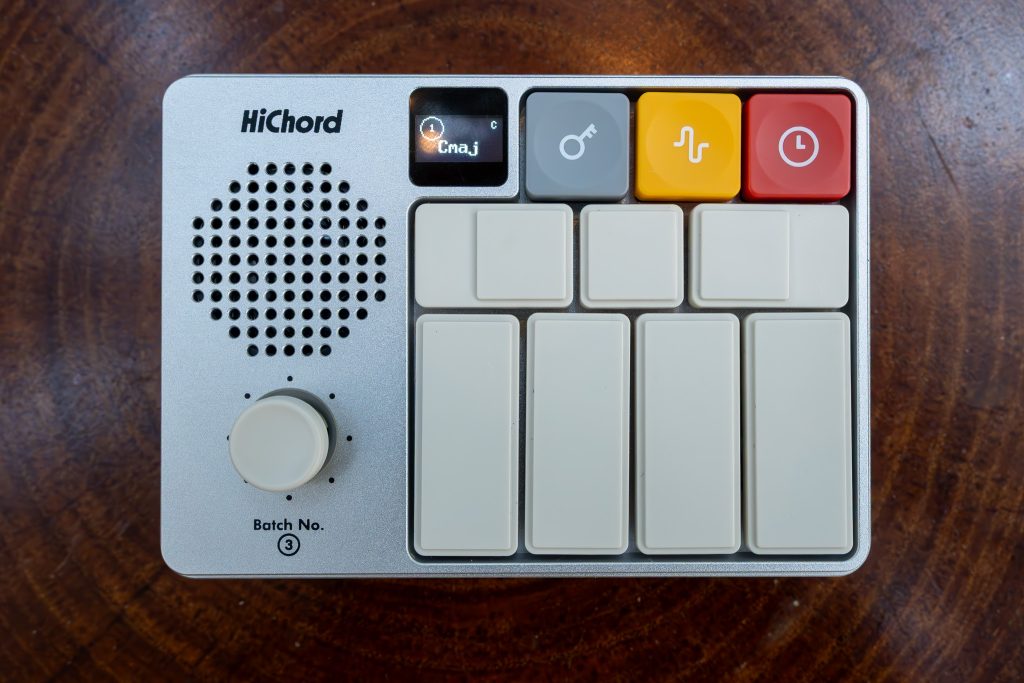
HiChord is a modern little contradiction: a simplified chord machine built on a legitimately capable synthesis engine. It looks and feels premium, anchored by a durable CNC anodized aluminum body and a control layout that prioritizes hands over menus. The seven chord buttons and joystick make harmony immediate, and the dual-track looper plus drum machine push you toward full ideas instead of endless fragments. When it clicks, it’s hard to put down, because the device keeps you moving.
The compromise is baked in. “No wrong notes” is liberating if you want to write quickly inside a key, and limiting if your instincts run outside the lines. The OLED display is tiny, useful, and sometimes a bottleneck. USB-C does the right things—fast charging and MIDI out—but it doesn’t solve audio recording without an external interface. Firmware momentum is a value-add, but it also means the product’s story isn’t finished.
Buy HiChord if you want a pocket-first songwriting tool that turns chords into action and doesn’t require a laptop to feel productive. Skip it if you need traditional keys, immediate shipping certainty, or a device that never asks you to learn its quirks. My clearest memory of it is simple: standing in my kitchen, built-in speaker whispering a loop, and realizing I’d accidentally written the outline of a song before dinner was done.