






The Ritz-Carlton, Okinawa Review




The climb up through Kise Country Club feels like leaving regular time. Headlights catch bits of green and then nothing, the road twisting just enough that you can’t quite predict when the hotel will appear. It’s not dramatic, exactly, more like a slow subtraction of distractions. By the time the taxi finally pulls up and the building reveals itself, you’ve already started to understand what kind of escape this is going to be.
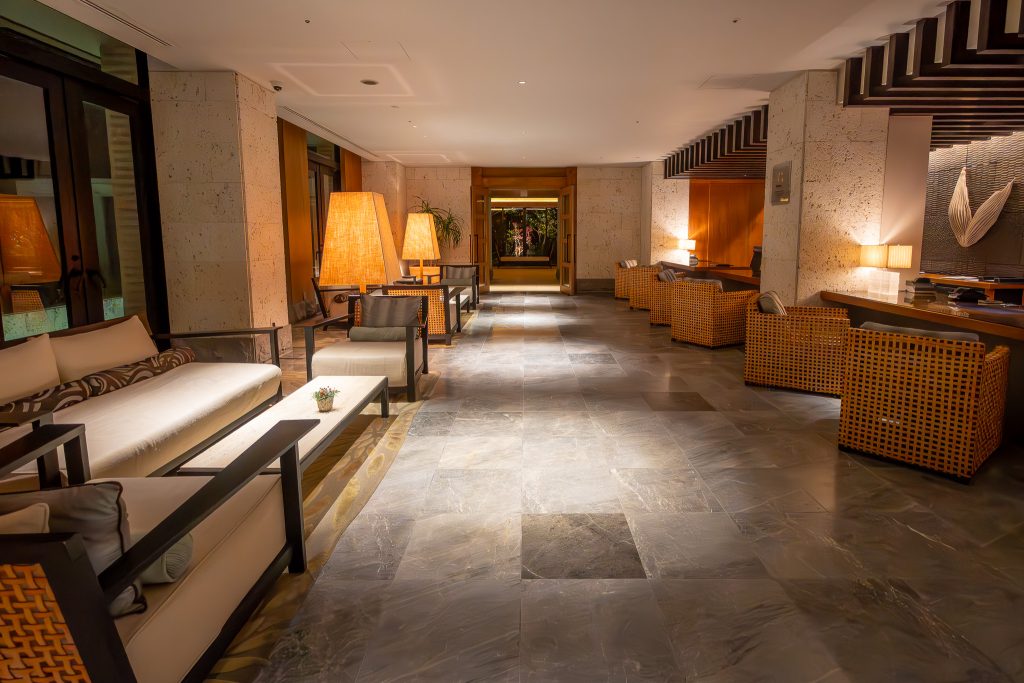
Inside, the atmosphere pivots to controlled warmth. Stone underfoot, water moving somewhere nearby, and a lobby that wants to read as ceremonial without becoming stiff. By the following morning, it was clear what The Ritz-Carlton, Okinawa is trying to do: meet a global luxury standard while letting Okinawa’s Ryukyuan identity show up in materials, scent, and small rituals. It mostly succeeds, with a few moments where the brand’s choreography crowds the place’s quieter voice.
Northern Quiet, On Purpose


This resort sits in Nago City, in the northern region of Okinawa’s main island, in an area known as Yambaru. That context is the point. You’re not here for walkable nightlife or the hum of a town outside your door. You’re here because the property is built to face inward: golf course on three sides, ocean beyond, subtropical landscape wrapping around it.
Arriving from Naha Airport by a taxi arranged through the hotel took about an hour on the road, the kind of transfer that feels longer at night because there’s nothing to do but watch the headlights sweep across landscaped edges and then darkness again. The resort can also be reached via an Airport Liner shuttle bus from Naha, and there’s paid parking if you’ve rented a car, but the broader truth remains: you’re car-dependent up here.
The immediate surroundings don’t offer much on foot. Kise Beach is about a five-minute drive, and the Okinawa Churaumi Aquarium is roughly a 50-minute drive away. I didn’t come to tick off sights; I came to stop moving. On that metric, the location works brilliantly, as long as you accept that seclusion is the amenity and the constraint.
Castle Energy, Not Costume Play
The hotel’s design is described as inspired by the grandeur of Shuri Castle, and you feel that ambition in the way the public spaces stage arrival and movement. This isn’t a beachy lobby that tries to dissolve into the outdoors. It’s more fortress-like in its sense of threshold: a controlled interior that makes you aware you’ve entered a composed environment.


Material does a lot of the work. Local Okinawan stone and limestone show up as the anchor, giving the building a weight that suits a golf-resort setting without leaning into faux rusticity. Against that, Ryukyu glass art appears in décor as a counterpoint: more delicate, more explicitly local, and used as accent rather than theme-park centerpiece. The sea motif is present too, but it’s handled through abstraction. I kept noticing blue-toned carpets that read like water without literally depicting it, and the recurring sound and sight of cascading water features and pools around the property reinforces that idea of moving water as atmosphere.
The question with any culture-forward luxury design is whether it becomes decorative shorthand. Here, the Shuri Castle references sometimes feel like a big architectural gesture intended for first impressions. But the more convincing choices are quieter: the honest stone, the glass, and a spatial plan that uses layers, thresholds, and controlled views to create calm in a humid, subtropical climate.
Bay Deluxe King: Renovated Comfort with Real-World Friction
The Ritz-Carlton, Okinawa has 97 guest rooms, a scale that keeps circulation legible and avoids the anonymous feeling of larger resorts. Rooms and suites run from standard categories like Deluxe and Bay Deluxe up through Cabana Rooms and named suites such as The Ritz-Carlton Suite and a Presidential Suite. I stayed in a Bay Deluxe King, a category that sits in the practical middle of the inventory: not a showpiece, but not an afterthought.


The room felt freshly renewed, consistent with the fact that all guestrooms underwent renovation in 2024. The layout is straightforward and functional. You enter into a generous sleeping area with a clear line to the balcony, and that balcony matters because it provides the mental release of exterior space even if you only step out for five minutes. The windows also open, which I used in the morning to bring in air that felt cooler and cleaner than the conditioned interior.


The bathroom is built for actual use, not just photos: double sinks, a rain shower, a high-tech toilet, and an indoor bathtub positioned to take advantage of the outlook. Counter space was adequate for two people without the usual dance of moving bags around. Bath amenities were set out with the kind of predictability you expect at this price level, but the more locally specific touch was the Churaumi bath salts presented in a handcrafted Tokoname ceramic jar, a small object with real tactile presence.
 Technology was modern and sensible: a large flat-screen TV, a Nespresso machine I used every morning, and a Tivoli Audio system that made the room feel less generic. The minibar included local beverages such as Orion beer and Awamori, which is exactly the kind of detail that can either be token or thoughtful. Here, it landed as a gentle nudge toward place.
Friction points were minor but real. It took me a minute to understand the shower controls, and I spent the first evening adjusting the individually controlled air conditioning until the room felt right for sleeping. Sound insulation can vary by room, and I did catch a bit of outside noise at times, the trade-off of a resort where landscape maintenance and arrivals still happen beyond your balcony.
Polished Help, Island Pace
Ritz-Carlton service has its own grammar: greeting, handling, smoothing edges before you feel them. At arrival, that showed up in a valet-style welcome and luggage handling that moved quickly, letting the lobby remain calm instead of turning into a bag-drop zone. A welcome drink appeared as part of the check-in rhythm, another familiar brand gesture, but it didn’t feel forced. It fit the setting, especially after a long night transfer.


 Over the next day, the service style stayed consistent: present but not chatty, formal without being cold. I leaned on the concierge desk for practical help and got it, the kind of quiet competence that matters more at an isolated resort because you can’t simply step outside and improvise your day.
Language is part of operational reality in Okinawa, and it surfaced here too. Staff can assist in multiple languages, including English, but proficiency varies. In my case, it meant one or two moments of simplifying a question, repeating it, and then getting the answer we both knew I was asking for. It wasn’t a problem so much as a reminder that this is Japan with a global brand overlay, not an English-first bubble.


Housekeeping hit the expected notes, including turndown service that made the second night feel calmer than the first. The overall impression was that the hotel translates Ritz standards into a slightly softer, more reserved register, which suits Yambaru better than high-theater luxury ever could.
Plates, Glasses, and a Sense of Place

Breakfast set the tone. The buffet offered a mix of Japanese and Western options, and I ate around mid-morning, when the day felt fully underway but not rushed. More than variety, what I noticed was pacing: staff kept the room moving without making it feel like a feeding station. It’s a small thing, but a breakfast room is often the clearest view into a hotel’s operational competence.


For dinner, I gravitated to Chura Nuhji, the resort’s Italian restaurant that uses local ingredients. Italian in Okinawa could read as brand-safe neutrality, but here it played as a way to let local produce and flavors show up without turning the meal into a cultural lecture. The room itself carried that same balance: polished enough for a special night, but not so precious that you feel underdressed the moment you sit down.

Another evening leaned more casual. The Library, positioned as a lounge with refreshments and pool views, functioned as the resort’s social hinge, the place you land when you want something small and don’t want the full ceremony of dinner. Later, I poked into the bar program, including the evening cocktail and cigar bar that shifts the mood toward adult quiet. It’s still a resort, still controlled, but it gives night a shape beyond retreating to the room.
Room service filled the gaps the way it should: a practical option when the day has been built around the spa or the pools and you don’t feel like starting over with another outfit and another setting.
On-Site Gravity, Off-Grid Feel
A secluded resort only works if the on-site universe is complete, and The Ritz-Carlton, Okinawa mostly is. The hotel sits within the premises of Kise Country Club, surrounded on three sides by an 18-hole championship golf course that overlooks the ocean, and golf access is part of the resort logic even if you never pick up a club. You see the fairways from public areas and from the room side of the building, a constant reminder that this is a golf and spa resort first, a beach hotel second.


Pools are split between indoor and outdoor. The outdoor pool reads as infinity-style, oriented to palms and scenery, while the indoor pool sits adjacent to the Spa Café terrace with floor-to-ceiling windows that bring in light without requiring perfect weather. I used the indoor pool when the day felt cooler, and the outdoor setting when the sun returned and the property’s water features seemed to pull you outside.


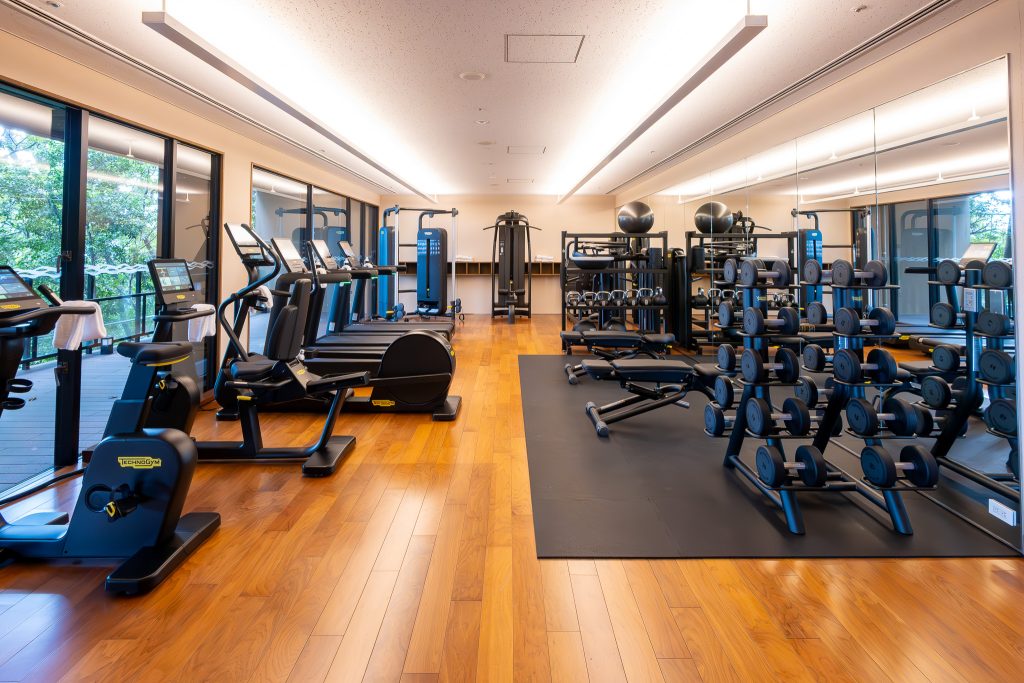
The gym is open 24 hours and equipped with Technogym cardio and strength machines plus free weights. Hardwood floors and big windows make it feel like a real room, not a basement obligation. I went early once, partly to reset my body clock, partly because resorts like this can blur time if you let them.
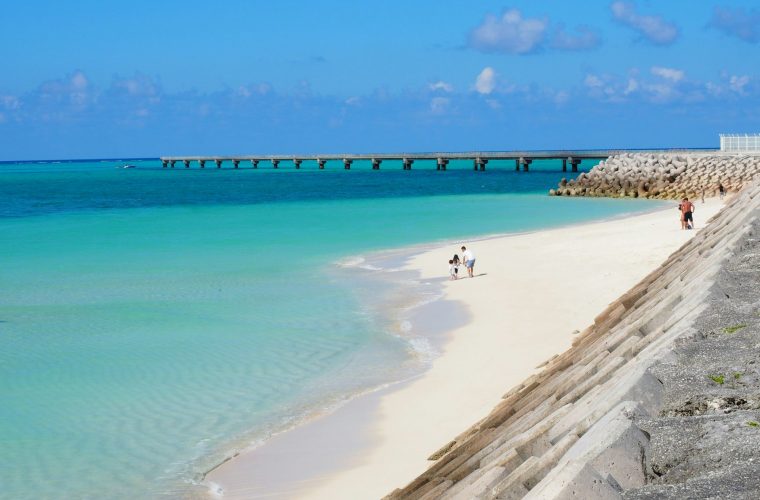
The beach isn’t outside your door, but the hotel offers a complimentary shuttle to nearby Kise Beach and provides sunbeds, towels, drinking water, and sun lotion. Activities like snorkeling and paddle surfing can be arranged, and the broader programming includes yoga sessions and occasional cultural and family activities, the kind of structure that matters for longer stays or for families traveling with kids.
The center of gravity, though, is the spa.
When the Spa Speaks Ryukyu


The Ritz-Carlton Spa, Okinawa is in a separate building, and that separation is the smartest planning move on the property. You reach it on foot in about three minutes along a garden path through subtropical greenery, passing through a bamboo tunnel that compresses your field of view and forces your pace to slow. It’s a simple piece of spatial choreography, and it works. By the time you arrive, you’re already quieter.
The spa is a two-level retreat adjacent to a primitive forest, and the design leans into organic materials and a deep forest motif. Inside, décor emphasizes bamboo and warmth, with the kind of bright calm that doesn’t need to announce itself. Appointments are required, it’s open daily from 9:00 a.m. to 9:00 p.m., and they recommend arriving up to an hour early. That advice isn’t fluff. Showing up early let me use the heat and water facilities without feeling rushed.
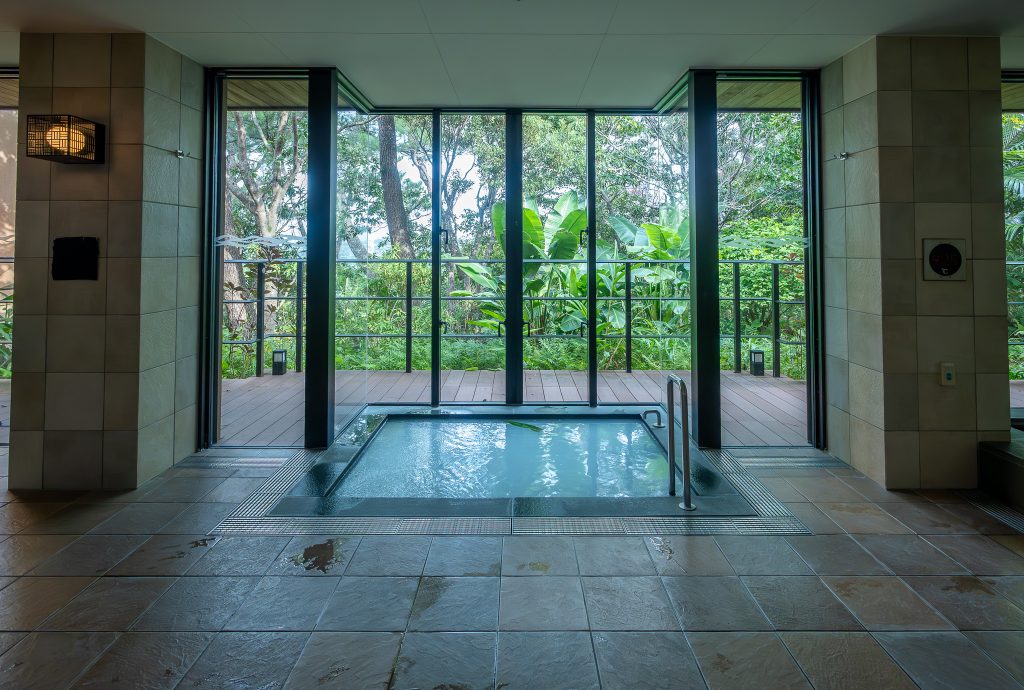

The thermal sequence is serious: a vitality pool, a cypress wood dry sauna, a Japanese coral-tiled steam room, and a Japanese-style heated plunge pool, with rain showers and power showers to reset between. Policies are clear and enforced, including a no phone and camera environment, which is exactly what you want in a spa that’s trying to be more than an amenity checkbox.

Treatments connect most directly to place. The menu highlights indigenous Okinawan ingredients like the Getto plant and tiger clam shells, and local healing practices including a detoxifying treatment referred to as Yambaru Umikaji. I chose a treatment built around those local elements, and the feeling afterward wasn’t just relaxation. It was the sense that the resort’s Ryukyuan storyline can be real when it’s embedded in ritual and material, not just décor.
Afterwards, I ate something light at the Spa Café, which serves salads, sandwiches, and beverages in a forest setting. The terrace looks toward greenery, not spectacle. That choice, again, felt honest.
Final Thoughts
The Ritz-Carlton, Okinawa is not a beach resort that happens to have a spa. It’s a golf-and-wellness property that uses Okinawa as both setting and source material, then applies Ritz-Carlton standards to keep everything smooth. The northern Yambaru location, within Kise Country Club, filters the audience by design. If you want to land and roam on foot, you’ll feel stranded. If you want a controlled retreat with enough on-site gravity to hold your attention for days, the seclusion becomes a relief.


Architecturally, the Shuri Castle inspiration could have tipped into costume, but the more convincing work is done through limestone, Ryukyu glass, water, and a spatial plan that understands thresholds. The Bay Deluxe King supported daily life well, with renovations that read as fresh and a few small realities like learning curves and occasional outside noise. Service kept the Ritz cadence while allowing for Okinawa’s quieter tone, even when language slipped into occasional simplification.
I’d book this hotel for a couples’ reset, a spa-first long weekend, or a golf-centered trip where the course is part of the landscape you want to wake up to. I’d skip it if your Okinawa ideal is stepping from lobby to sand without a shuttle schedule. The clearest memory I took home was that walk to the spa: bamboo narrowing the world, then forest opening it back up.