





The Hiramatsu Ginoza Hotel Review








Silence hits first. Not the curated hush of a luxury lobby, but the kind you only get when there’s more sky than signage and more ocean than infrastructure. Stepping out of the taxi in winter light, I found myself standing at the top of a site that doesn’t bother with theatrics: just a clean drop of red-tiled roofs stepping down a gentle slope toward the cobalt-blue edge of Okinawa’s east coast. It’s an immediate separation from the usual resort strip logic. You’re not here to drift between unrelated amenities. You’re here for a composed sequence: room, water, sky, and a restaurant that behaves like the center of gravity.

THE HIRAMATSU HOTELS & RESORTS GINOZA calls itself a gourmet resort, and it’s built, from the ground up, to make that claim feel structural rather than promotional. The question is whether that architectural efficiency, and the French cuisine shaped around Okinawan ingredients, can justify the seclusion.
East Coast Quiet as a Design Decision
Ginoza Village sits on Okinawa’s less developed east coast, and the resort leans into that quiet instead of trying to distract you from it. The address, 1425 Matsuda, places you close to the shoreline, and the site feels like it’s been chosen for mornings. Every room faces east, so sunrise becomes a daily design feature, not a special request.
Access is the trade-off. The hotel is roughly 61 kilometres from Naha Airport, and while the road time will vary, the scale of the trip is clear the moment you commit to it. The practical tip here is simple: if you plan to explore beyond the immediate beach edge, a car makes life easier. The area works as a base for driving to the north and west coast sightseeing areas, but it’s not a place where you casually stroll into town for variety.
I walked toward the nearby shoreline after check-in, the kind of short outing that confirms what “quiet coast” means in real terms. Hippie Beach is described as a short walk away, and it reads that way on foot: close enough to count, not framed as a production. Back on site, free on-site private parking is available, which tells you, quietly, how most people are meant to arrive and move.
A 21,000-Square-Metre Site Built for Pacing, Not Drama


This is a purpose-built resort spread across more than 21,000 square metres, and the planning is legible in how it controls your tempo. The rooms sit on the gentle slope, and the entrance, placed at the top, gives you a quick orientation. From there, you descend into the property rather than wandering across a flat plane. That’s a small move with a big experiential payoff: you feel the site every time you go to dinner.
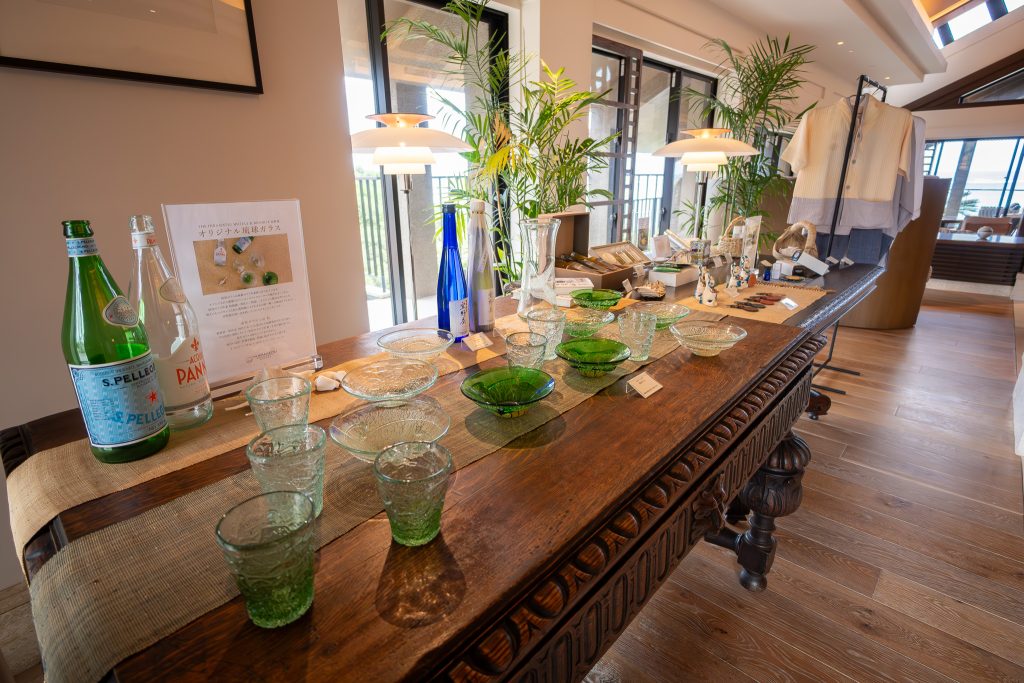
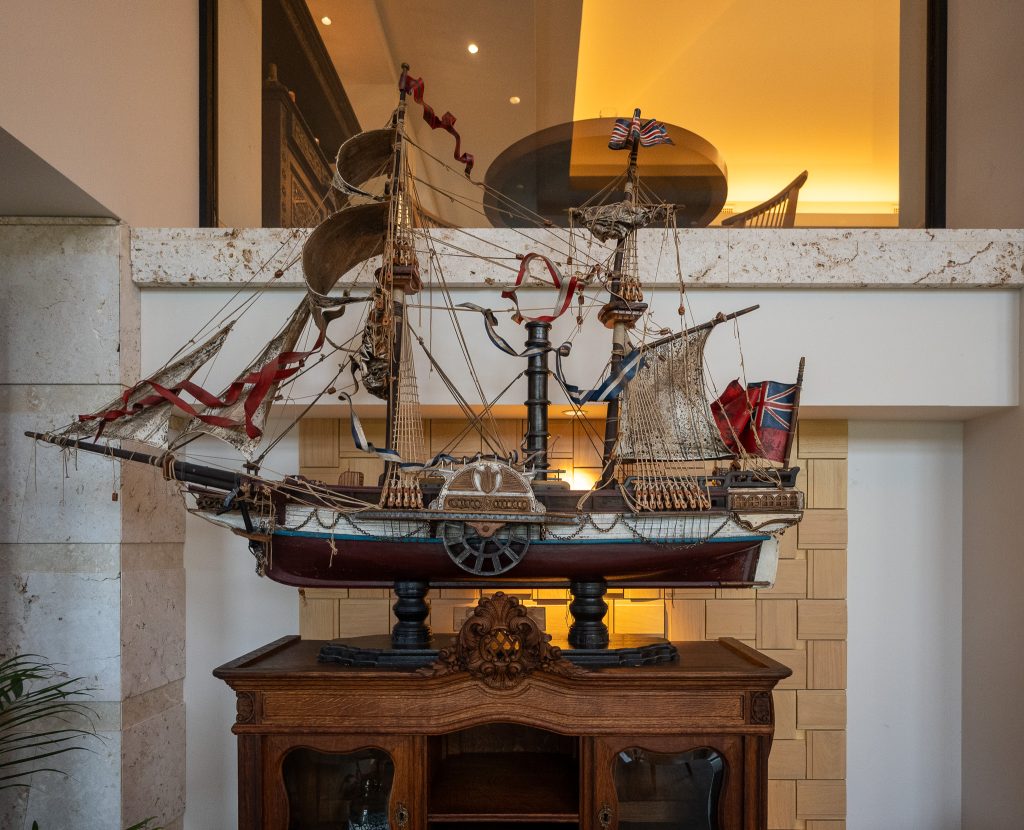
The public spaces carry a calm, refined palette: dark brown wooden floors and furniture, chic fabric combinations, and the occasional European antique and fine art piece used as punctuation rather than theme. I’m sensitive to “imported” décor in tropical settings because it can read like a costume. Here it mostly works because the architecture does the heavy lifting. Large windows and terraces keep pulling your eye back to the ocean and the vegetation, so the interior objects function as texture, not identity.


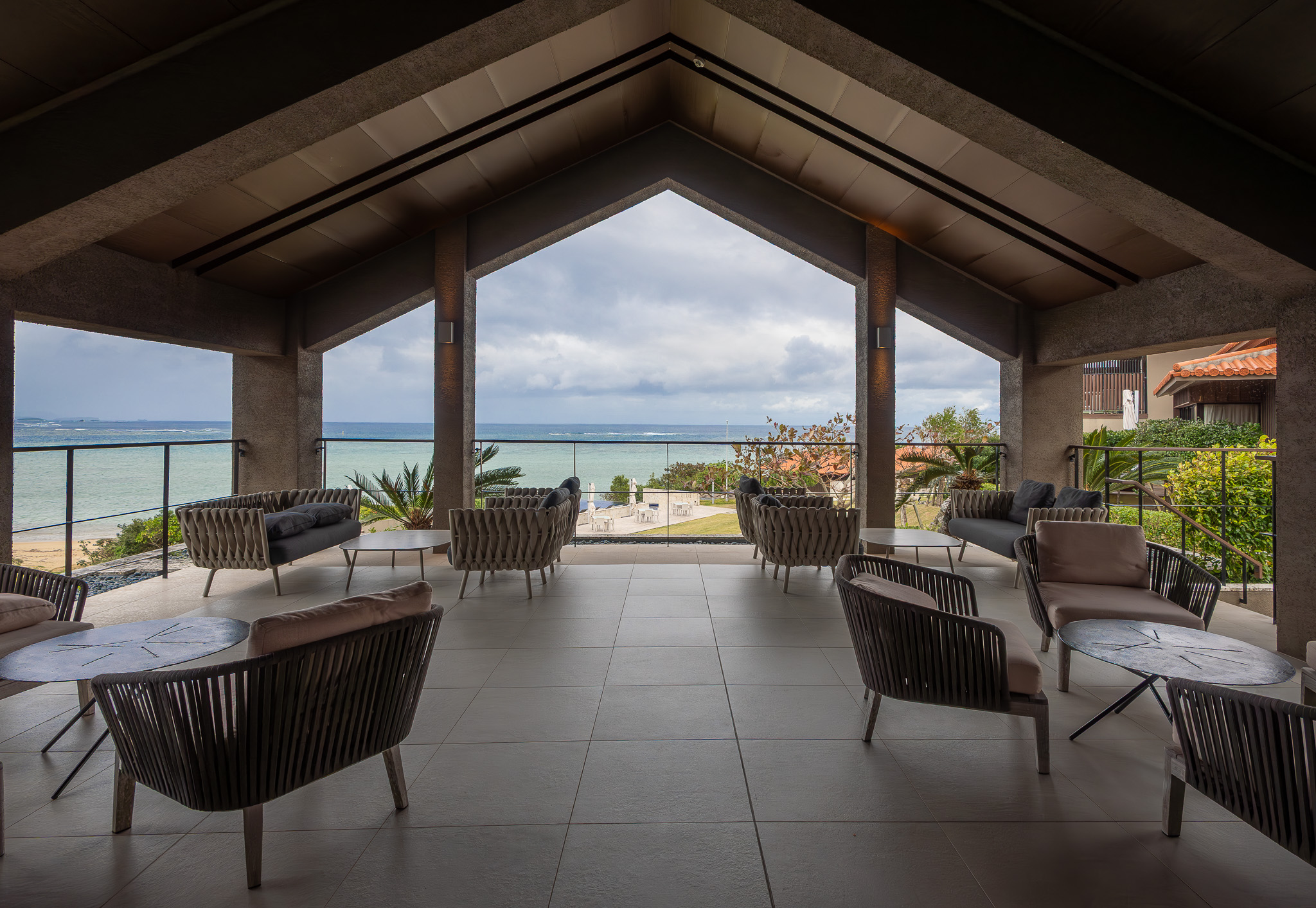
The Reception Lounge faces the water, and its terrace earns the reputation as one of the most photogenic spots because it’s uncluttered and correctly oriented. The first sensory note is olfactory: an original essential oil scent based on geraniums and other flowers grown in Ginoza Village. It’s subtle, and it matters. It makes the entry feel local without turning the whole place into a theme park of “Okinawa.”
Acoustically, the building behaves like a small resort should. Quiet rooms, soft public spaces, and no sense of cavernous volume trying to manufacture buzz.
Executive Double Room Living, Set Against a 19-Key Program

THE HIRAMATSU HOTELS & RESORTS GINOZA has 19 guest rooms total, built as villa-style accommodations across multiple buildings on the slope. The structure is intentionally small. The property describes five Villa Suites as detached two-storey seaside villas, and it also has Terrace House rooms in Executive, Premium, and Standard categories. At the top end, it presents Private Pool Villa Suites as its most luxurious accommodation type, designed as seaside villas with separate living-room and bedroom buildings plus a private pool, with the pool unheated and recommended for use from April to October. In winter, that hierarchy matters: the heated outdoor jet baths become the real water feature.


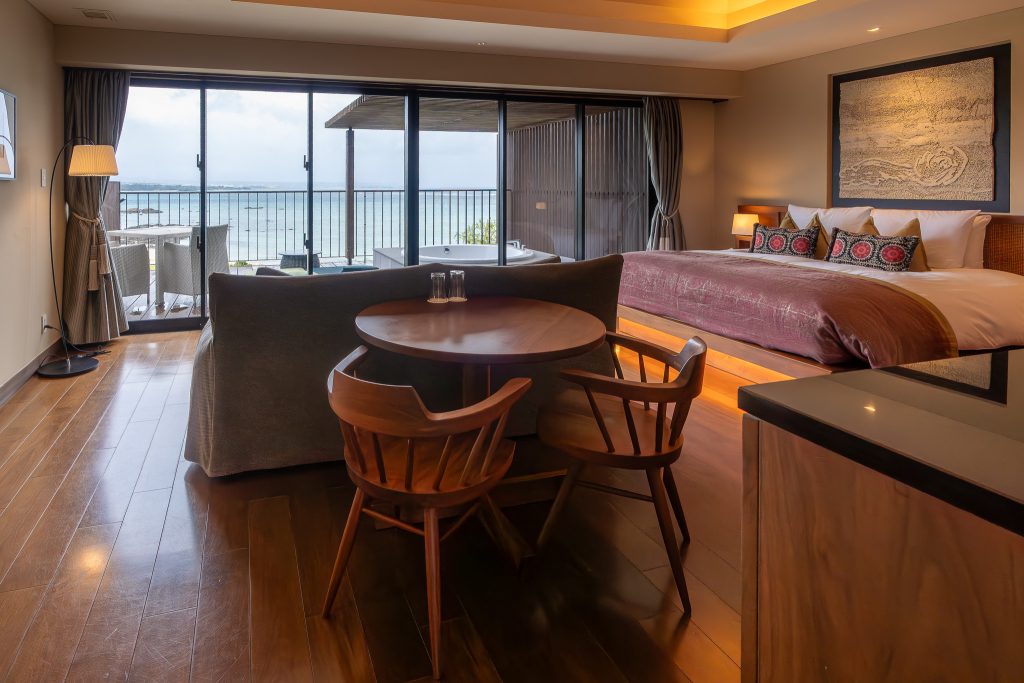
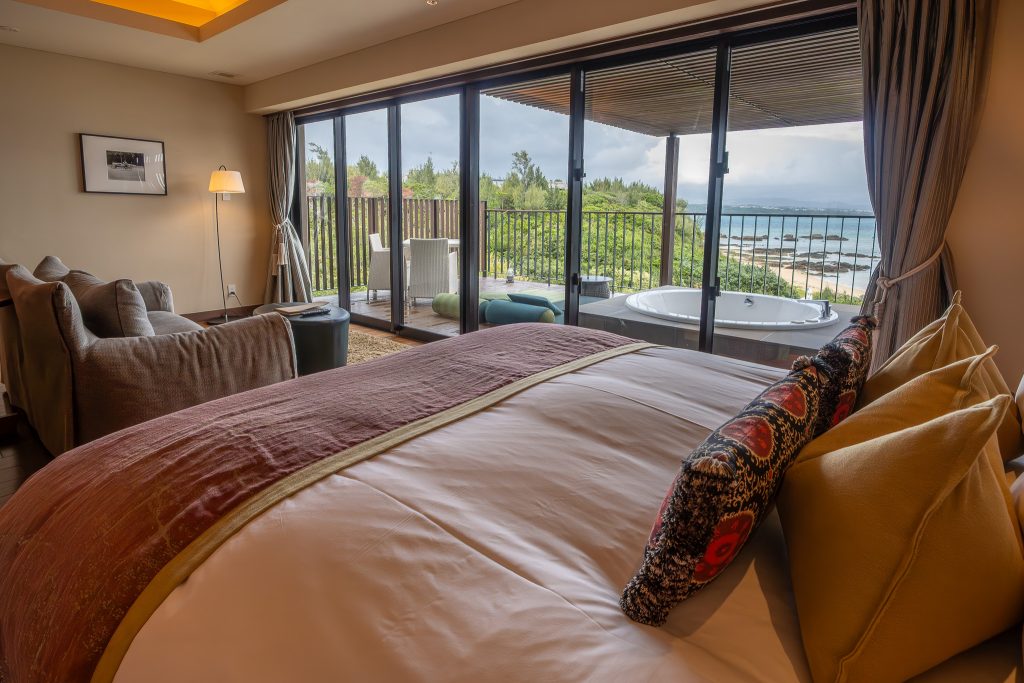
I stayed in an Executive Double Room in the Terrace House building, which made the logic of the broader program easy to read. Executive rooms are designed looking out toward the infinity pool and the ocean, and the room’s main move is straightforward: a large ocean-facing window pulls light deep into the interior, and the terrace becomes a second living zone. Outside, wooden decking holds a jet bath, a dining table and chairs, and an outdoor mattress. Every room at the property has a terrace or balcony, and every room has a jacuzzi or jet bath out there. That consistency is smart. It prevents the resort from feeling like it has “winners” and “losers” in the mid-range categories.


My first hour was pure adjustment. I dropped my luggage, realized the storage was adequate but not expansive, and then went straight to the terrace to figure out the jet bath controls. There’s a specific behavioral cue here that shapes how you use the room: guests are asked to wear swimwear in the outdoor jet baths. Once you accept that, the terrace stops being a decorative edge and becomes a nightly routine. In winter, with the jet bath heated for year-round use, it’s the feature that makes the architecture feel generous rather than merely efficient.


Sleep quality came down to two things: darkness and orientation. The east-facing window means morning arrives quickly, and if you’re sensitive to light, you’ll feel it. If you like waking naturally, it’s exactly the point. I woke early more than once without setting an alarm, stepped onto the terrace, and watched the sky shift over the water. That’s not romance. That’s planning.
Hospitality with a Restaurant Brain

Hiramatsu built its identity through restaurants, and the service rhythm at Ginoza feels calibrated to that heritage. The staff presence is attentive and personal without turning into constant hovering. It’s the difference between being watched and being tracked. Here, I felt tracked in the best sense: needs anticipated, requests handled cleanly, then space restored.
The check-in sequence happens in the Reception Lounge, which is open late, and it sets the tone. Staff greeted me in that ocean-facing room with the local essential oil scent already doing half the emotional work. After the basics, the lounge’s function becomes more practical than poetic. It’s where you can book taxis, make spa and activity appointments, ask about local tourism, and buy craft products and original hotel merchandise. I used it the way a solo traveler actually uses a small resort hub: quick questions, light logistics, then back to the room.


The spa reservation process is a good example of the hotel’s operational clarity. THE SPA・KUKURU runs from 9:00am to 11:00pm, with the last appointment at 9:00pm, and it requires advance reservations. I went through the motions—checked the hours, asked reception, confirmed availability—but ultimately didn’t book. The villa jacuzzi was calling. Still, the process itself mattered: this is the small-luxury version of friction. The hotel is flexible, but it’s not casual.
If you want a place where service performs friendliness as entertainment, this isn’t it. The posture is closer to fine dining: composed, capable, and designed to keep your attention on what you came for.
Dinner as Daily Climax


A lot of resorts treat the restaurant as one more facility. Here, the main dining room is the point. The hotel describes itself as combining Hiramatsu’s restaurant expertise with resort hospitality, and the architecture supports that claim: the main dining room is high-ceilinged, sea-oriented, and designed to harmonize with Ginoza’s natural surroundings instead of competing with them.


Cuisine is described as exquisite French cooking made with locally sourced ingredients, with chefs selecting ingredients from around Japan and tailoring French and Italian cuisine to Okinawa’s land and air. That sounds broad on paper, but in practice the message is consistent: this is French technique wearing Okinawan material. The restaurant also positions itself as a destination in its own right. It’s open to non-resident diners from 5:30pm, and there are four private dining rooms that reinforce the sense of it operating as a serious restaurant, not a hotel buffet with better lighting.

My best moment came before eating. The hotel recommends the path from the entrance to the restaurant building as a place to watch the evening sky turn red, and it’s one of those suggestions that feels corny until you do it once. The slope, the open sky, the gradual transition from daylight to dinner. It’s sequencing, the same thing architects always chase, and it worked on me.


Breakfast is available and typically described as American-style, which communicates something clear about priorities: mornings are functional, evenings are where the property wants to be judged. For a resort built around gastronomy, that choice makes sense, even if it won’t thrill travelers who want breakfast as theater.
Amenities That Know Their Role
The amenity list is intentionally edited, and that restraint is part of the identity. The infinity pool faces the ocean and works as the property’s shared “public living room,” especially in daylight. In winter, I treated it more as a visual anchor than a long swim proposition, and that’s fine. The pool’s main value is how it frames the horizon and how it pulls you out of your room without requiring a plan.

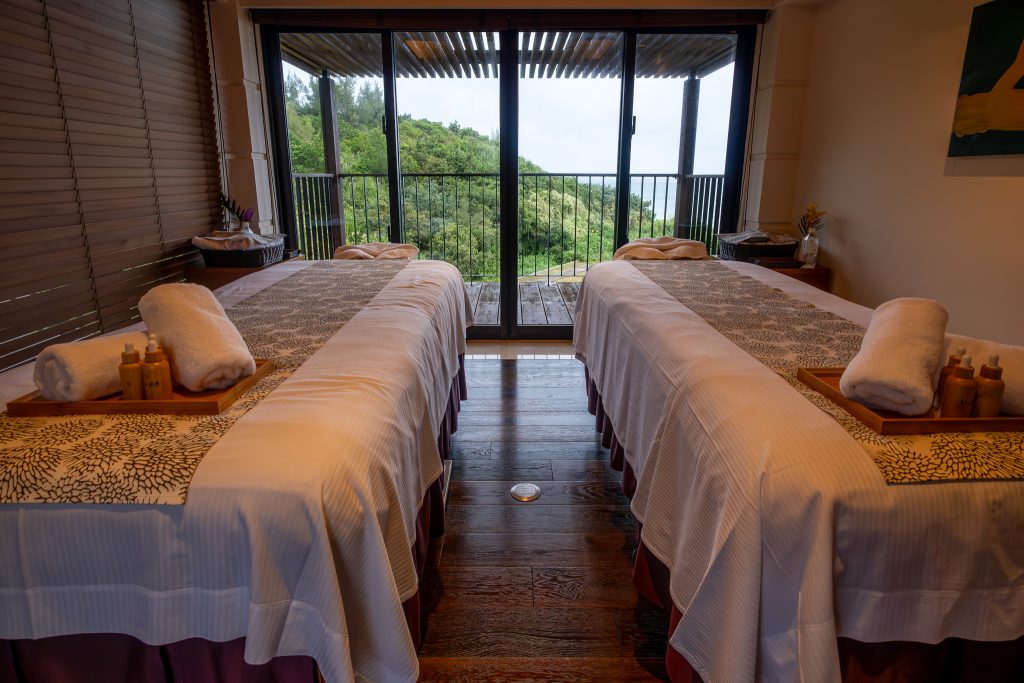
THE SPA・KUKURU is the other major pillar. It has two treatment rooms, including one that can handle two for a couples massage, and it leans into Okinawan natural themes: blue sky, cobalt sea, starry nights, and what it calls the earth’s energy. The spa uses original oils selected in line with the phases of the moon, and the programs are customized by experienced therapists. Even if you’re skeptical of spa language, the operational details matter more: it runs long hours, it’s reservation-only, and it’s quiet enough to feel like a real reset.

Daily utility is handled well in small ways. There’s a self-service laundrette with washer-dryers and swimwear dryers in the Reception Lounge building, which sounds minor until you’ve spent a day moving between pool, beach air, and terrace bathing. Free Wi-Fi is available throughout, and the property offers non-smoking rooms, facilities for disabled guests, a 24-hour front desk, and concierge service. Families can request cots or cribs, but the overall atmosphere reads quieter than the big west coast resorts, more couple-coded and solo-friendly by sheer scale.
Paying for Commitment, Not Spectacle

Value at THE HIRAMATSU GINOZA isn’t about hunting a deal. It’s about accepting a clear proposition: 19 rooms, a purpose-built site, and a dining program designed to carry the stay. The resort received one MICHELIN Key in the MICHELIN Guide Hotel Selection 2025 as well as a Gault et Millau award – a distinction meant for hotels that deliver a very special stay with personality and experiences beyond the ordinary. That framing fits, but it also raises expectations. If you arrive wanting constant programming or a dense menu of activities, the design will feel too quiet, even evasive.
The best-rate guarantee is tied to bookings made via the official website in Japanese, and the hotel notes that some external channels may not be eligible for preferential programs. That’s a practical consideration more than a philosophical one, but it tells you the brand wants a direct relationship with guests, the way restaurant groups do.
Who does this work for? Anyone who likes a resort that doesn’t perform busyness. Couples will understand the premise immediately. Solo travelers who want architecture, space, and a strong dinner anchor will also be comfortable here, as long as they’re okay with the east coast’s reduced walkability.
Who should skip it? Travelers who measure a resort by how many things it can throw at them, or anyone who hates the logistics of distance. The seclusion is the point, and if it isn’t your point, it becomes a problem fast.
Final Thoughts
 THE HIRAMATSU HOTELS & RESORTS GINOZA is a small, purpose-built resort that behaves like a well-run restaurant with rooms, rather than a hotel that happens to have a good kitchen. The slope is the organizing idea. It structures your movement, protects quiet, and turns dinner into a daily climax without needing spectacle. The material palette, heavy on dark wood and controlled décor, stays calm because the real aesthetic is the view: east-facing water, vegetation, and an uncluttered horizon.
The location on Okinawa’s quieter east coast is both the filter and the feature. If you’re comfortable with the distance from Naha Airport and you either have a car or are content to stay close to the property, the seclusion starts to feel like an architectural amenity in itself. Add the consistent presence of private outdoor jet baths across room categories, the infinity pool as a shared focal point, and a spa built for late-day decompression, and the resort’s “luxury of doing nothing” line stops sounding like marketing.
I kept returning to the same small ritual: stepping onto the terrace before sunrise, letting the room’s big window do what it was designed to do, and watching the east coast brighten without any need for narration. That’s the hotel, in one frame.