






Hotel Nikko Alivila Okinawa Review




I arrived on a winter afternoon when the island looked half-asleep: low sun, drained color, the kind of quiet that makes big resorts feel either overbuilt or oddly comforting. The road dropped me at a low, white mass that wasn’t shouting for attention so much as taking up space with confidence. My Uber slowed as the building resolved into multiple wings rather than one block, which matters when you’re dealing with a 397-room property that could easily feel institutional.

Inside, the first impression wasn’t “new.” It was maintained. The lobby’s scale and circulation were calm enough that arriving felt like entering a place with habits, not a stage set. Over the next couple of days, the question became simple: does this Spanish colonial resort, opened June 27, 1994, function as a lived environment on Okinawa’s west coast, or does it lean too hard on imported aesthetics? It lands closer to the former, largely because its planning and landscaping have had three decades to settle into something convincing.
Yomitan’s West Coast Reality: You’re Here for the Shore
Hotel Nikko Alivila sits at 600 Gima in Yomitan, on central Okinawa’s west coast, and it behaves like a beach resort, not a city hotel with an ocean view. That’s both the appeal and the constraint. Under typical conditions, Naha Airport is about a 70-minute drive, and that distance sets expectations immediately: once you’re here, you stay here, or you commit to driving.
Public transit exists, but the area’s limited transportation makes the car question unavoidable. The airport limousine bus does connect Naha Airport to the hotel on its B area route, with a one-way fare of 1,700 yen for adults and 850 yen for children, though seats are limited and reservations are a practical move. On site, paid parking runs 1,000 yen per stay and holds around 250 cars, a clear signal that the resort expects wheels.
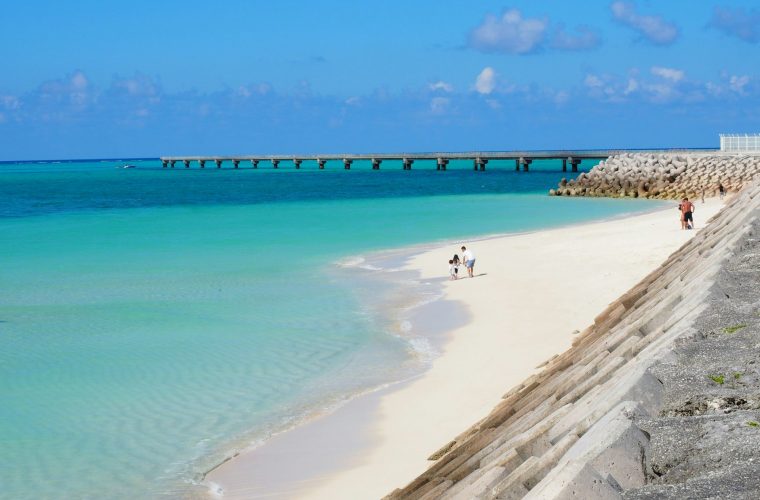
I made one short outing by car to Cape Zanpa, about five minutes away, then returned quickly. The real neighborhood is the coastline itself. The hotel fronts Nirai Beach, with direct access to white sand and clear, swimmable water. In winter, the shore reads less like a playground and more like an architectural edge condition: wind, horizon, and the steady sound of waves doing the work that crowds do in summer.
Spanish Colonial as Site Planning: Scale Broken into Walkable Pieces

A 30-year-old resort can fail in two predictable ways: it can feel like a dated artifact, or it can feel like a machine built to process people. Alivila avoids the second problem by distributing its mass. With 397 rooms, the architectural challenge is scale, and the resort’s multi-building layout keeps that scale from becoming oppressive. You don’t confront one giant façade; you move through a sequence of wings, corridors, and outdoor rooms where the ocean appears and disappears on cue.
 The Spanish colonial vocabulary is overt: white walls, red roof tiles, and an insistence on courtyards as organizing devices. On arrival around 2:45 or so, I had a short wait before the 15:00 check-in time, which turned into an accidental tour of proportion. The lobby has enough volume to absorb arrivals without turning into an echo chamber, and the vertical circulation is legible. Elevators are where you’d expect, not hidden as an afterthought.
What makes the Mediterranean idea credible isn’t the style—it’s the way the style supports functional resort logic. White walls bounce daylight into interior circulation. Courtyards offer orientation, not just decoration. And the resort’s outward-facing moments are carefully rationed so that when you finally step into a view corridor toward the water, it reads as intentional, not accidental.


Premier Ocean Patio Twin: A 43 m² Room That Works Like a Room
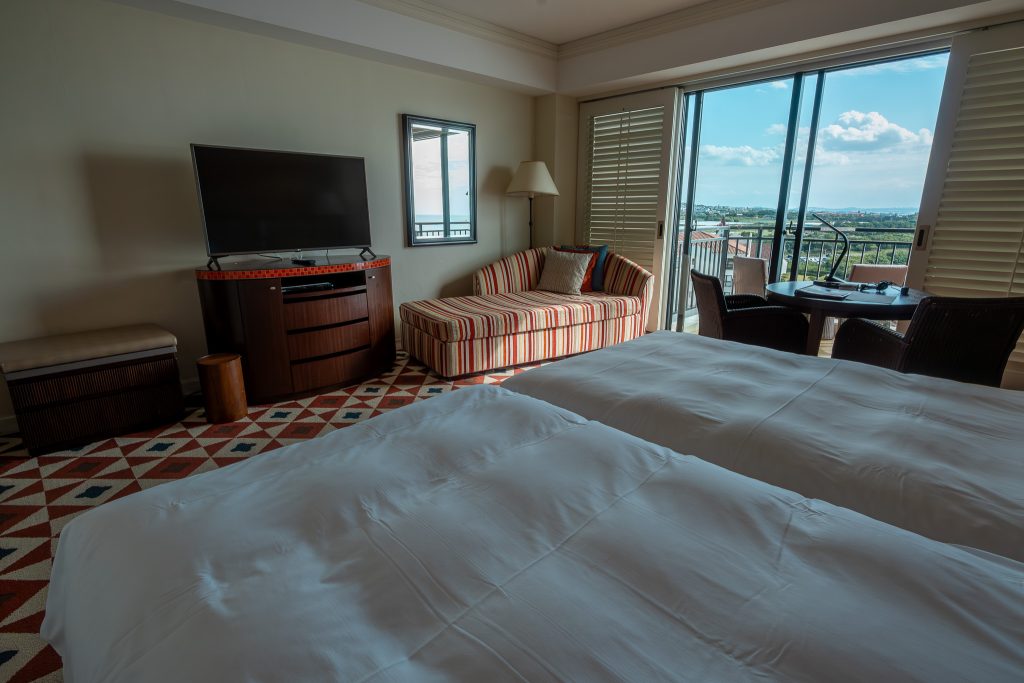
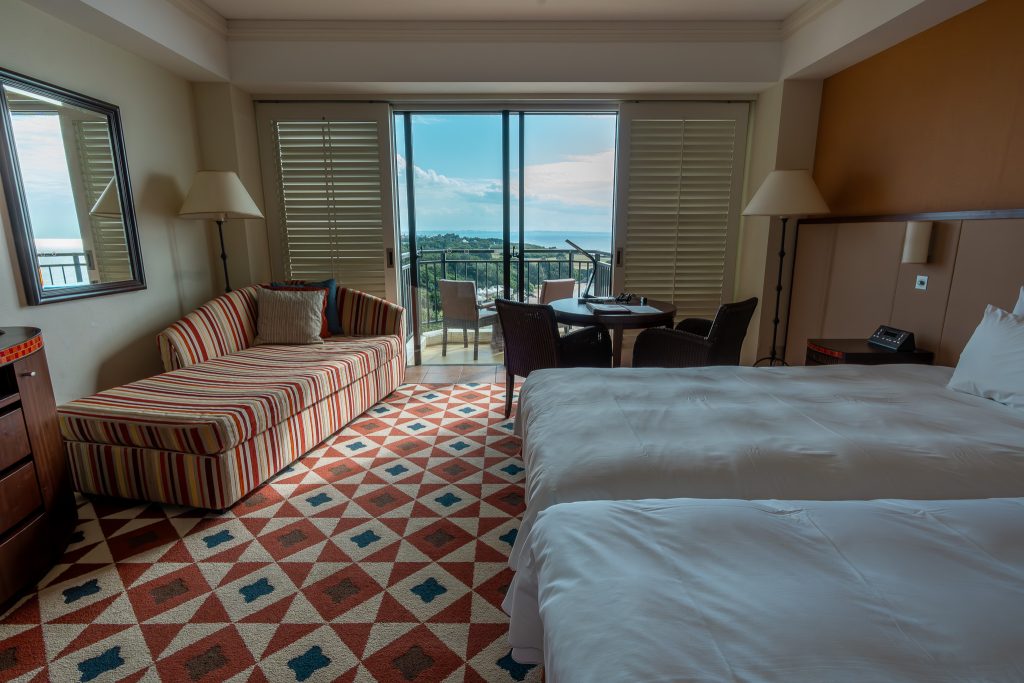
All 397 guest rooms here are non-smoking, including the balconies, and that alone changes how the building smells and feels in the corridors. My base was a Premier Ocean Patio Twin, 43 square meters, set up with twin beds at 120 cm by 203 cm each. The room can accommodate one to four people, with additional beds from the third guest onward, but the plan makes its strongest argument for two.


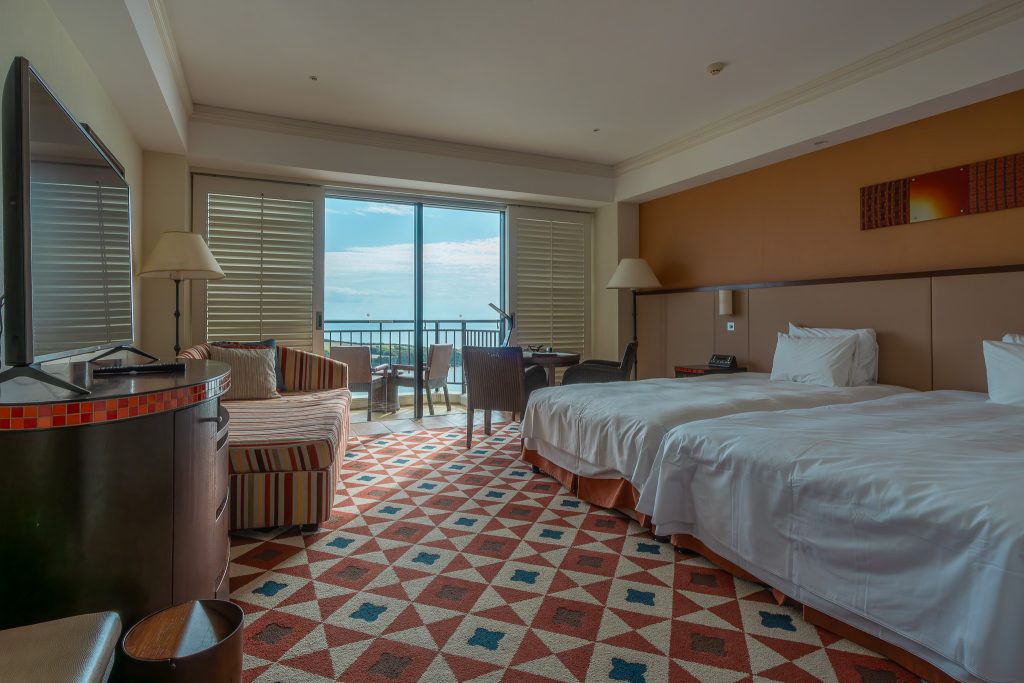
The entry sequence is straightforward: luggage lands without blocking circulation, and the room opens toward the patio side, where daylight does the real work. I used the ocean-facing outdoor space in small, realistic ways: a few minutes with a phone call, then later, the second afternoon, a longer pause just watching the winter water shift color. It’s a functional extension of the room, not a symbolic balcony you ignore.
 Storage felt adequate for a short stay, and the surfaces read as maintained rather than freshly reimagined. A minor friction point: the bathroom controls took a minute to decode, the usual hotel learning curve. The bathroom itself is a true hotel bathroom, with both a bathtub and a shower, and enough counter space to avoid the daily game of balancing toiletries on corners.
At night, I listened for the building. Sound insulation held up better than I expected for a large resort, and the climate control handled winter without turning the room into a dry box. It’s not a room designed to photograph as “design-forward.” It’s designed to be used, then quietly reset.
Service That Mirrors the Architecture
Resort service has a particular trap: it can become performative, a kind of scripted hospitality that draws attention to itself. Alivila’s service style felt more consistent with its architecture, which is to say composed and practical. Check-in, once the clock tipped to official time, moved efficiently. The tone was friendly without the forced intimacy some resorts lean on, and English-speaking staff were available, which matters here because the property draws international visitors.


Over the next day, I had a few small interactions that reveal how the place actually runs. I asked for directions to one of the restaurants on the Garden Floor and got clear guidance framed around the building’s circulation rather than vague pointing. In public spaces, staff presence registered as maintenance and attention: areas stayed clean, and nothing felt neglected. That’s not glamorous, but it’s the difference between a 1994 resort that feels tired and one that feels like it has a system.
Housekeeping followed the rhythm you want in a resort: thorough, invisible, and timed so you’re not dodging carts in narrow corridors. The overall impression was operational steadiness. This is part of Okura Nikko Hotels and participates in the One Harmony loyalty program, but what I felt on the ground was simpler. The hotel behaves like it expects repeat use, and that expectation tightens standards.
Eating the Concept, Within Limits
With seven dining outlets on paper, Alivila reads like a self-contained ecosystem. In winter, the operational reality becomes more visible. A few venues were temporarily closed during my stay: the Teppanyaki-Restaurant GOSAMARU, Beach House SOL, and Chinese Restaurant KINSHESA. That concentrates energy into the outlets that are open, and it changes how you plan your day.

Breakfast communicated the hotel’s positioning clearly. I ate with the expectation of choice rather than spectacle, and the structure delivered: Japanese and Western options coexisting in a way that made the room feel multi-generational even in a quiet season. The second morning I went later, closer to mid-morning, and the atmosphere shifted toward slower resort pacing rather than a rush.
For dinner, I gravitated toward the property’s Japanese and Ryukyu side, because that’s where the hotel’s Okinawan location has the best chance to break through the Mediterranean envelope. The messaging around the resort emphasizes traditional and modern gastronomy using Okinawan ingredients, and in practice the better moments were the ones that didn’t try to over-style the idea of “local.” The restaurants feel designed to serve a large building efficiently: generous seating, clear circulation, and an ambiance that can absorb families without turning into chaos.
Winter at a Summer-Minded Resort


The resort’s facilities are broad enough that you can structure an entire day without leaving. The core is water. There’s the outdoor Garden Pool, described as welcoming adults and children and framed by sun and sea, and the indoor Relaxation Pool, which becomes the smarter choice in cooler weather. I spent more time observing the Garden Pool than using it, partly because winter light makes the pool deck feel like an outdoor room you visit briefly, then retreat from. The indoor pool read as a practical counterbalance: controlled climate, quieter energy.

Nirai Beach is the real anchor, directly accessible from the property, with white sand and clear, swimmable water. In winter, the beach edge felt almost architectural, a clean line where the resort’s courtyards and paths finally surrender to open horizon. The hotel manages beach facilities, and the whole zone felt well-kept.


Activities extend beyond swimming. Marine sports and field sports are part of the offer, and the resort runs an Edutainment Program built around Okinawan nature and culture. On the retail side, three shops cover the resort’s daily needs and souvenir gravity: ALIVIO for Kariyushi and resort wear, MERCADO for Okinawan items like Awamori, Ryukyu glass, and Yachimun pottery, and DIA for snacks, drinks, travel items, and baby goods. Wi-Fi is free, which matters if you’re treating the room like a temporary studio between beach walks.
The property also supports events. Two wedding chapels sit on site, one a red-roof chapel with stained glass and a pipe organ, the other a white chapel oriented toward a strong ocean view. Even if you’re not here for a ceremony, those structures shape the landscape and give the grounds a second, more formal axis.
Who This Place Is Quietly Built For
Hotel Nikko Alivila is positioned as an upscale resort, with rates that vary widely by season, and the value equation hinges on whether you’ll use the property as intended. If you want nightlife access or a constant stream of off-site dining, the Yomitan location will feel like distance, not peace. The 70-minute drive from Naha Airport is a real commitment, and the limited public transportation pushes you toward a car mindset. The costs are straightforward enough to factor in: 1,000 yen per stay for parking if you drive, or the airport limousine bus fare if you don’t.

Families benefit most from the resort’s planning. Room capacities up to four people across categories, the beach and pool infrastructure, and the dining scale all point in that direction. At the same time, the property still works for couples who want a quiet oceanfront base, especially outside peak seasons when Okinawa’s family travel calendar isn’t at full volume.
The bigger question is age. Some interior moments read slightly dated, and the Spanish colonial theme is an imported language on an Okinawan coastline. Yet the building has been maintained, and the planning is thoughtful enough that age reads as maturity, not decline. If you need a resort to feel brand-new and design-forward, this isn’t that. If you care more about spatial calm, functional outdoor rooms, and a beachfront setting that doesn’t require constant entertainment, the value is easier to justify.
Final Thoughts


Alivila’s character is defined by a contradiction it mostly resolves: a Spanish colonial resort vocabulary, planted firmly on Okinawa’s west coast, made believable through careful site planning and the slow authority of mature landscaping. Opened in 1994, it doesn’t chase contemporary minimalism, and it doesn’t pretend to be a boutique. It’s a large resort, openly so, but one that breaks its 397-room scale into walkable pieces, with courtyards and circulation that keep you oriented and unhurried.
Book it if you want a family-friendly beachfront property with direct access to Nirai Beach, pools that cover both outdoor and indoor seasons, and enough dining and on-site infrastructure to stay put without feeling trapped. Skip it if you need urban friction, easy public transit, or a resort that reads as newly built.


By the time I checked out at 12:00, the strongest memory wasn’t a single amenity. It was the way the white walls held winter daylight in the courtyards, and how, from the patio, the ocean stayed present without demanding attention. That’s mature resort design doing its job.